
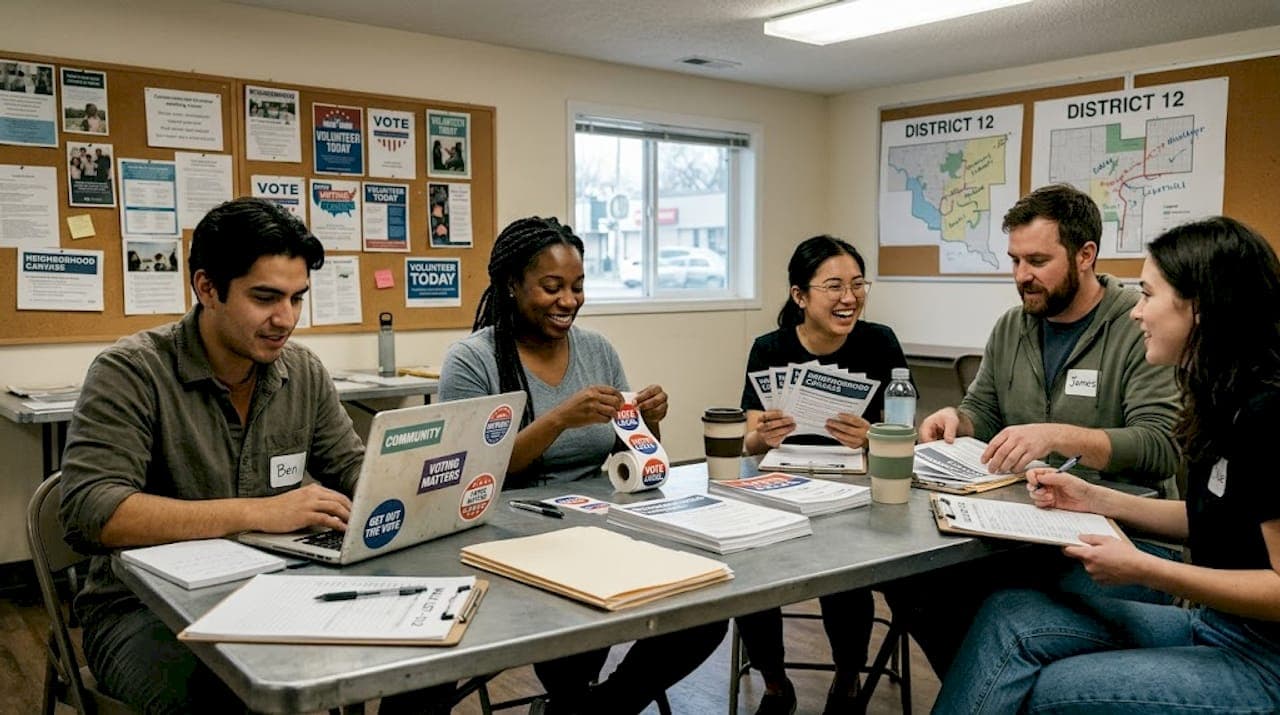
Most campaigns treat volunteers as a nice bonus, a warm body to knock on doors when the budget runs dry. That's a costly mistake. Well-managed volunteer teams are force multipliers that can shift voter turnout by several percentage points in competitive races. The Obama 2008 campaign deployed 2.2 million volunteers and recorded notable gains in counties with active volunteer offices. Personal contact methods consistently outperform automated outreach, and the gap is wider than most organizers expect. This article breaks down the core tasks volunteers handle, why face-to-face contact wins, how to prevent burnout, and how to scale impact the way landmark campaigns have done it.
Table of Contents
- Core roles volunteers play in campaigns
- Why personal contact beats remote outreach
- volunteer management: Tools, retention, and burnout prevention
- Force multipliers and scaling impact: lessons from major campaigns
- Why treating volunteers as community, not labor, makes all the difference
- Take your campaign further with Campaign buddy HQ
- frequently asked questions
Key Takeaways
| Point | Details |
|---|---|
| Personal contact matters most | Volunteer-led face-to-face outreach drives higher voter turnout than remote or automated methods. |
| Structured management is critical | Effective volunteer coordination needs clear roles, good tools, and strategies to prevent burnout. |
| Force multipliers scale impact | Volunteer peer networks and cascading recruitment rapidly expand campaign effectiveness. |
| Community equals retention | Treating volunteers as valued members ensures long-term engagement and sustained campaign support. |
Core roles volunteers play in campaigns
Volunteers are not just extra hands. They are the direct link between a campaign and the voters it needs to reach. When you understand exactly what roles they fill, you can recruit smarter, assign tasks with purpose, and measure results with confidence.
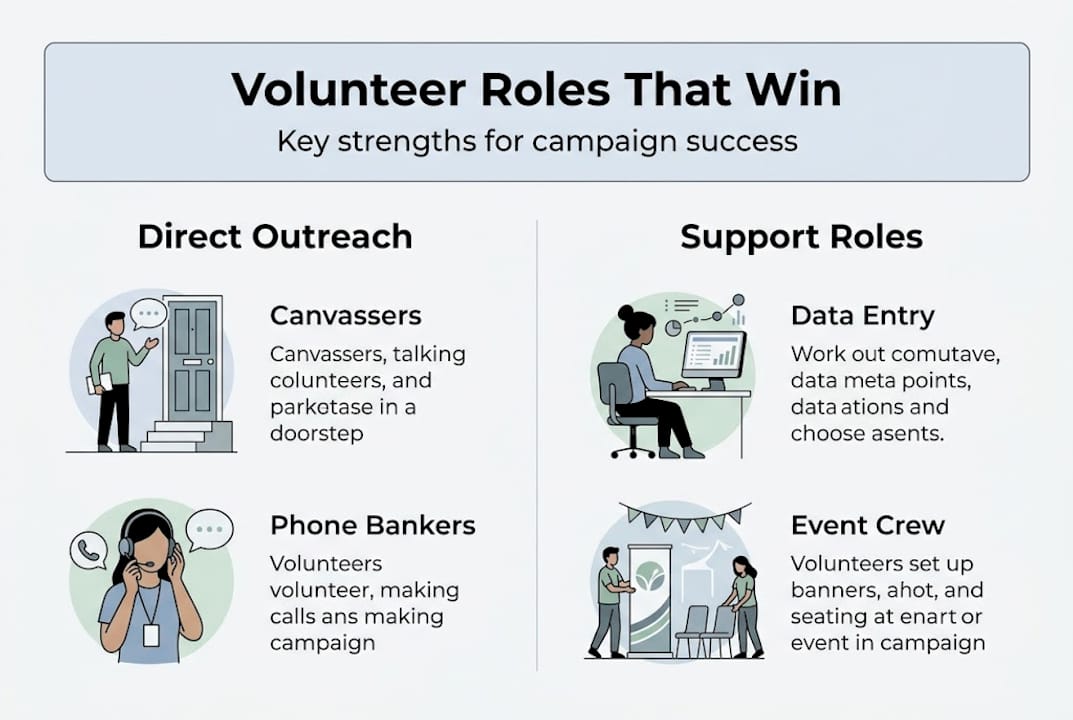
The key tasks volunteers perform include canvassing, phone banking, event organizing, social media engagement, and Get Out The Vote efforts. Each one serves a distinct function in your campaign ecosystem:
- Door-to-door canvassing creates personal connections that no mailer or digital ad can replicate. A neighbor talking to a neighbor about a candidate carries social weight that paid outreach simply cannot buy.
- Phone banking expands your reach quickly, especially in districts where door-knocking is logistically difficult. It works best when volunteers use targeted call lists focused on low-propensity voters.
- Event organizing energizes your base and creates visible community presence. A well-run rally or town hall signals momentum, which attracts more volunteers and donors.
- Social media engagement activates younger voters who are less likely to answer a door or a phone. When volunteers share content authentically from their own accounts, it reaches networks the campaign cannot access directly.
- Get Out The Vote (or "get out the vote") work is the final push before election day. This is where volunteer hours translate most directly into votes cast, and where building volunteer networks with enough depth pays off the most.
Each role requires a different skill set and a different level of commitment. A volunteer who thrives at a phone bank may feel overwhelmed canvassing alone. A social media-savvy college student may not want to spend six hours making calls. When you match people to the right role from the start, retention goes up and productivity follows.
Pro tip: During onboarding, ask every volunteer two questions: "What are you comfortable doing?" and "What would you like to try?" This simple intake step reduces mismatches and keeps volunteers engaged longer.
The broader point is that a campaign with diverse volunteer roles is more resilient. If phone banking response rates drop, your canvassing team keeps the momentum going. If event turnout is low, your social media volunteers amplify what did happen. Think of volunteer roles as a portfolio, not a single strategy.
Why personal contact beats remote outreach
Understanding the tasks is one thing, but what's the real impact? Let's see how in-person volunteer outreach stacks up against remote efforts.
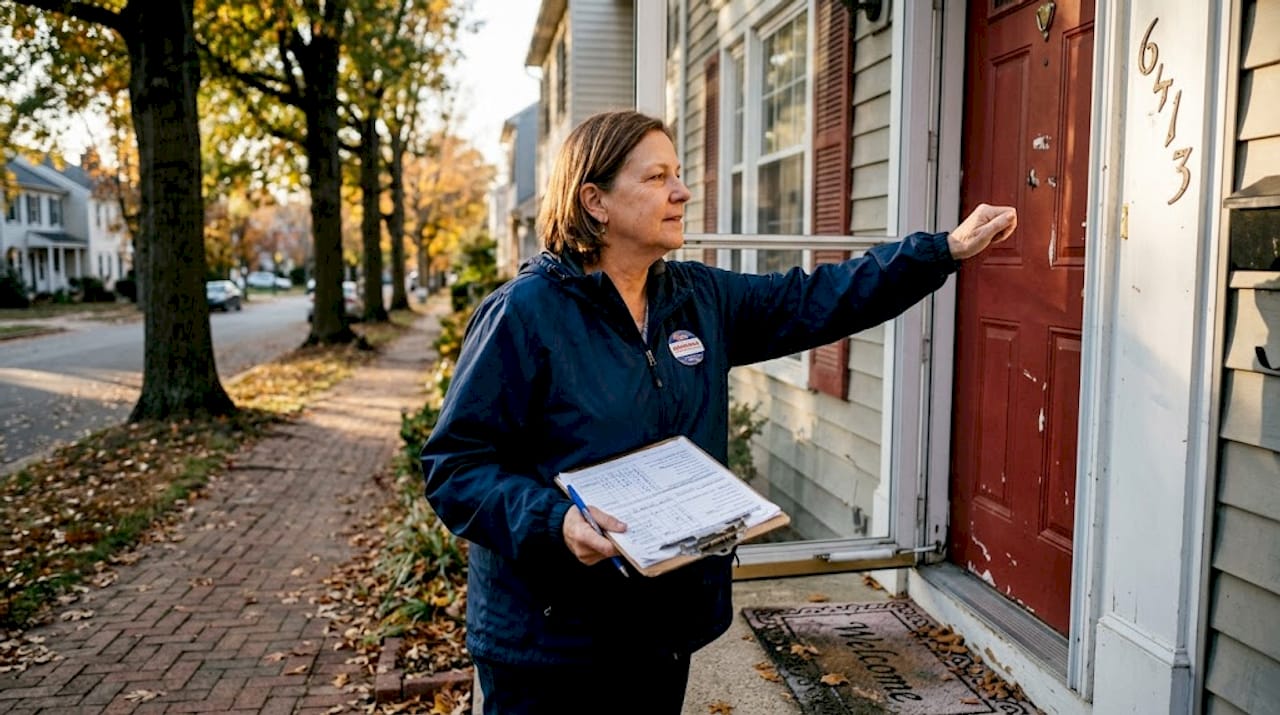
The data here is not subtle. Obama campaign canvassing achieved 30 to 40 percent higher voter contact rates compared to phone banking and direct mail. That is not a marginal difference. That is the difference between a competitive race and a comfortable win.
| Method | Contact rate | Cost per contact | Long-term retention effect | Best use case |
|---|---|---|---|---|
| Door-to-door canvassing | High (30-40% above average) | Medium | Strong | Low-propensity voters |
| Phone banking | Medium | Low | Limited | High-volume outreach |
| Direct mail | Low | High | Very limited | Name recognition |
| Social media ads | Variable | Low to medium | None | Youth and awareness |
| Auto-calls (robo-calls) | Very low or negative | Very low | None | Not recommended |
The research on automated outreach is particularly striking. Face-to-face mobilization declines are directly linked to lower voter turnout, and robo-calls have been shown to produce minimal or even negative effects on participation. When voters feel like a number on a list, they disengage.
"The most powerful political tool is still a real conversation between two people who share a neighborhood."
Social pressure is a real and measurable driver of turnout. When a volunteer from your street tells you they voted and asks if you plan to, that social accountability changes behavior in a way that a text message cannot. Research in behavioral political science consistently confirms that people are more likely to vote when they believe people they know are watching.
This does not mean remote methods have no place. Phone banking is efficient for high-volume contact in the weeks before election day. Social media engagement opens doors with younger demographics. But these methods work best as complements to personal contact, not replacements for it.
The practical takeaway: prioritize your strongest volunteers for canvassing, especially in precincts where turnout is historically low. Reserve phone banking for follow-up contact with voters who were not home during canvassing. Stack your methods deliberately rather than treating them as interchangeable.
volunteer management: Tools, retention, and burnout prevention
Now, let's pivot to the practical challenges of managing volunteers, and how innovative tools and strategies make a difference.
Coordinating dozens or hundreds of volunteers without the right infrastructure is a recipe for chaos. Tools like NGP VAN, solidarity Tech, and CallHub enable real-time coordination, shift tracking, and automated reminders that reduce no-shows and keep teams aligned. These platforms let you see who showed up, what they accomplished, and where gaps need to be filled.
| Platform | Primary strength | Best for |
|---|---|---|
| NGP VAN | Data integration and voter file access | Large campaigns |
| solidarity Tech | Community-driven coordination | Labor and grassroots |
| CallHub | Phone and text banking automation | High-volume outreach |
Burnout is the silent campaign killer. Long hours and unclear roles are the top drivers of volunteer dropout, but training and consistent reminders can boost retention by up to 65 percent. That number should stop you in your tracks. More than half of your retention problem is solvable with better onboarding and communication.
Here are the most effective retention strategies, ranked by impact:
- Clear role assignments from day one. Every volunteer should know exactly what they are responsible for and who to contact with questions.
- Regular training sessions. Even short 20-minute briefings before a canvassing shift build confidence and reduce errors.
- automated reminders. A text message the night before a shift dramatically reduces no-shows without requiring staff time.
- flexible task options. Not everyone can commit to a four-hour block. Two-hour shifts and remote tasks keep part-time volunteers in the pipeline.
- Public recognition. Call out top volunteers by name in team meetings, on social media, and in campaign emails. Use volunteer recognition approaches that feel genuine rather than performative.
Pro tip: Create a "volunteer of the week" spotlight in your campaign newsletter. It costs nothing and signals to every volunteer that their contribution is seen and valued.
The goal is to make volunteering feel sustainable. A volunteer who burns out in week three is worth far less than one who shows up consistently through election day.
Force multipliers and scaling impact: lessons from major campaigns
To wrap up the practical side, let's look at how campaigns can scale volunteer impact, drawing lessons from landmark efforts.
The most powerful concept in volunteer management is the cascade effect. When each volunteer recruits others, the network grows exponentially rather than linearly. The Obama 2008 campaign reached 2.2 million volunteers and recorded approximately 1 percent vote share gains in counties where campaign offices were active. Each volunteer in that network recruited an average of 2.3 additional volunteers, compounding the campaign's reach without proportional increases in cost.
The mamdani campaign mobilized 95,000 volunteers through solidarity Tech, demonstrating that even newer campaigns can achieve massive scale when they invest in the right coordination infrastructure.
Key lessons from both efforts:
- Quality management beats raw volume. A smaller team of well-trained, motivated volunteers outperforms a large, disorganized group every time.
- Early investment in systems pays off late. The campaigns that built strong volunteer infrastructure in the primary had a structural advantage in the general.
- Geographic targeting matters. Deploy your strongest canvassers to the highest-leverage precincts, not just the most convenient ones.
- Track everything. Without data on who contacted whom and what the outcome was, you cannot improve your approach or hold volunteers accountable.
Pro tip: Set a "cascade goal" for each volunteer leader: ask them to personally recruit three more volunteers within their first two weeks. This single practice, done consistently, can triple your volunteer base without a single paid recruitment ad.
The lesson from major campaigns is not that you need millions of dollars or millions of volunteers. It is that structured, data-driven volunteer management at any scale produces outsized results compared to informal, ad hoc approaches.
Why treating volunteers as community, not labor, makes all the difference
Here is the perspective most campaign guides skip: the tactical frameworks above only work if your volunteers actually want to be there.
Too many campaigns treat volunteers like unpaid staff. They assign tasks, track outputs, and move on. That model produces short-term compliance and long-term attrition. The campaigns that win, and keep winning cycle after cycle, are the ones that make volunteers feel like they belong to something larger than a single election.
retention requires treating volunteers as community, not just as a resource to be managed. When volunteers feel connected to each other and to the mission, they show up without being asked. They recruit their friends. They come back after the election for the next fight.
This is not soft advice. It is a strategic advantage. A volunteer who feels part of a movement is your most durable asset. They reduce your recruitment costs in future cycles, carry institutional knowledge, and model commitment for newer volunteers. The campaigns that invest in relationships, not just tasks, build something that outlasts any single race.
Take your campaign further with Campaign buddy HQ
If you're ready to boost your campaign's volunteer power, here's how Campaign buddy HQ can help.
Managing volunteers across canvassing shifts, phone banks, and events is genuinely hard without the right tools. Campaign buddy HQ gives progressive campaigns a single platform to plan daily outreach, log volunteer activity, track progress toward goals, and keep teams motivated with real-time visibility into what is working.
Whether you are running a local race or scaling a regional effort, Campaign buddy HQ is built for the realities of grassroots organizing, including rural and low-density communities where every contact counts. Use the vote goal calculator to set realistic targets, and explore the AI campaign overview to get data-driven guidance tailored to your race. Start your free 7-day trial today. No credit card required.
frequently asked questions
How can campaigns recruit volunteers for maximum impact?
Peer-to-peer invitations are the most effective recruitment method because each volunteer who recruits others creates a cascade effect, with each recruit bringing 2.3 more volunteers on average.
What tools are most effective for volunteer management?
NGP VAN, solidarity Tech, and CallHub are the leading platforms for real-time coordination, shift tracking, and automated volunteer communication.
How can campaigns prevent volunteer burnout?
Clear role assignments, regular training, flexible scheduling, and public recognition work together to reduce burnout and can boost retention by 65 percent.
Do remote outreach methods like phone banking drive turnout?
Phone banking and digital outreach help with volume, but canvassing outperforms both phone banking and direct mail in voter contact rates and turnout impact.