
Consistency is the word campaign managers throw around constantly, yet most teams misunderstand what it actually demands. It does not mean locking your volunteers into a word-for-word script and hoping they survive a tough doorstep conversation. Progressive cycle guidance increasingly treats consistency as fully compatible with real-time adaptation, which means your campaign can stay coherent while your organizers stay human. This guide breaks down the frameworks, drift-correction tools, and daily habits that let you build message discipline without sacrificing the flexibility that wins real voters.
Table of Contents
- Why campaign consistency matters (and what it isn't)
- Core frameworks for campaign consistency
- Spotting and correcting consistency drift
- Sustaining consistency through every campaign phase
- Why consistency is a living discipline, not a script
- Take your campaign outreach to the next level
- Frequently asked questions
Key Takeaways
| Point | Details |
|---|---|
| Consistency builds trust | Voters respond best to campaigns with clear, coherent, repeatable messages. |
| Adapt templates, not just scripts | Baseline messaging guides are effective when teams adjust them for context without losing the core message. |
| Correct drift quickly | Recognize and realign messaging as soon as inconsistencies appear, especially in the field or under media pressure. |
| Consistency is a daily practice | Sustaining message discipline comes from regular coaching, reviews, and team alignment throughout every campaign phase. |
Why campaign consistency matters (and what it isn't)
Voter trust is built on repetition. When a neighbor hears your candidate's core message at the door, reads it in a mailer, and hears it again at a community event, something clicks. That alignment signals organizational competence, and competent organizations earn votes. Campaigns that skip this foundation often watch their resources scatter across competing narratives while volunteers improvise answers that contradict the field director's talking points.
The misconception that trips up most managers is equating consistency with rigidity. Running the same word-for-word script in October as you did in June is not consistency. It is stagnation. Real consistency lives at the message level, not the script level. Your core argument, the reason voters should choose your candidate, should remain stable. The tactics, tone, and targeting around that argument should evolve as the campaign moves through its phases.
Indivisible's VET Guide makes this distinction clearly, framing intentional voter engagement as the bedrock of effective organizing:
"Strong, intentional, and consistent voter engagement is a core building block of a winning campaign."
That word "intentional" carries real weight. Consistency without intention is just repetition. Intentional consistency means every touchpoint, from phone banks to text banks to door knocking, reinforces the same strategic argument while meeting voters where they actually are. The difference between persuasion conversations and GOTV conversations is enormous, and your consistency framework must account for both.
Without a coherent approach, the risks stack up fast:
- Voter confusion: Conflicting messages force voters to reconcile what they have heard, and most will not bother.
- Wasted resources: Staff time spent correcting miscommunication is time not spent on new outreach.
- Internal misalignment: When field staff and digital staff tell different stories, team morale erodes along with your credibility.
- Lost persuasion windows: Voters who receive inconsistent follow-up rarely convert.
Maintaining a unified message across every outreach channel is not a communications luxury. It is a survival requirement for competitive campaigns, and it starts by accepting that consistency is a strategic posture, not a content straitjacket.
Core frameworks for campaign consistency
Understanding why consistency matters is the easy part. Building operational systems that deliver it under pressure is where most campaigns falter. The good news is that several proven frameworks already exist, and the best ones share a common thread: they prioritize adaptability within structure.
The DNC Grassroots Organizing to Win in 2026 playbook frames consistency as an operating model change, not just a messaging memo. It calls out specific shifts that campaigns must make to avoid siloed, script-heavy operations:
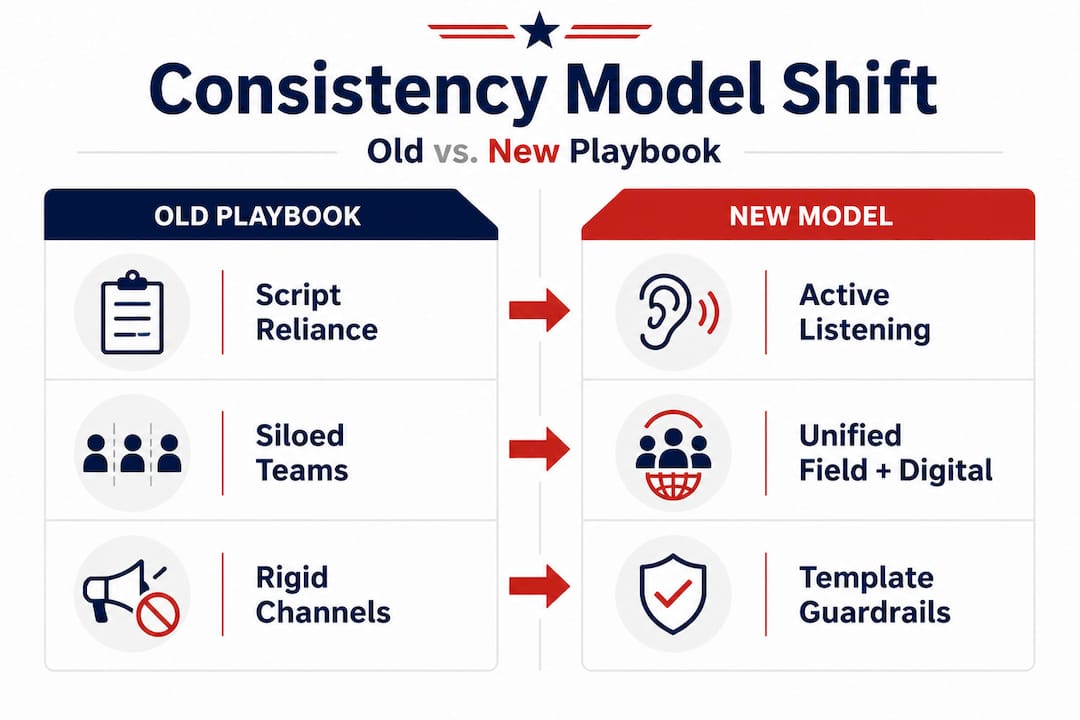
| Old playbook | New model |
|---|---|
| Script-heavy canvassing | Listen-first conversations |
| Siloed field and digital | Integrated team operations |
| Rigid messaging per channel | Adaptive templates, stable core message |
| One-off training events | Continuous coaching culture |
| Top-down communication | Coalition-integrated feedback loops |
The transition from the left column to the right is not cosmetic. It requires rethinking how you train volunteers, how you run debriefs, and how you measure outreach quality. Campaigns that make this shift report stronger consistent but adaptive organizing results because their teams feel trusted to respond authentically while still anchored to strategy.
Here is how to operationalize this framework step by step:
- Define your core message clearly. Distill the campaign's argument to two or three sentences that every team member can recall under pressure. This is your anchor.
- Train across all teams simultaneously. Field, digital, and communications staff should train together on message fundamentals, not separately in departmental silos.
- Monitor coherence weekly. Review a sample of call recordings, text responses, and door-knock reports to check for message drift before it compounds.
- Review and adapt tactics by phase. Persuasion conversations need different approaches than GOTV conversations, so schedule deliberate tactic shifts with full-team briefings.
Pro Tip: Baseline templates are your friend. Use them as guardrails, not cages. A volunteer who understands why the template is structured the way it is will adapt it authentically. A volunteer who is simply ordered to memorize it will freeze the moment a voter asks something unexpected.
Spotting and correcting consistency drift
Even the best-structured campaigns experience drift. A local news story breaks, a volunteer goes off script, a regional coordinator sends a text blast with the wrong framing, and suddenly your unified message has three competing versions in the field. Recognizing drift early is far less damaging than discovering it after a news cycle has amplified the inconsistency.
The most common drift triggers in progressive campaigns are predictable:
- Media pressure that forces rapid responses before messaging teams are aligned
- Cross-channel miscommunication where digital and field staff are not sharing updates in real time
- Volunteer errors during high-volume outreach pushes where oversight naturally thins out
- Leadership speaking off-the-cuff without checking updated talking points
A message discipline framework under pressure emphasizes structuring responses to state the key message first and bookending with that prepared message, even when questions veer off course:
"…structuring responses to state the key message first and bookending with the prepared message keeps spokespeople coherent without appearing evasive."
This principle applies equally to a field director facing a hostile voter at the door and a communications lead fielding a journalist's ambush question. The muscle is the same: acknowledge, bridge, return to core message.
Here is a quick-reference table for spotting and correcting the most common drift scenarios:
| Sign of drift | Rapid correction strategy |
|---|---|
| Inconsistent phrasing across channels | Push a single-page message update within 24 hours |
| Conflicting replies to voter questions | Run an emergency debrief with all team leads |
| Off-message escalation by a volunteer | One-on-one coaching before next shift |
| Leadership contradicting field materials | Issue a joint statement and update talking points |
| Digital ads diverging from field message | Pause ads, realign copy, relaunch |
Immediate tactics for drift correction in the field:
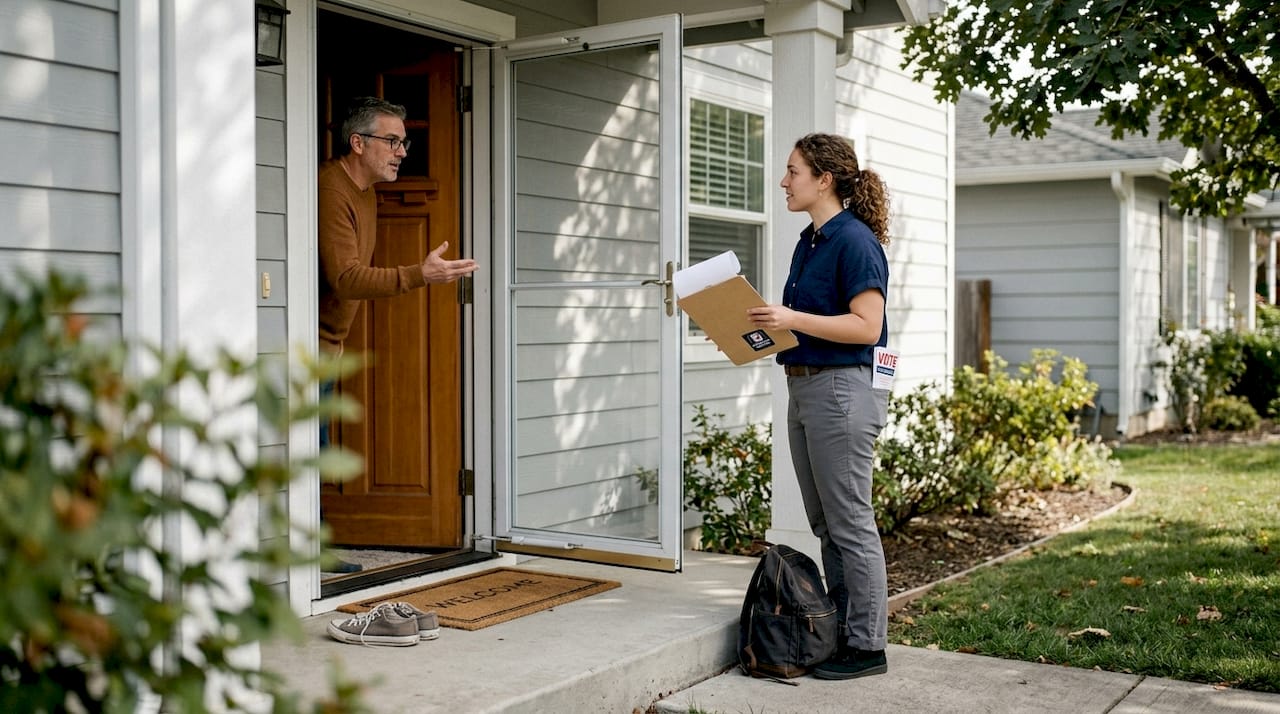
- Bridging: Acknowledge the voter's point, then steer back. "That's a fair concern, and what our campaign is focused on is..."
- Refocusing: In team debriefs, name the drift without blame and return to the core message framework together.
- Aligning in post-event reviews: Make drift-checking a standing agenda item in every debrief, not an emergency measure.
Pro Tip: When confronted with unpredictable questions, train your volunteers to acknowledge the question genuinely, pivot clearly, and return to the core message with confidence. Voters respect honesty. They distrust evasion. The bridge gives you both.
Maintaining a unified message during high-pressure moments is what separates campaigns that recover quickly from those that spiral into crisis communications mode. Build the bridge reflex before you need it.
Sustaining consistency through every campaign phase
Drift correction is reactive. What you really want is a campaign culture where consistency is the default, reinforced by daily habits so ingrained that your team does not have to think about it under pressure. That requires treating message discipline as a practice, not a policy.
Indivisible's VET Guide distinguishes persuasion interactions from GOTV work and frames consistent live engagement as essential throughout both phases. The tactical execution changes dramatically between a persuasion conversation in July and a GOTV push in October, but the underlying message coherence must not waver. Voters who heard your candidate's core argument in the summer should recognize it immediately when they are reminded of it on election week.
Here is what a sustainable daily and weekly consistency practice looks like for managers:
- Start each day with a brief message check. Spend five minutes reviewing any new talking points or updated scripts before your team hits the phones or the doors.
- Monitor message use in real time. Use outreach logs to spot unusual patterns, such as a sudden spike in "no answer" codes or volunteers skipping the closing message entirely.
- Coach staff and volunteers proactively. Weekly one-on-ones with top outreach leaders are a low-cost investment that pays massive consistency dividends.
- Re-align after significant events. After a debate, a news cycle, or an opponent attack, hold a rapid all-hands message refresh before the next outreach push.
- Review phase transitions deliberately. Moving from persuasion to GOTV is a cultural shift for your team, not just a tactical one. Schedule a full briefing, update all templates, and test the new messaging before deploying at scale.
Stat callout: Campaigns that build consistent live voter engagement into every phase report measurably stronger outcomes than those relying on a single pre-election push, according to field research summarized in Indivisible's VET Guide. Intentional, phased consistency compounds over time.
The secret that experienced managers know is that consistency does not require Herculean effort when it is baked into routine. Organizing meetings, field action reports, and communications debriefs are already happening. The question is whether consistency is a standing agenda item or an afterthought. Make it a habit, and building campaign momentum becomes a natural byproduct of your everyday operations rather than a special initiative you launch when things feel stale.
Why consistency is a living discipline, not a script
Here is the uncomfortable truth that most campaign training programs miss: perfect consistency is a myth, and chasing it will cost you more than a little drift ever would.
The campaigns that win are not the ones that never deviate from the script. They are the ones that recover fastest when deviation happens, and that recovery speed comes from treating consistency as a living discipline rather than a static document. Your message framework should be a muscle your team builds, not a rulebook they memorize.
Classic errors we see stall campaign growth every cycle: over-reliance on scripts that leave volunteers paralyzed when conversations go off the rails, and inflexible post-event debriefs that shame drift rather than correct it. Both create cultures of fear, where volunteers stop reporting problems and managers stop hearing about them until it is too late.
The future of progressive outreach is team alignment plus improvisational skill, backed by templates but not constrained by them. This means your training program needs to simulate unpredictable scenarios deliberately. Role-play hostile voter questions. Practice adaptive momentum-building when media coverage suddenly shifts. Develop the instinct for bridging under pressure so that when field conditions or tough media questions diverge from the planned script, your people can redirect coherently without sounding defensive.
The organizers who master this balance do not look like they are following a playbook. They look like they believe every word they are saying, because the message has become genuinely internalized, not just memorized. That is the discipline worth building. Experiment with it on your team. Give volunteers room to find their own voice inside the message framework. You will be surprised how much stronger the consistency becomes once it stops being imposed and starts being owned.
Take your campaign outreach to the next level
Knowing the frameworks is only half the equation. The other half is having the right systems to put them into practice every single day, across every person on your team.
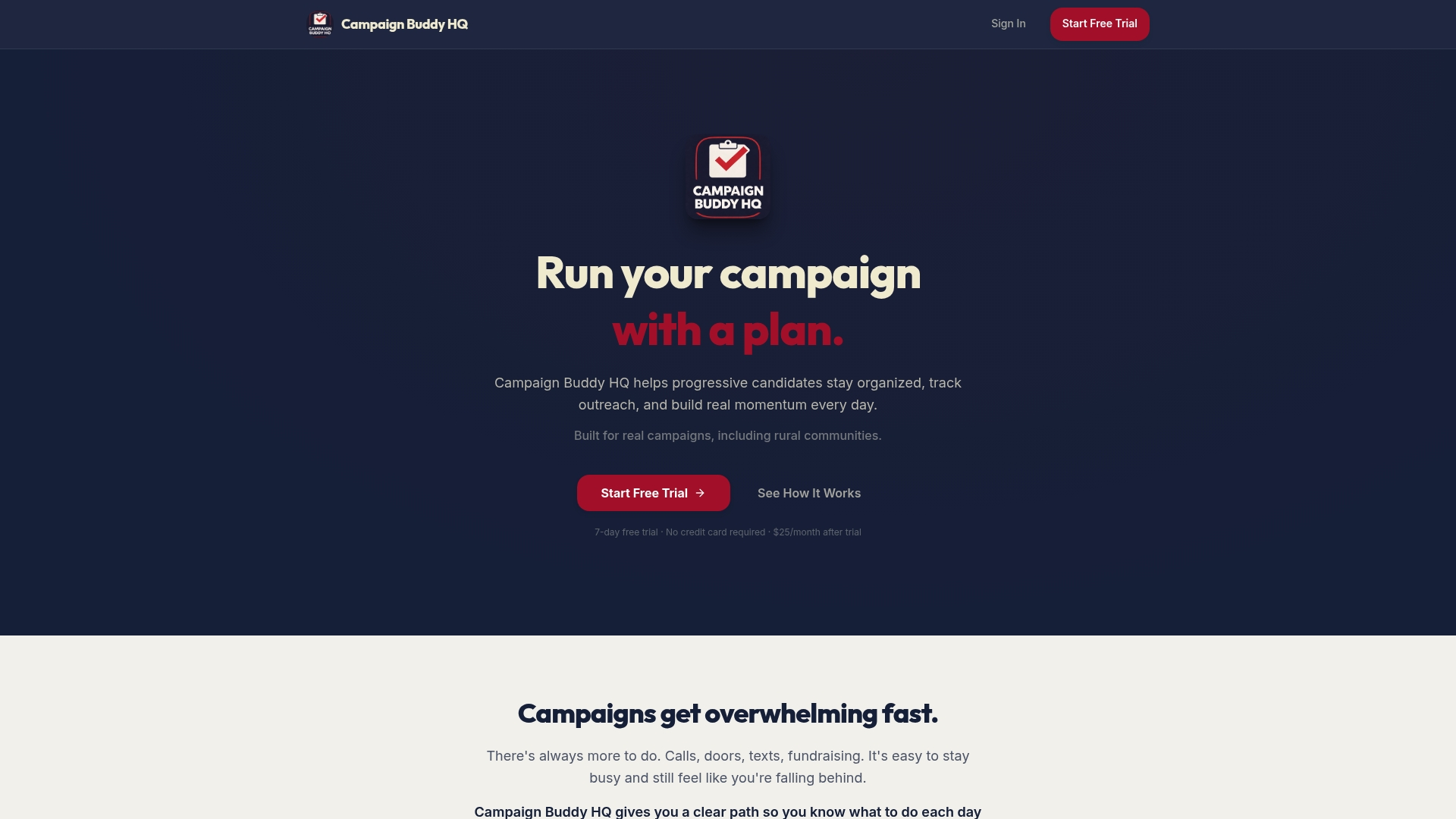
The Campaign Buddy HQ platform gives progressive organizers exactly that: centralized message management, field performance dashboards, and adaptable outreach templates built for real-world campaign conditions. Whether you are running persuasion in a competitive district or driving GOTV in a low-density rural area, Campaign Buddy HQ keeps your team aligned without adding administrative burden. Start by mapping your resources with the free campaign budget template to plan for sustained consistency across the full cycle, and use the how many voters to win calculator to set data-driven targets that keep your outreach consistent and strategically focused. A free 7-day trial requires no credit card and gets your team organized from day one.
Frequently asked questions
How do I know if my campaign is suffering from message drift?
Common signs include inconsistent phrasing across channels, volunteers improvising answers that contradict talking points, and conflicting voter follow-ups. A core inconsistency risk in campaigns is drifting across channels and roles, which compounds quickly if not caught early.
Does consistency mean sticking to one script for the whole cycle?
No. Effective campaigns use adaptable templates anchored to a stable core message, adjusting tactics by phase and audience. Progressive cycle guidance increasingly treats consistency as fully compatible with real-time adaptation.
What's the biggest challenge to message consistency in field operations?
Department siloes and over-reliance on rigid scripts create confusion at scale. The Organizing to Win in 2026 playbook specifically recommends dismantling departmental siloes and integrating digital tools to improve message effectiveness across the full team.
How can we recover consistency after a media misstep?
Use bridging: acknowledge the question directly, steer back to your campaign's core message, and reinforce your key points before closing. Message discipline approaches emphasize returning to the prepared message even under sustained pressure, without appearing evasive.