
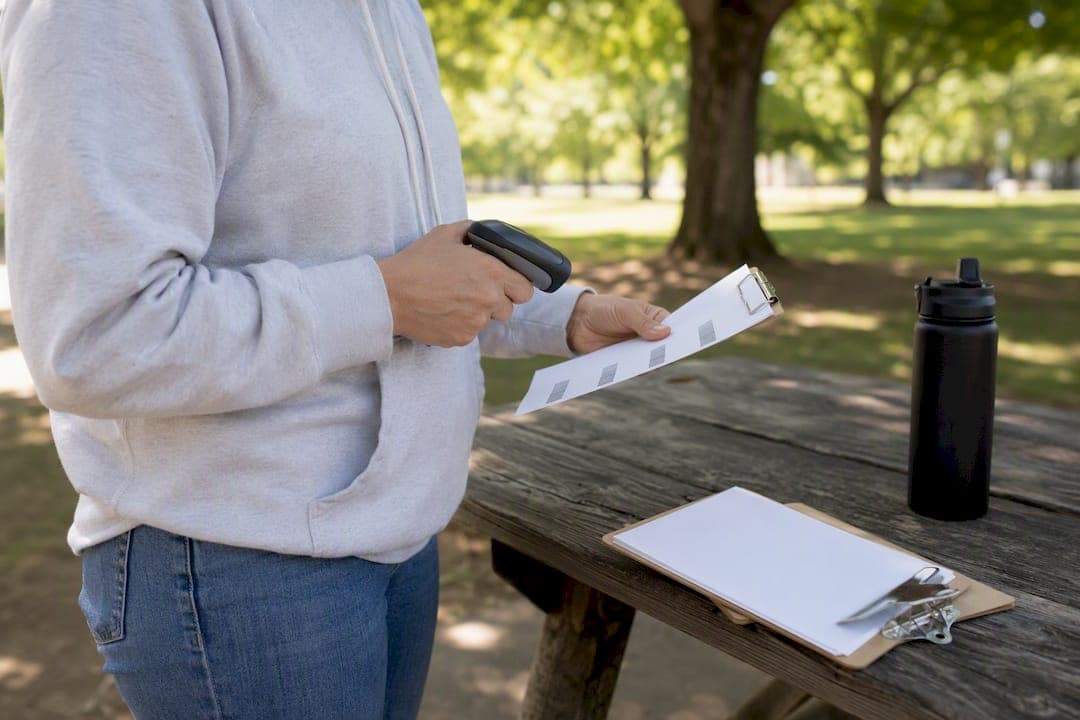
The door to digital handoff means moving canvass notes, whether scribbled on a clipboard or reported verbally, into structured records in your campaign CRM before the day ends. Success looks simple: every household gets one logged contact outcome, no duplicate records, and any follow-up need lands on someone's task list before the next shift starts. Tools like Campaign Buddy HQ are built to make that same-day turnaround realistic for smaller teams.
TL;DR:
- Confirm household IDs and normalized addresses are consistently used and matched to the walk sheet before leaving the door to prevent duplicate records.
- Use barcode-enabled walk sheets and dedicated entry roles to speed same-day data input, ensuring accuracy even without smartphones.
- Run quality checks such as record count comparisons and duplicate reviews before treating the data as final for reliable follow-up.
- Limit data collection to essential single-select fields and assign a dedicated data lead to maintain high completion rates and reduce errors.
- Automate the handoff process with tools like Campaign Buddy HQ to streamline data entry, deduplication, and task creation for immediate follow-up.
Table of Contents
- Pre-Shift and Post-Shift Checklist for a Clean Handoff
- The Step-by-Step Workflow From Doorstep to Database
- What Fields Actually Belong in Your Data Model
- Running the Handoff Without Mobile Devices for Everyone
- Quality Checks Before You Call the Data Live
- Three Mistakes I See Constantly, and the Fixes That Actually Work
- Make the Handoff Automatic With Campaign Buddy HQ
- Sources
Pre-Shift and Post-Shift Checklist for a Clean Handoff
A predictable checklist beats a heroic end-of-night scramble. Distribute this to every volunteer and team lead before doors open, and revisit it after the last knock.
Before the shift:
- Confirm walk sheets are numbered and matched to a specific turf and canvasser.
- Assign one household ID scheme so nobody improvises their own numbering.
- Check device batteries and confirm login access for anyone using mobile capture.
- Review the required fields out loud so nobody skips the follow-up column.
During the shift:
- Log exactly one contact outcome per household, even for a no-answer.
- Never leave the follow-up field blank. "None needed" is still an answer.
- Double-check the household ID before moving to the next door.
After the shift:
- Route paper packets to one drop point, not whoever's car is closest.
- Name the specific person entering data that night, not "whoever has time."
- Set a hard commit time. Same-day means before midnight, not "sometime this week."
The Step-by-Step Workflow From Doorstep to Database
Getting from a filled-out walk sheet to a working task list takes five predictable steps. Skip one and you end up with data nobody trusts.
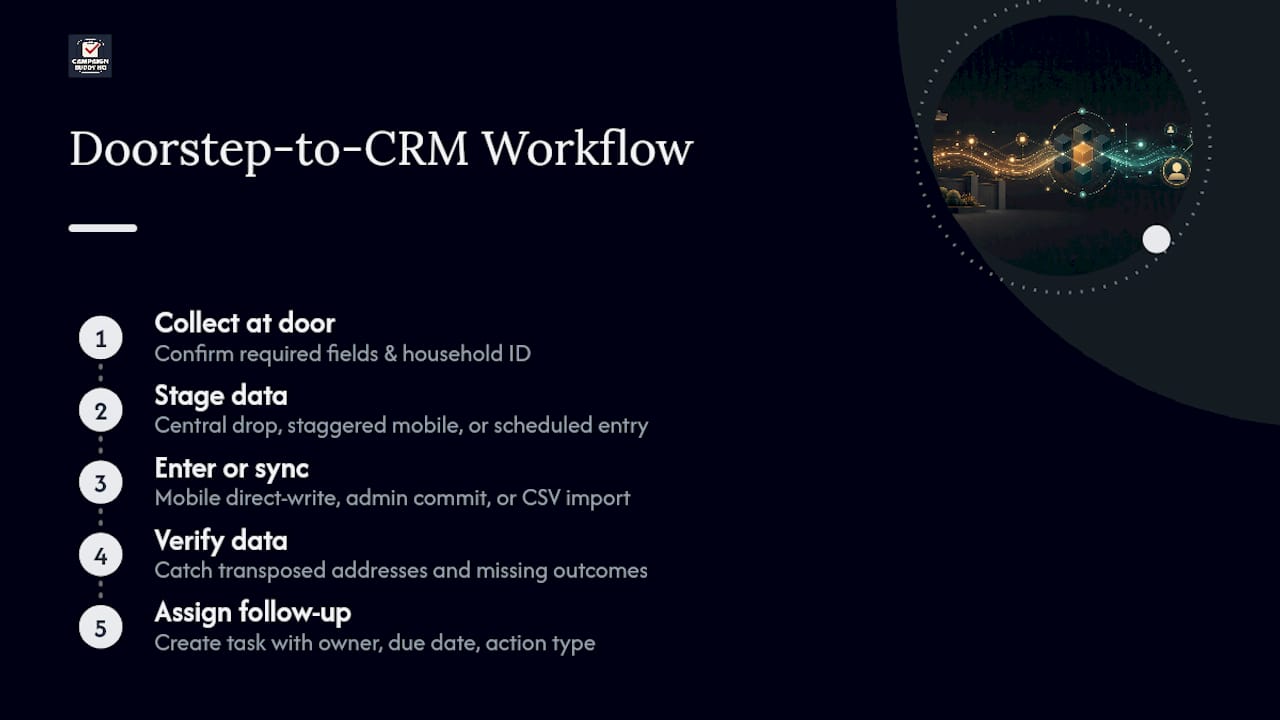
1. Collect with discipline at the door. Volunteers confirm every required field is filled and the household ID matches the walk sheet number before leaving the turf. A canvasser who leaves a block with three blank follow-up fields has created work for someone else at 9 p.m.
2. Stage the data for entry. Campaigns generally choose one of three staging patterns: a centralized packet drop where all paper converges at headquarters, staggered uploads where mobile users sync throughout the shift, or a scheduled evening data-entry block where volunteers gather to key in results together. Staggered mobile uploads work best when your canvassers already carry phones and know the app; scheduled entry sessions work better for paper-heavy, rural, or low-connectivity turf.
3. Enter or sync the results. Mobile capture tools that write directly into your CRM are fastest. Systems like MiniVAN can auto-sync canvass entries to VAN, but the sync alone doesn't finalize anything, a staff member still has to commit the batch through the admin tools before it's officially stored. For paper walk sheets, campaigns typically fall back on CSV import with a fixed field-mapping template or barcode-assisted scanning into a data-entry form.
4. Verify before anyone treats it as final. A quick pass catches transposed addresses and missing outcomes before they poison your follow-up list.
5. Assign the follow-up. Once a record is clean, generate the task: a re-knock, a phone call, an email, or enrollment in a nurture sequence, complete with a due date and a named owner. Field apps that write directly into CRM contact properties let workflows and dashboards react immediately, which is the whole point of doing this same day instead of next week.
Pro Tip: Set your commit deadline for two hours after the last canvasser is expected back, not midnight. It forces the data lead to chase stragglers early instead of discovering gaps at 11:45 p.m.
What Fields Actually Belong in Your Data Model
Every field you add is a field a tired volunteer might skip. Keep the mandatory schema small and force everything into predictable formats so matching and deduplication actually work later.
Identification fields:
- Household ID (your single source of truth for matching)
- Normalized address (same format every time, no exceptions)
- Voter ID, when your voter file provides one
- Name, when the canvasser captured it
Outcome fields:
- Contact outcome as a single-select: contacted, not home, refused, moved, wrong address
- Support level as a single-select, never a free-text note
Follow-up fields:
- Follow-up needed: yes or no
- Follow-up type: call, visit, email, or text
- Due date and assigned owner
Metadata fields:
- Walksheet ID, shift ID, canvasser ID, timestamp, and source
For dedupe, match in this order: household ID first, then normalized address, then phone or email as a tiebreaker. Field practitioners consistently recommend structured single-select fields over free-text notes because they're the only format a manager can filter and act on within minutes of the shift ending. Starting with a tiny mandatory schema and expanding only once those fields are reliably completed keeps completion rates high.
Running the Handoff Without Mobile Devices for Everyone
Not every canvasser carries a smartphone, and not every campaign can afford one per volunteer. Barcode-enabled walk sheets are the workhorse low-cost solution here.
The setup is straightforward: print a unique voter code on each line of the walk sheet, then hand canvassers a crib sheet with answer codes in a barcode-friendly font. A data-entry volunteer scans the voter code to pull up the record, then scans the answer codes rather than typing them. This approach speeds fixed-answer capture considerably, though addresses, name corrections, and handwritten notes still need manual entry, barcodes solve the repetitive part, not the messy part.
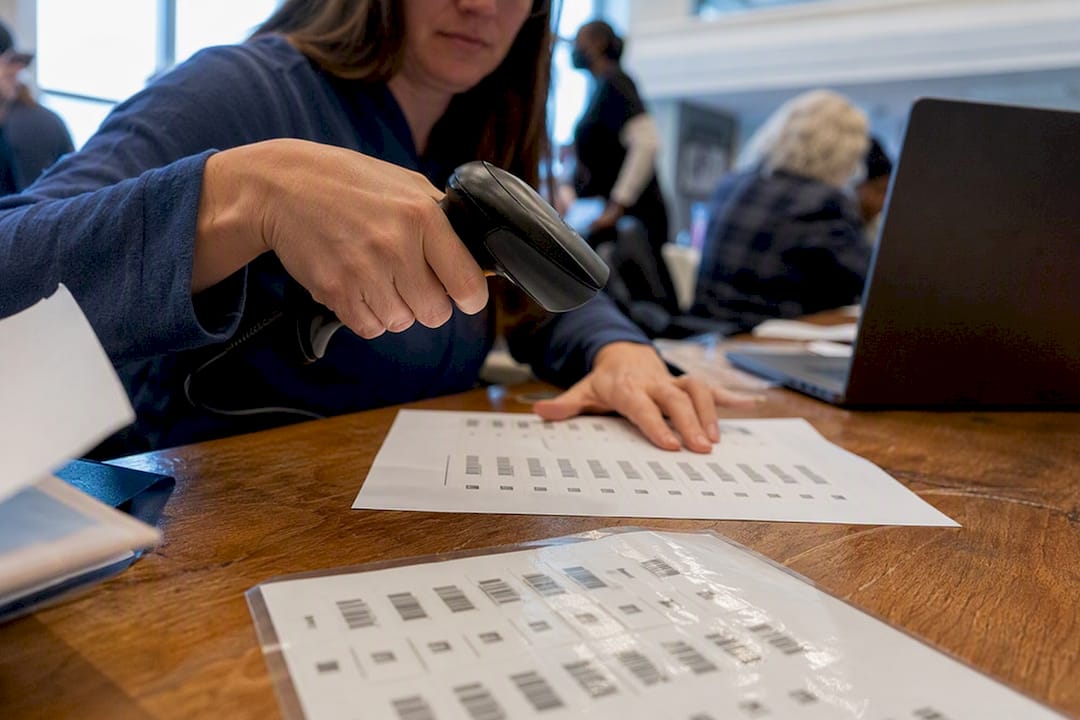
Staff your entry station with three roles: a scanner operator running the barcode reader, an address editor fixing the handwritten corrections, and a verifier doing a final read-through. For same-day results, run entry the same evening rather than batching it overnight. The most common failure modes are illegible handwriting and missing household IDs.
Pro Tip: Pre-print crib sheets in large, high-contrast type and laminate them. A smudged or rain-soaked crib sheet is the single most common reason a scanner operator falls behind.
Campaigns coordinating with community groups on outreach logistics can find useful framing in guidance on collaborating with communities on shared organizing goals, which applies just as well to respectful door-to-door engagement.
Quality Checks Before You Call the Data Live
Before anyone treats tonight's data as final, run these checks in order:
- Compare record counts to field reports. If ten canvassers reported 40 doors each, you should see roughly 400 records, not 280.
- Check required-field completeness. A completion rate under 90% on your core four to six fields means something broke in the field, not just in entry.
- Spot-check five random records per shift. Pull them against the original walk sheet to catch systemic errors before they spread.
- Run the dedupe pass, matching on household ID, then normalized address, then phone or email, and flag possible duplicates for manual review rather than auto-merging.
- Commit the batch, recording who committed it and when, since that action is what should trigger downstream workflows or SMS sends.
Disconnected systems commonly leave 20 to 30% of records needing cleanup before they're trustworthy, so budget real time for this step rather than treating it as optional. When you spot a systematic error, a canvasser consistently skipping the follow-up field, for instance, report it back to the field lead that night so it doesn't repeat tomorrow.
Three Mistakes I See Constantly, and the Fixes That Actually Work
The biggest handoff failures aren't technical. They're campaigns collecting eight free-text fields when four single-selects would do, waiting three days to enter data because "we'll catch up this weekend," and skipping household IDs because "the address is obvious enough."
The fix isn't more software, it's smaller scope. Require four core fields. Name one person as the daily data lead, even if it's a rotating volunteer. Block 30 to 60 minutes every evening for entry, no exceptions. A dedicated data lead running a short nightly QA loop consistently produces more usable follow-up lists than a team that cleans up once a week. Keep one canonical record per household and write your rules down. Campaigns that treat this as governance, not a favor someone does when they have time, are the ones whose follow-up calls actually happen.
— Billy
Make the Handoff Automatic With Campaign Buddy HQ
Most of the workflow above exists because campaigns are stitching together a walk sheet, a spreadsheet, and a CRM that don't talk to each other. Campaign Buddy HQ closes that gap for teams who can't afford a full-time data manager. It gives you the required fields built in, mobile entry for canvassers who have phones, household-level views that catch duplicates before they become two follow-up calls to the same door, and task creation that fires the moment a record gets marked "follow-up needed."
The 7-day free trial, no credit card required, lets you run one real shift through it: log doors, watch a follow-up task get created automatically, and see what your dashboard looks like the next morning instead of three days later. If your current handoff involves a shoebox of walk sheets and a volunteer who "will get to it," start a trial at Campaign Buddy HQ before your next canvass shift and see what same-day data actually feels like.
Sources
- Progressive Technology Project Voter TechKit - List Production and Data Entry
- Canvassing data: What to collect at the door | Ecanvasser
- Voter outreach on HubSpot: Step-by-Step Guide | Nonprofit Tech Shop
- Chapter 28: The Modern Data-Driven Campaign | Political Analytics