
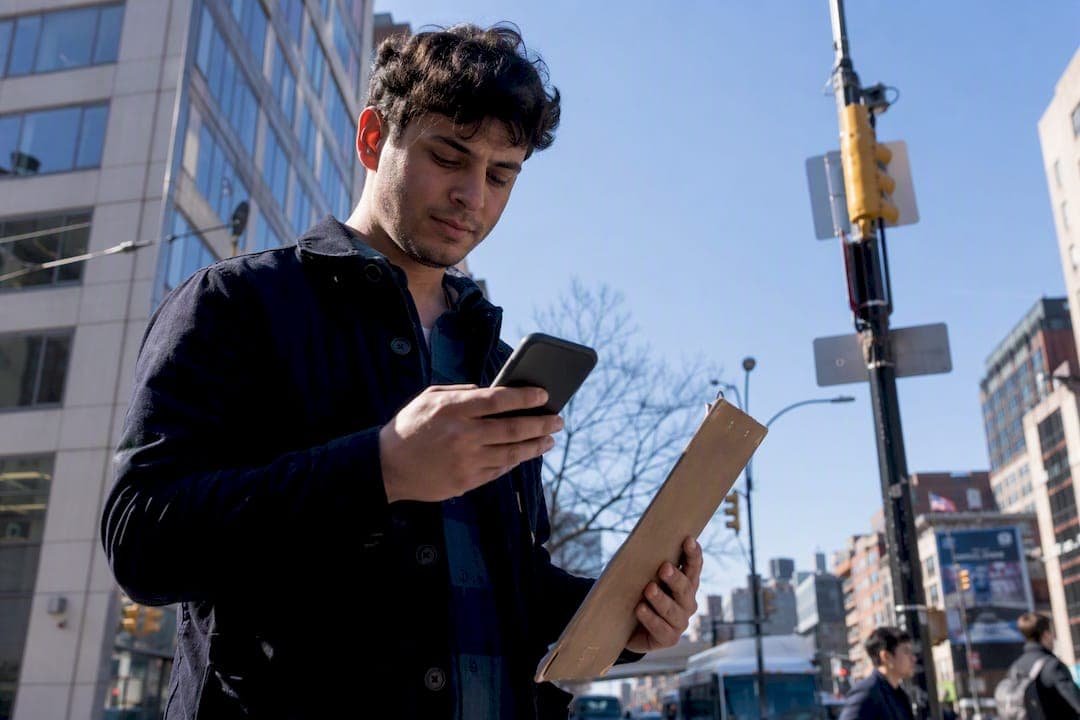
For most voter contact goals, start with texting for scale and speed, then reserve calling for the persuasion targets who are actually worth the volunteer hours. A large multi-treatment turnout study found SMS mobilization lifted turnout by about 0.25 percentage points, and text banking routinely produces far more contacts per volunteer hour than phone banking, according to industry benchmarks from CallHub. Calling still wins when you need a real conversation, not a nudge. Campaign Buddy HQ builds workflows around exactly this split.
Here's what to do in the next 24 hours:
- Pull your target universe and split it by task: GOTV/reminders go to text, persuasion/undecided voters go to calls.
- Schedule one call session and one text send this week, then compare contact rates before committing more hours.
- Log every disposition in one shared system so neither channel wastes time on someone already reached.
Key Takeaways
Texting wins on reach and speed for GOTV and reminders, calling wins on persuasion depth for identified persuadable voters, and the two channels perform best when synced through one shared contact system rather than run separately.
| Point | Details |
|---|---|
| Lead with texting for scale | Use texting for GOTV, reminders, and fundraising links where reach matters more than depth. |
| Reserve calls for persuasion | Target undecided or persuadable voters identified through early testing, not a blanket call list. |
| Sequence, don't duplicate | Call first, suppress dispositions, then text non-contacts to avoid wasted volunteer hours. |
| Watch compliance basics | Register under 10DLC, follow TCPA dialing rules, and log consent and opt-outs consistently. |
| Test before scaling | Run a holdout comparing texting and calling on the same universe and track cost per conversion. |
| Sync channels in one platform | Campaignbuddyhq centralizes call and text dispositions so managers can compare channels and avoid duplicate outreach. |
Table of Contents
- Texting vs Calling: Comparing the Two Channels Side by Side
- How to Sequence Call and Text Programs Without Wasting Volunteers
- When Texting Should Be Your Default Tactic
- When Calling Deserves the Volunteer Hours
- Legal Basics for Political Texts and Calls in 2026
- Running Simple Tests to Know Which Channel Is Working
- Frequently Asked Questions
- Sources
Texting vs Calling: Comparing the Two Channels Side by Side
The math on speed isn't close. Texting can hit read rates in the range of 55% to 98%, according to practitioner data, and a trained peer-to-peer texter can often send 60 to 120 messages an hour. Phone banking rarely gets close to that throughput because most calls go to voicemail or ring out, and every completed conversation eats several minutes.
Persuasion is where the story flips. A meta-analysis of 49 field experiments found that direct campaign contact has close to zero average persuasive effect in general elections. That doesn't mean persuasion is dead. It means blanket contact rarely moves anyone, and the campaigns that do move voters are the ones that find persuadable pockets first and then put a real human voice on the line for those specific people. A text can deliver a fact or a link. It can't read hesitation in someone's voice or adjust on the fly the way a caller can.
Cost and effort track the same pattern:
- Texting costs less per contact and scales to huge universes with a handful of volunteers running P2P tools.
- Calling costs more per completed contact but carries far more persuasive weight when it lands with the right person.
- Reminders, confirmations, and polling locations are text's home turf: short, factual, link-friendly.
- Complex asks, undecided voters, and relationship building need a voice, not a template.
The edge case worth flagging: fundraising asks with a donation link almost always outperform as text, since nobody wants to read a URL over the phone.
How to Sequence Call and Text Programs Without Wasting Volunteers
Run calls first on any list where a real answer matters, then export the dispositions and text everyone you couldn't reach live. That single move stops you from calling someone twice or texting someone who already said no on the phone.
- Call the full list during your scheduled phone bank window and log every disposition (answered, refused, voicemail, wrong number).
- Suppress "answered" and "refused" contacts immediately in your shared system.
- Export the non-contacted and voicemail segment into a text queue.
- Send a short, tailored text referencing the earlier call attempt, not a generic script.
- Flip the order for time-sensitive rapid response — a same-day event change or a court ruling that needs to reach people in minutes should go out as text first, with follow-up calls reserved for people who need more explanation.
A two-person team can realistically run a two-hour phone bank, then launch a P2P text wave to non-contacts the same evening, all from one dataset instead of two disconnected lists.
Pro Tip: In rural or low-density areas, expect higher phone answer rates but lower total throughput because of longer calls and patchy cell coverage. Pair that with short, location-specific text templates so volunteers aren't retyping the same details for every town.
Campaigns that treat texting and calling as one synced system, rather than two separate operations, consistently get more effective contacts out of the same volunteer pool by following best practices described in How to collaborate with communities on unsolved crimes. Campaignbuddyhq's field guide on voter contact approaches walks through this exact disposition sync in more depth.
When Texting Should Be Your Default Tactic
Texting is the right default any time reach matters more than depth. That covers more of your program than most managers assume.
- GOTV windows and Election Day reminders — texts referencing Election Day directly and using social-pressure framing outperform plain reminders, per the Political Behavior study.
- Polling location alerts and last-minute logistics — speed and volume both matter, and a text lands in seconds.
- Fundraising asks with a link — a text with a donation link converts faster than asking someone to write down a URL mid-call.
- Any universe too large for your volunteer hours to cover by phone.
Watch the fatigue problem, though. Texting volume nationally jumped from an estimated 15 billion messages in the 2022 cycle to roughly 25 billion in 2024, and voters are noticing. Cap frequency per contact and vary your message content, or your open rates will start sliding toward the low end of that range.
When Calling Deserves the Volunteer Hours
Calling earns its cost when the goal is genuinely persuasive, not just informational. Save your phone bank hours for these situations:
- Persuadable voters you've already identified, not a blanket persuasion push across your whole list — broad contact rarely moves anyone who isn't already leaning your way.
- Complex policy conversations where a voter has real questions a template can't answer.
- Older voters and any demographic that consistently prefers a live conversation over a text thread.
- Voter ID and intensity scoring, where you need a human read on how firm someone's support actually is, not just a yes or no.
Campaignbuddyhq's phone banking guide covers scripting for exactly these higher-stakes calls.
Legal Basics for Political Texts and Calls in 2026
Compliance mistakes tank deliverability faster than bad targeting does. A handful of rules cover most of what campaigns need:
- Register your sending numbers under 10DLC before running mass SMS, and include clear opt-out language in every message.
- Understand the TCPA distinction between manual dialing and autodialers. Autodialed calls and texts to cell phones need prior consent; hand-dialed calls have more latitude.
- Respect calling-hour restrictions, typically limited to reasonable daytime and evening hours in the voter's local time zone.
- Keep records of opt-outs and consent, and sync suppression lists across your call and text tools so a "stop" on one channel actually stops both.
Roughly 25 billion political texts went out in the 2024 cycle alone, per the same turnout study cited above, which is exactly why regulators and carriers have gotten stricter about registration and consent. This is general guidance, not legal advice. Consult campaign counsel on anything unusual.
Running Simple Tests to Know Which Channel Is Working
You don't need a data science team to find out whether texting or calling is doing more for your program. You need a clean holdout and a few numbers you actually track.
- Split an identical universe into two random groups: one gets calls, one gets texts.
- Track contact rate, reply or engagement rate, and conversion (a confirmed vote, an RSVP, a donation) for each group.
- Calculate cost per conversion, not just cost per contact, since a cheap contact that converts nobody isn't actually cheap.
- Only scale the winning channel once the gap holds up across more than one send or shift, not a single lucky night.
| Metric | Texting | Calling |
|---|---|---|
| Contact rate | High (55% to 98% read rates) | Lower (voicemail and no answer are common) |
| Contacts per volunteer hour | 60 to 120 | Meaningfully lower |
| Persuasion depth | Low to moderate | Higher, especially with trained callers |
| Best measured by | Reply rate, click rate, conversion | Disposition quality, intensity score |
A Rural Sequencing Example That Shows the Model Working
On a rural county program, a two-person team ran a two-hour phone bank, exported dispositions the same night, and sent a short P2P text wave to everyone who didn't answer, referencing the earlier call attempt. Answer rates ran higher than the campaign's urban lists, but total throughput still lagged because calls ran longer and cell coverage was patchy in places.
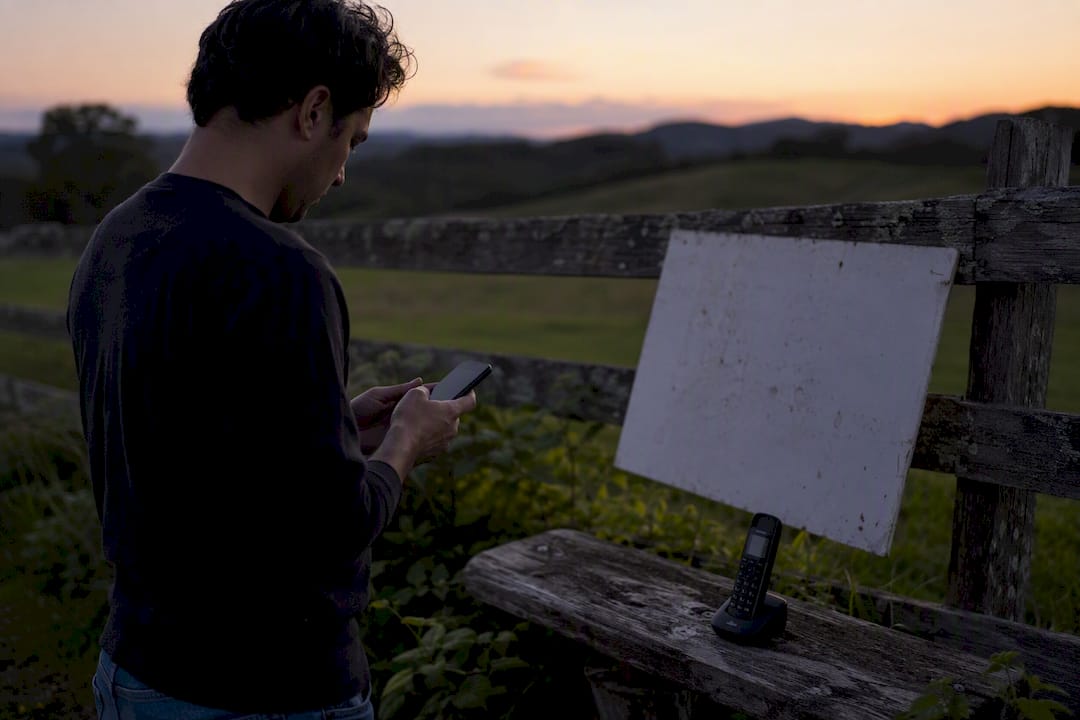
.. The platform's core job is cutting the friction between those two steps: shared records, synced dispositions, one place to see who's already been reached..
How Campaignbuddyhq Runs Combined Outreach Programs
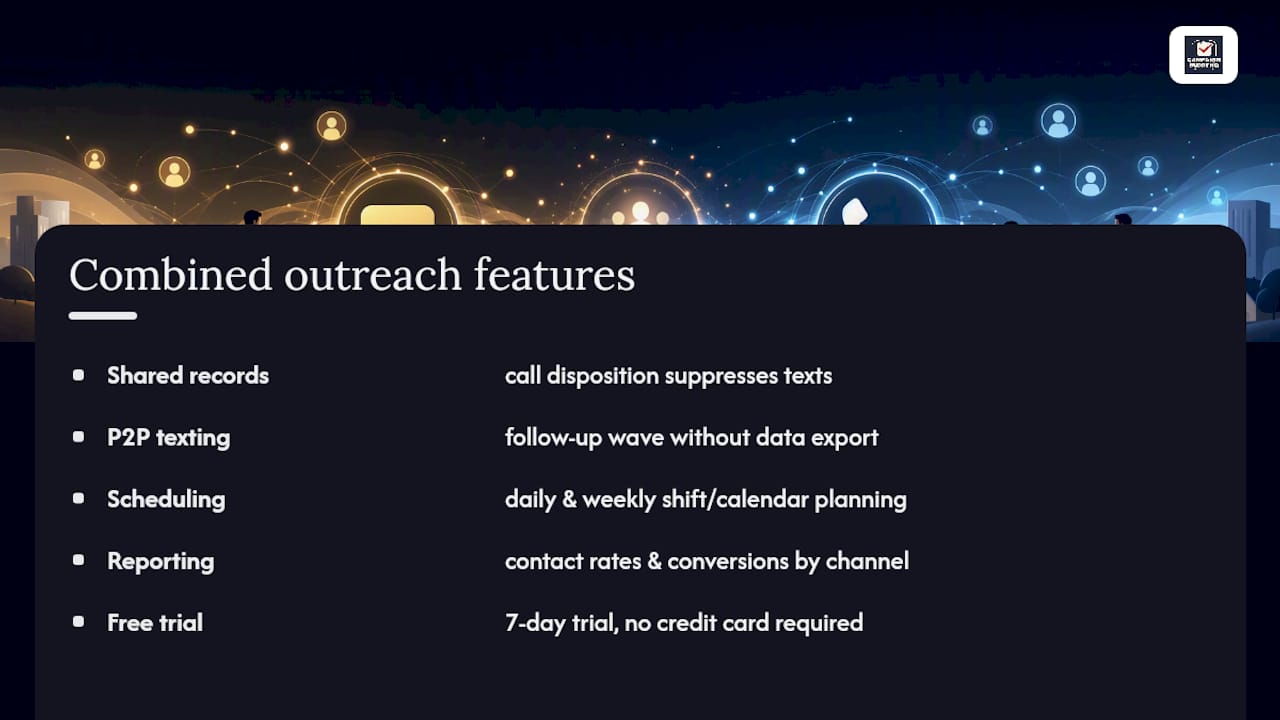
Campaignbuddyhq is built for campaigns that want the call-then-text sequence without stitching together two separate tools. Shared contact records mean a call disposition automatically suppresses that person from your text queue, and P2P texting support handles the follow-up wave without a second data export.
The platform adds daily and weekly scheduling, so a volunteer coordinator can plan phone bank shifts and text sends around the same calendar instead of two disconnected ones, plus reporting that shows contact rates and conversions by channel side by side. Every campaign gets a 7-day free trial with no credit card required, enough time to run one real sequencing test on your own list. If you want the fuller playbook first, the field guide on voter contact approaches walks through setup. Otherwise, start your free trial and load your first target list today.
Frequently Asked Questions
Is texting or calling better for political campaigns? Neither wins outright. Texting is better for scale, speed, and reminders; calling is better for persuasion and complex conversations with identified persuadable voters.
How many contacts can a volunteer make texting versus calling per hour? Text bankers using P2P tools often reach 60 to 120 contacts an hour, according to practitioner benchmarks, while phone banking throughput runs meaningfully lower because of voicemail and no-answer rates.
Do I need to register for 10DLC to send campaign texts? Yes, mass SMS sending generally requires 10DLC registration along with clear opt-out language in every message; consult campaign counsel for your specific setup.
Does texting actually move undecided voters? Texting is more effective for turnout and reminders than for deep persuasion.
What's the best way to combine texting and calling? Call first, log the disposition, then text everyone you didn't reach live. Flip the order only for time-sensitive rapid response where speed outweighs depth.
Sources
- Unresponsive and unpersuaded: unintended consequences of voter persuasion effort (Kalla & Broockman summary)
- The effects of SMS mobilization, message, and timing on voter turnout (Political Behavior, 2026)
- Phone banking vs text banking: When to use each channel (CallHub blog)