
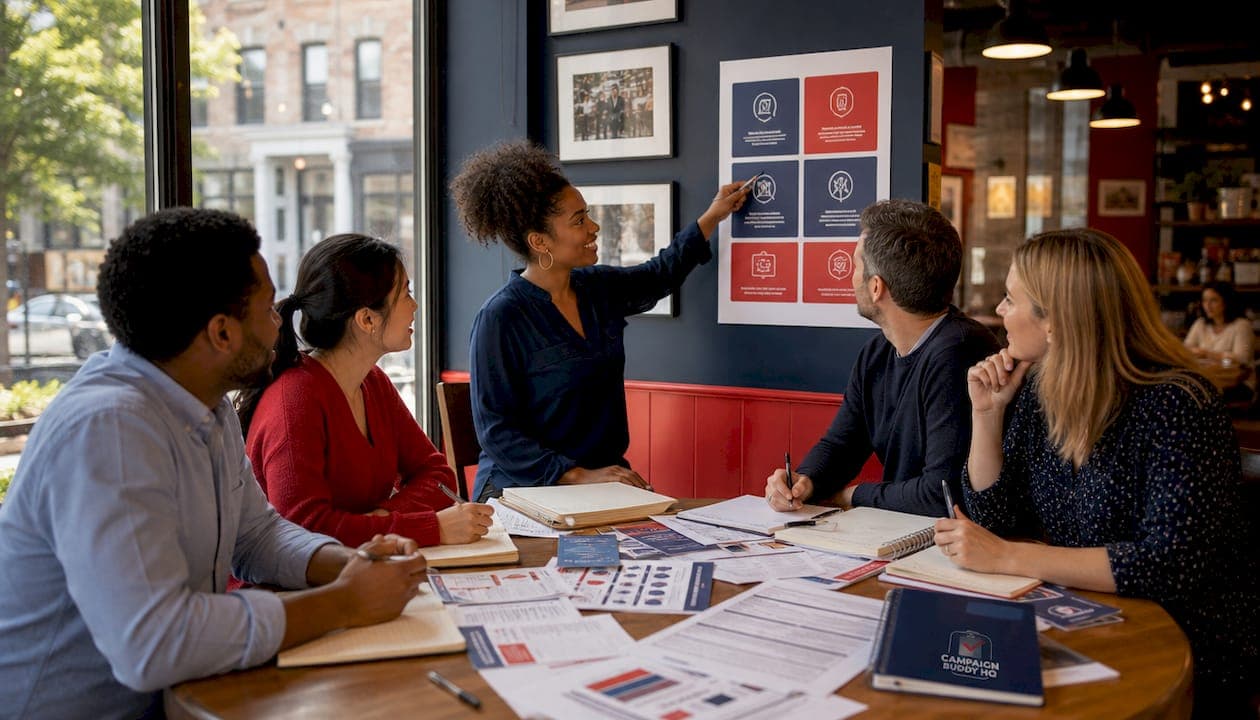
Campaign voter contact approaches are defined as coordinated, multi-channel efforts to reach voters through relational organizing, texting, phone calls, and door conversations in a deliberate sequence. The most effective programs do not rely on a single tactic. Layered voter contact outperforms isolated outreach because each interaction builds on gathered data, deepens trust, and moves voters closer to commitment. Campaignbuddyhq is built around this exact model, giving campaign teams the tools to track every contact, update voter records in real time, and sequence outreach for maximum impact.
What are the top campaign voter contact approaches for effective engagement?
The strongest voter outreach strategies combine five core methods: relational organizing, peer-to-peer texting, door-to-door canvassing, phone banking, and digital follow-ups. No single method wins elections alone. Coordinated, layered contact consistently produces higher persuasion and turnout rates than any isolated tactic.
The logic is straightforward. A voter who receives a text from a neighbor, a knock at the door from a volunteer, and a follow-up call from the campaign is far more likely to act than a voter who receives one mailer. Each contact reinforces the last. The channel mix also matters because different voters respond to different formats.
Trusted messengers are the force multiplier in this system. A friend asking you to vote carries more weight than a stranger reading from a script. Campaigns that identify and activate trusted community voices inside their voter universe gain a structural advantage that volume alone cannot replicate.
- Relational organizing activates existing relationships to identify and persuade voters through trusted networks.
- Peer-to-peer texting reaches large audiences fast and gathers first-party response data.
- Door-to-door canvassing creates the deepest commitment through face-to-face conversation.
- Phone banking reinforces prior contacts and drives get-out-the-vote (GOTV) action.
- Digital follow-ups (email, voicemail drops) fill gaps between live contacts and keep the campaign top of mind.
Pro Tip: Build your contact sequence around the voter, not the calendar. Start with relational outreach to identify supporters, then layer in texting, canvassing, and calls based on each voter's response history.
1. Relational organizing as the foundation of voter trust
Relational organizing is defined as friend-to-friend and neighbor-to-neighbor outreach, where volunteers contact people in their own social networks rather than strangers on a list. This method identifies supporters and persuadable voters through relationships that already carry credibility. The trust built in this phase makes every subsequent contact more effective.
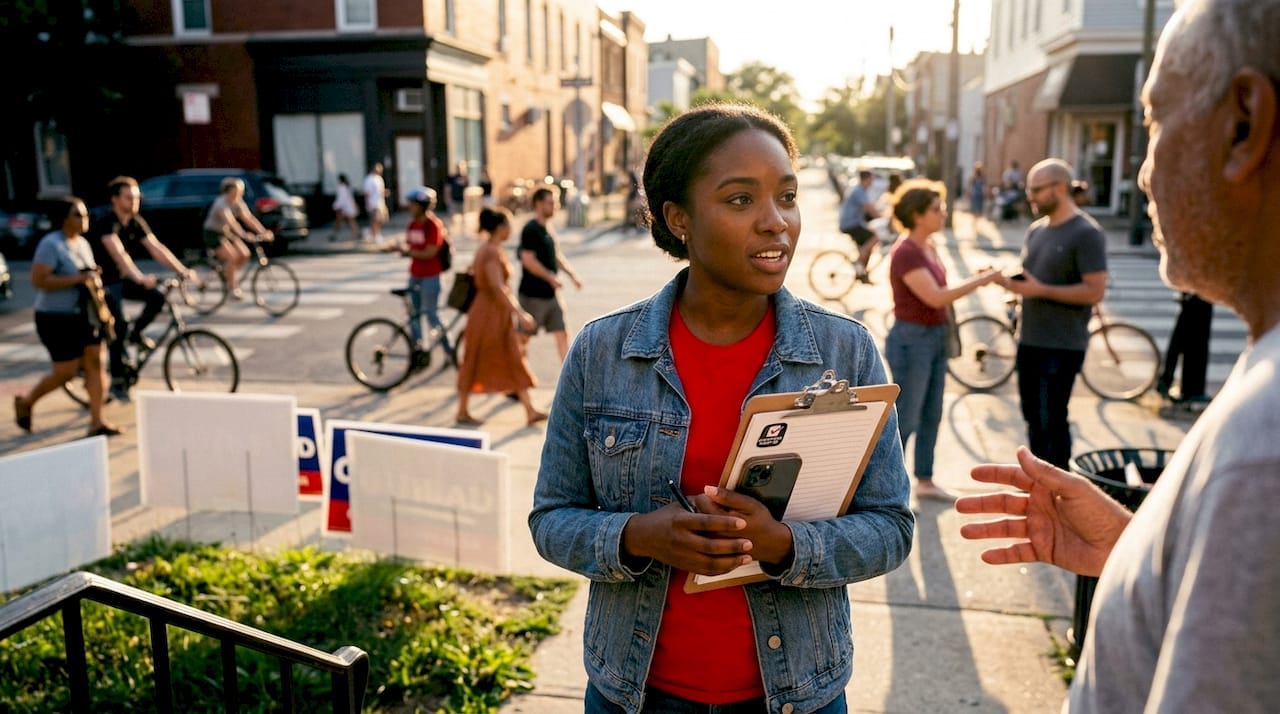
The practical mechanics are simple. Volunteers share a short list of people they know, mark each person's likely support level, and report back after conversations. Those responses update the voter file and inform which doors to knock and which numbers to call next. Without this foundation, campaigns waste resources contacting voters who are already committed or firmly opposed.
Relational organizing also surfaces the campaign's best volunteer recruiters. People who can move their social networks are more valuable than high-volume phone bankers who work cold lists. Identifying them early and giving them a clear role pays dividends through every phase of the campaign.
Metrics worth tracking in this phase include:
- Number of voters contacted through personal relationships
- Support level recorded for each contact (strong support, lean support, undecided, lean oppose)
- Volunteer recruitment rate from relational conversations
- Percentage of relational contacts who later respond to texting or calls
A strong step-by-step outreach guide can help campaign teams structure this phase so no conversation goes unrecorded.
2. Texting for speed, scale, and first-party data
Text messages carry a 90% read rate within five minutes, making texting the fastest way to reach voters at scale. That speed advantage is not just about delivery. It means campaigns get response data almost immediately, which updates the voter file and guides the next contact.
Timing and message content determine whether texting helps or hurts. Texts sent before 9:00 AM or after 8:00 PM generate complaints and opt-outs. Messages longer than two sentences lose readers. The best texts ask one clear question or make one direct ask, then stop.
Response management is where most campaigns fall short. A text program that sends 10,000 messages but has no one monitoring replies wastes the data advantage entirely. Assign volunteers to response shifts and build a decision tree for common replies: yes, no, maybe, wrong number, and stop.
Pro Tip: Use texting to confirm canvassing appointments and follow up on no-answer calls. A text sent within 30 minutes of a missed call doubles the chance of a callback.
Coordinating texting with phone calls and emails prevents contact fatigue. Multi-channel sequencing based on each voter's response keeps outreach relevant and reduces the chance a voter opts out entirely.
3. Door-to-door canvassing for deep commitment
Door-to-door canvassing is the most labor-intensive voter engagement technique, and it produces the strongest commitment signals when done correctly. The critical distinction is between a door attempt and a persuasive conversation. Knocking a door and leaving a flyer is not canvassing. A two-minute conversation that surfaces a voter's top concern and connects it to the candidate is canvassing.
Prioritizing doors using relational and digital signals before canvassing begins separates high-performing programs from average ones. Canvassers should work lists of undecided and low-propensity voters who have already received a text or relational contact. That prior touch makes the door conversation warmer and the commitment ask more natural.
Strong door conversations share three attributes. The canvasser listens more than they talk. They connect the candidate's position to something the voter already cares about. They end with a specific commitment ask, such as "Can I count on you to vote on November 3rd?" Recording that commitment in real time, before leaving the porch, is what makes the data useful.
Sequencing canvassing after digital and relational outreach maximizes the return on volunteer hours. Voters who have already heard from someone they trust are more receptive at the door. Campaigns that send canvassers cold, with no prior contact on record, consistently underperform.
4. Phone banking as layered reinforcement
Phone banking serves three distinct goals depending on the campaign phase: voter identification (voter ID), persuasion, and GOTV mobilization. Treating all three as the same call with the same script is a common mistake. Each goal requires a different conversation, a different list, and a different success metric.
Phone banking programs produce the best results when calls are sequenced with immediate follow-up texts for no-answers, and when voter files update in real time after each call. Campaigns that synchronize calls and texts outperform siloed programs by raising contact rates and reducing voter annoyance.
The three call types and their primary goals:
- Voter ID calls ask support level and top issues. The goal is data, not persuasion.
- Persuasion calls use the voter's recorded concerns to make a targeted case for the candidate.
- GOTV calls confirm voting plans: polling location, transportation, and time of day.
List management is as important as scripting. Calling a strong supporter with a persuasion script wastes a volunteer's time. Calling a firm opponent with a GOTV script is worse. Suppression logic, which removes already-contacted or committed voters from active call lists, keeps programs efficient.
Pro Tip: After every phone banking session, update your voter file before the next session begins. Stale data is the single biggest drag on phone program efficiency.
5. Digital follow-ups and ringless voicemail
Digital follow-ups fill the gaps between live contacts and keep the campaign present without demanding a response. Email works best for detailed messages: event invitations, policy explainers, and donation asks. It is not a substitute for live contact, but it reinforces the campaign's presence between canvassing and phone banking waves.
Ringless voicemail messages appear on a voter's lock screen as a missed call notification with a recorded voice message, without interrupting the recipient. This format works well for GOTV reminders and event announcements because it feels personal without requiring a live volunteer. Strategic timing, such as the evening before Election Day, increases the chance a voter listens before heading to the polls.
The key rule for digital follow-ups is relevance. A voter who has already confirmed their support should not receive a persuasion email. A voter who has not yet been contacted live should not receive a GOTV text. Real-time voter data updates make this kind of targeting possible and prevent the repetitive messaging that drives opt-outs.
6. Multi-mode programs and what the data shows
A multi-mode voter contact program combining text ID and live calls helped campaigns win 18 of 19 state legislative races in a six-week program. That result reflects what the data consistently shows: combining channels improves targeting and turnout efficiency in ways that single-channel programs cannot match.
The mechanism is straightforward. Text ID calls identify supporters quickly and cheaply. Live calls then focus only on persuadables and low-propensity supporters. Canvassers work the highest-priority doors. Each layer narrows the target universe and raises the quality of every subsequent contact.
Campaigns are shifting from asking "How many doors did we knock?" to asking "How many layered contacts did each voter receive from trusted sources?" That shift reflects a maturation in how campaigns measure effectiveness. Volume metrics feel productive but often mask inefficiency. Contact quality, measured by support level changes and commitment rates, is the metric that predicts outcomes.
Smaller campaigns can run multi-mode programs without large budgets. The requirement is not money. It is discipline: record every contact, update the file after every session, and sequence the next outreach based on what you learned. Campaignbuddyhq is designed to make that discipline manageable for teams of any size, including those working rural and low-density communities where every contact counts more.
Key takeaways
Effective voter mobilization requires layered, multi-channel contact where each interaction builds on the last, guided by real-time voter data and trusted-source relationships.
| Point | Details |
|---|---|
| Layer contacts deliberately | Sequence relational outreach, texting, canvassing, and calls so each builds on the last. |
| Prioritize quality over volume | Track layered contacts per voter, not just total doors knocked or calls made. |
| Update voter files in real time | Stale data causes wasted contacts and drives voter opt-outs across every channel. |
| Use trusted messengers first | Relational organizing builds the trust that makes every subsequent contact more effective. |
| Match the channel to the goal | Use texts for speed and data, calls for persuasion and GOTV, and doors for deep commitment. |
Why most campaigns still get voter contact wrong
Campaigns consistently make the same mistake: they treat voter contact as a volume problem instead of a sequencing problem. I have watched well-funded campaigns burn through volunteer hours knocking every door in a precinct with no prior data, no relational foundation, and no follow-up plan. The result is a lot of activity that produces very little movement.
The shift that actually changes outcomes is moving from channel-by-channel thinking to voter-by-voter thinking. The question is not "Did we run a texting program?" The question is "What has this specific voter received, how did they respond, and what is the right next contact?" That reframe changes everything about how you build lists, train volunteers, and measure success.
Smaller campaigns often assume layered outreach is only for well-resourced operations. That is wrong. A team of ten disciplined volunteers with a clear sequence and a shared voter file will outperform a disorganized team of fifty. The 2026 outreach trends confirm this: campaigns that invest in process and data discipline consistently outperform those that invest only in headcount.
The uncomfortable truth is that most campaigns do not fail because of a lack of effort. They fail because effort is not coordinated. Every contact that goes unrecorded is a wasted opportunity to make the next contact smarter.
— Billy
How Campaignbuddyhq supports layered voter outreach
Running a coordinated, multi-channel voter contact program requires one place where every call, text, door knock, and relational conversation gets recorded and acted on.
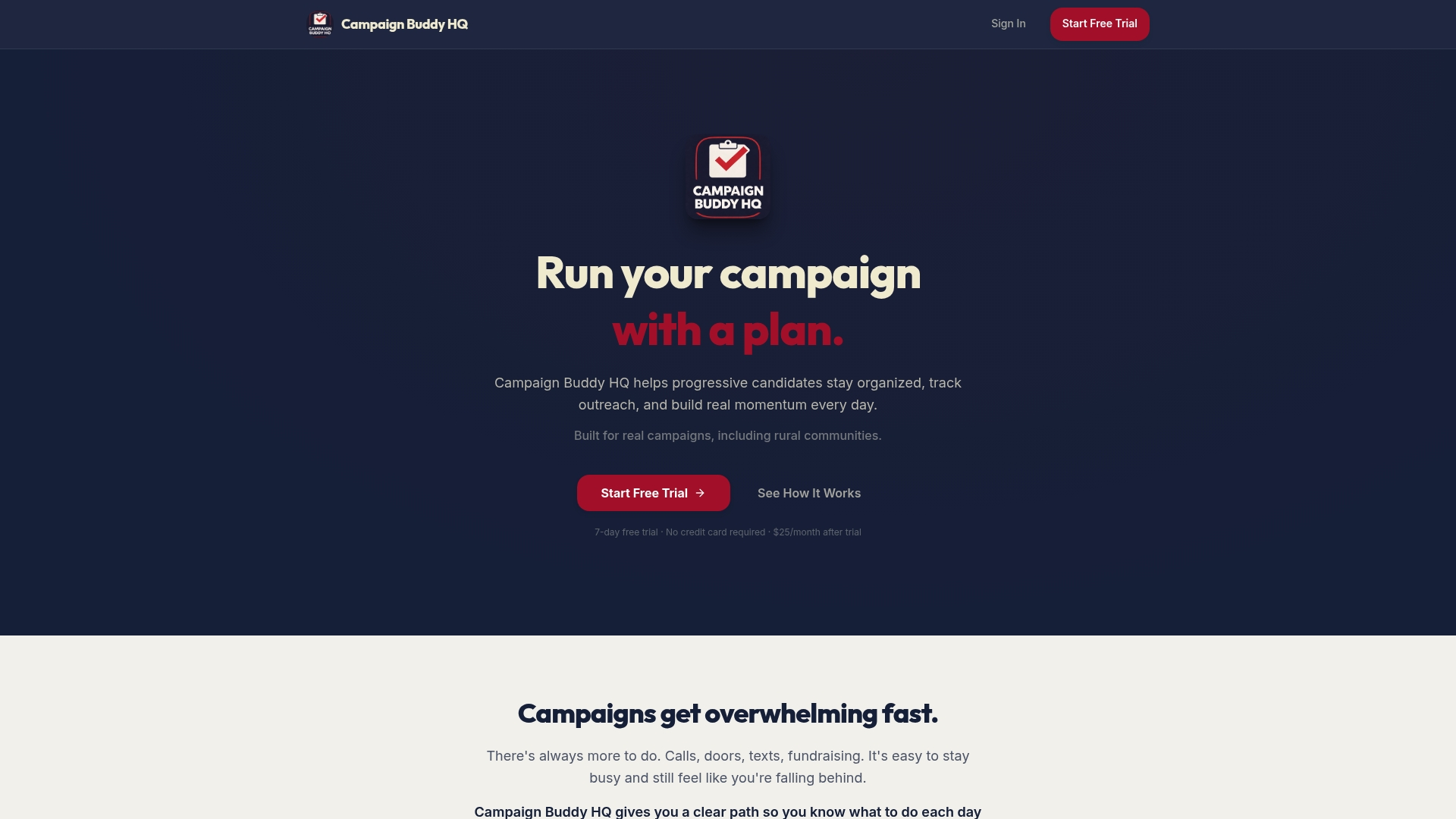
Campaignbuddyhq gives campaign teams a single platform to log outreach across all channels, track support levels, and sequence contacts based on real-time voter responses. Its suppression logic removes already-committed voters from active lists automatically, so volunteers always work the right universe. The platform is built for real-world campaign conditions, including rural and low-density areas where contact efficiency matters most. A free 7-day trial requires no credit card, making it accessible for campaigns at any stage of their volunteer-driven outreach program.
FAQ
What are campaign voter contact approaches?
Campaign voter contact approaches are coordinated methods used to reach and persuade voters, including relational organizing, texting, door-to-door canvassing, phone banking, and digital follow-ups. The most effective programs layer these methods in sequence based on each voter's response history.
Why does layering voter contact methods matter?
Layered contact programs outperform single-tactic efforts because each interaction builds trust and updates voter data, making the next contact more targeted and more likely to change behavior.
How many contacts does a voter need before acting?
No universal number applies to every race, but research consistently shows that voters who receive multiple contacts from trusted sources across different channels are significantly more likely to commit and turn out than those who receive a single contact.
What is the best first step in a voter contact program?
Relational organizing is the best starting point because it identifies supporters and persuadables through trusted relationships, producing higher-quality data than cold list outreach and warming voters for every subsequent contact method.
How do campaigns avoid contact fatigue?
Adaptive multi-channel sequencing based on each voter's response prevents repetitive messaging. Suppression logic that removes committed or opted-out voters from active lists keeps outreach relevant and reduces the chance voters disengage entirely.