

A well-built volunteer onboarding checklist does three things at once: it protects your campaign legally, gets volunteers productive fast, and keeps them coming back. Without a standardized process, you lose people to confusion before they ever knock a door. Here is what every campaign manager needs to cover, in order.
Core onboarding elements:
- Volunteer application and role-based screening
- Consent forms, liability waivers, and confidentiality agreements
- Background checks for sensitive or leadership roles
- Mission orientation and role expectations briefing
- Systems access setup (canvassing apps, CRM, communication tools)
- Role-specific training matched to the volunteer's assignment
- Facility tour, safety procedures, and emergency contacts
- Supervisor or point-of-contact introduction
- Schedule confirmation and reporting structure explanation
- 30/60/90-day check-in schedule for ongoing engagement
Treating onboarding as a control system rather than a welcome packet is what separates campaigns that retain volunteers from those that constantly recruit replacements. Every step above creates an audit trail, sets expectations, and reduces liability during intense pre-election campaign periods.
Table of Contents
- How to screen volunteers and collect the right documentation
- How to set up systems access before a volunteer's first shift
- How to train volunteers and connect them to the campaign mission
- How to build volunteer relationships that last past the first shift
- Health and safety protocols every campaign should cover
- Key Takeaways
- Put your onboarding process on a platform built for campaigns
How to screen volunteers and collect the right documentation
Screening is not a wall you put in front of volunteers. It is a filter you design into the intake flow from the start, so the right people reach the right roles without friction.
Application and intake steps:
- Use a digital application form that captures contact info, availability, skills, and preferred roles
- Trigger role-based screening requirements automatically based on the position selected
- Present background check disclosure and authorization as a standalone step with plain language, not buried in a general form
- Verify references for leadership or high-responsibility roles before assignment
- Collect a signed liability waiver, photo and media release, and code of conduct acknowledgment
- Gather emergency contact information during intake, not on the first shift
- Create a volunteer file immediately and track document completion status in your system
- Apply start-date controls so no volunteer enters a sensitive role before required checks clear
The Fair Credit Reporting Act governs how campaigns handle background check authorizations. Staff need to understand proper disclosure, authorization, and the steps required if a check affects placement. Tiering background checks by role risk level keeps your initial sign-up rate healthy while protecting the campaign where it counts most.
Pro Tip: Send a warm, personalized confirmation within 24 hours of sign-up. Name the next two or three steps clearly. That single message reduces early drop-off more than any reminder sequence you can build later.
How to set up systems access before a volunteer's first shift
The fastest way to waste a volunteer's first hour is to hand them a login they cannot use. Pre-shift access setup prevents that entirely.
Systems and facility access checklist:
- Set up CRM access, canvassing app credentials, and communication platform invitations based on the volunteer's specific role
- Send login instructions and training materials at least 24 hours before the first shift so volunteers arrive ready
- Issue an ID badge or name tag before or on arrival
- Complete a facility tour covering entrances, parking, restrooms, and emergency exits
- Review evacuation routes and emergency procedures during the tour
- Confirm the volunteer's access privileges match their role requirements, nothing more
- Add the volunteer to the correct communication channels (team group chats, shift reminders, organizer contacts)
- Log all access grants in the volunteer's file for audit purposes
Automated workflows that push login details and pre-shift content through SMS the day before a canvas shift eliminate the password-reset delays that kill early momentum. Your organizers should spend that first hour building relationships, not troubleshooting access issues.
How to train volunteers and connect them to the campaign mission
Training that ignores the "why" produces volunteers who show up once. Training that connects the role to the mission produces volunteers who recruit their friends.
Role-specific training steps:
- Open orientation by answering three questions: why does this campaign exist, why does this role matter, and what should the volunteer expect next
- Match training format to the role: shadow shifts and practice loops for canvassers, guided walkthroughs and scripts for phone bankers, scenario discussions for high-empathy roles like voter registration
- Use supervised observation before any volunteer works independently
- Cover role-specific expectations including responsibilities, boundaries, reporting structure, and what the volunteer cannot do
- Include cultural sensitivity and inclusion training as a standard part of orientation, not an optional add-on
- Complete child protection or mandatory reporter training for any youth-facing roles and document completion
- Run a readiness check before the first independent shift: did the volunteer complete training, do they know their supervisor, do they feel clear on the role?
- Track training completion dates and any certification expiration dates in the volunteer file
Good role descriptions define purpose, time commitment, required skills, boundaries, and what the volunteer gains from the experience. Vague descriptions attract vague commitments. Write them to screen people in and screen people out before orientation even begins.
How to build volunteer relationships that last past the first shift
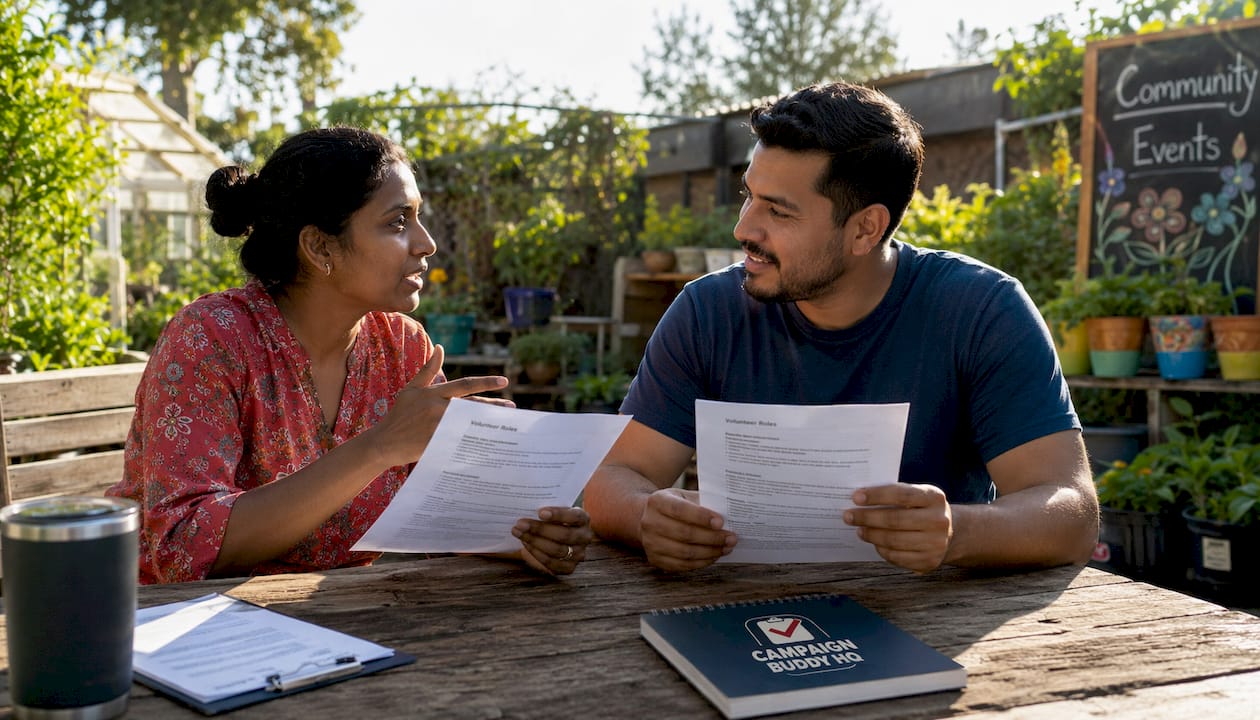
Logistics get volunteers to the first shift. Relationships get them to the tenth. The campaigns that win in November are usually the ones that figured this out in the spring.
Engagement and relationship-building steps:
- Assign every volunteer a named point of contact before their first shift, not a general inbox
- Send a personalized thank-you after the first shift that names the specific impact of their work
- Schedule brief check-ins at 30, 60, and 90 days to catch drift before it becomes dropout
- At day 30, ask direct questions about the first shift: what felt unclear, what felt good, what needs fixing
- At day 60, watch for attendance drift and late cancellations. Those patterns show up before formal dropout does
- At day 90, review role satisfaction, reliability, and interest in expanded responsibilities
- Automate confirmations, reminders, and document collection. Keep human the conversations that actually matter
- Create feedback channels so volunteers can express needs and preferences without waiting for a formal check-in
- Invite volunteers into the campaign community through social events, team updates, and mission impact stories
Relational onboarding treats volunteers as mission partners, not operational resources. Campaigns that build this culture early see higher retention and stronger word-of-mouth recruitment. You can find additional volunteer engagement strategies that reinforce this approach throughout the campaign cycle.
Pro Tip: Automate the logistics, but never automate the relationship. A text from a real organizer after a tough canvass shift does more for retention than any drip sequence. Use the time automation saves to have those conversations.
Health and safety protocols every campaign should cover
Safety briefings are not optional, and they are not a formality. A volunteer who gets hurt on a shift because no one covered emergency procedures is a liability and a human failure.
Cover these during orientation and document completion for each volunteer:
- Review emergency evacuation routes and exit locations for every physical site volunteers work from
- Identify the first aid kit location and the designated person to contact in a medical situation
- Explain the incident reporting process so volunteers know exactly what to do if something goes wrong
- Brief canvassers on personal safety protocols for door-to-door work, including how to handle aggressive contacts and when to leave a situation
- Address any physical requirements for the role upfront and ask proactively about accessibility needs
- Confirm that volunteers working in extreme weather conditions (summer canvassing, outdoor events) know hydration and heat safety basics
- Document that each volunteer received the safety briefing, with a signature or digital acknowledgment
For campaigns using volunteer coordination tools that integrate scheduling and compliance tracking, safety acknowledgments can be captured digitally at intake and stored alongside other onboarding documents. That creates a clean, searchable record if a question ever arises.
Key Takeaways
A complete campaign volunteer onboarding checklist covers screening, documentation, systems access, role training, relational engagement, and safety protocols to protect the campaign and retain volunteers through Election Day.
| Point | Details |
|---|---|
| Screen by role risk level | Tier background checks to protect sensitive roles without killing initial sign-up rates. |
| Send access before the shift | Deliver login credentials and training materials before day one to eliminate first-shift delays. |
| Connect training to mission | Open every orientation with why the role matters, not just what the volunteer will do. |
| Check in at 30, 60, and 90 days | Catch attendance drift and role confusion before they turn into dropout. |
| Document everything | Signed waivers, training completions, and safety briefings create the audit trail that protects your campaign. |
Put your onboarding process on a platform built for campaigns
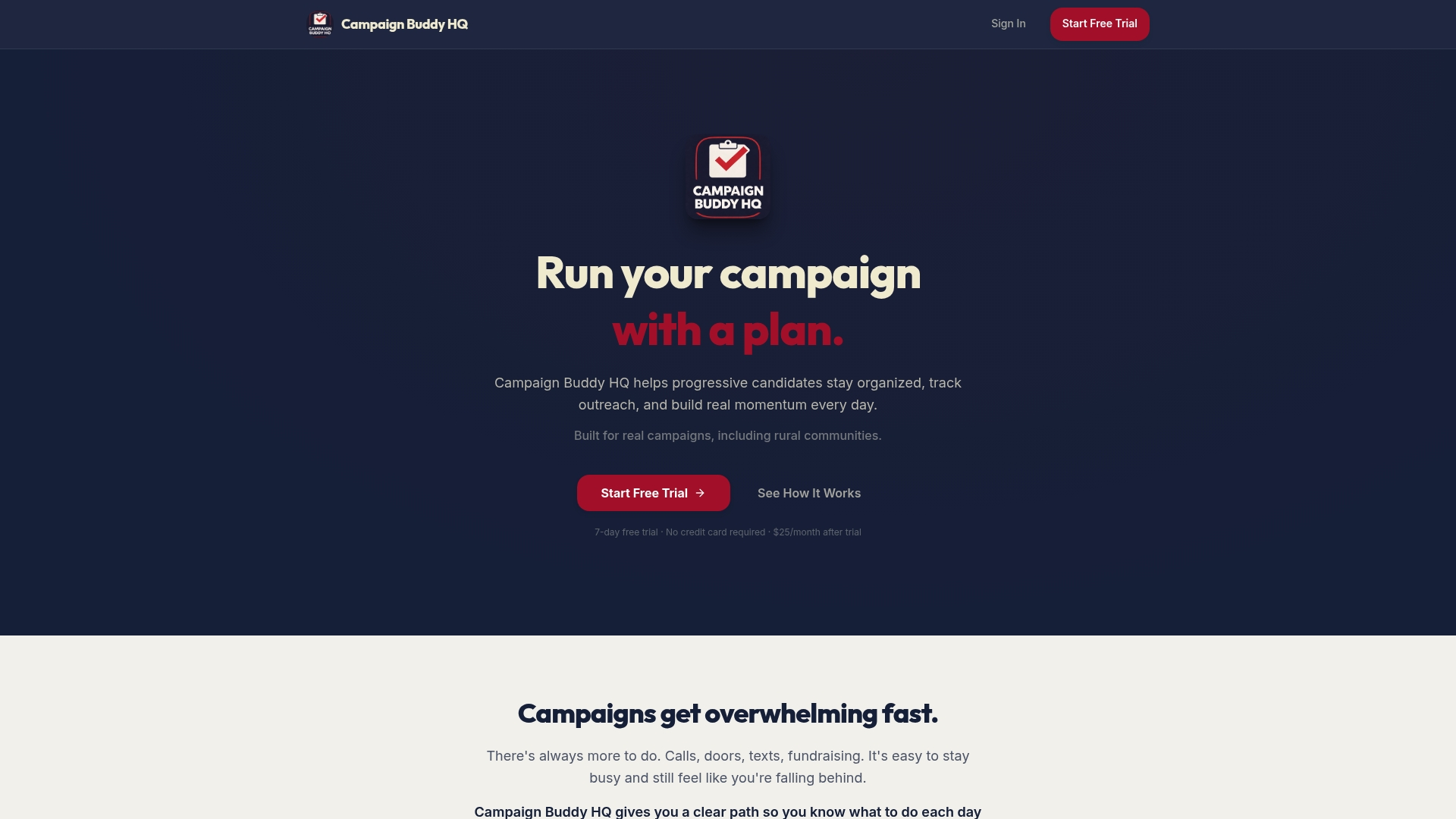
A checklist is only as good as the system running behind it. Campaignbuddyhq gives campaign managers a single platform to track volunteer outreach, log activity, monitor progress toward goals, and keep every organizer aligned from the first canvas shift to Election Day. The campaign management tools include daily and weekly planning, supporter tracking, and outreach logging built specifically for real-world campaign conditions, including rural and low-density communities where coordination is hardest.
Start your free 7-day trial at Campaignbuddyhq. No credit card required.