
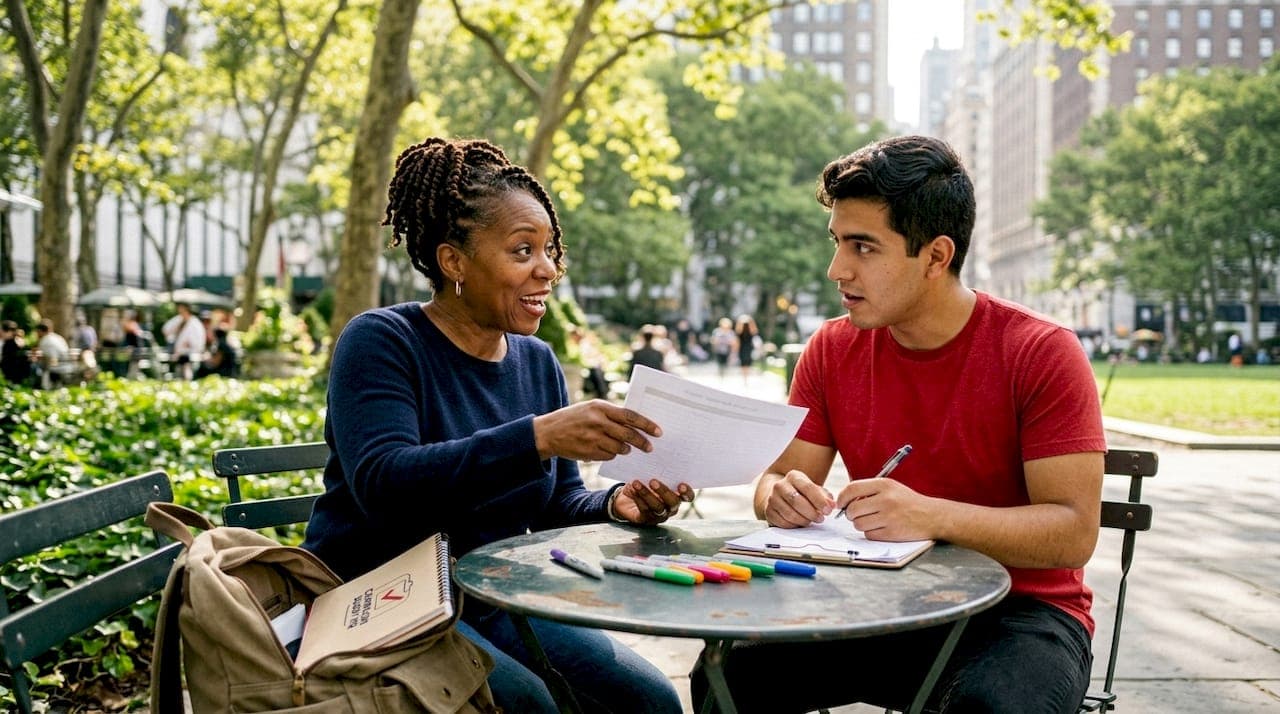
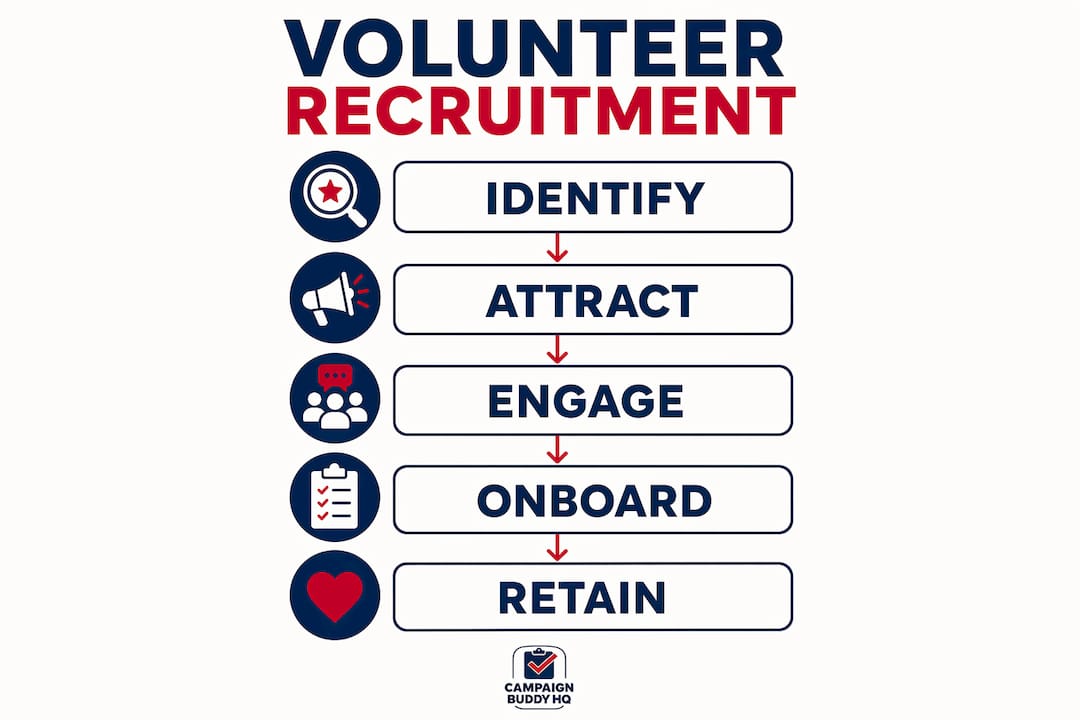
Volunteer recruitment is the process of identifying, attracting, and committing people to specific roles within your campaign or cause. Campaigns that know how to recruit volunteers with clear role definitions and structured outreach consistently outperform those that rely on informal appeals. Nearly 50% of organizations identify finding and retaining volunteer support as a major operational challenge. That number signals a systemic problem, not a people problem. The fix is a repeatable process, not a louder megaphone.
How to recruit volunteers with a high-converting ask
The single biggest reason volunteer recruitment fails is a vague ask. "We need help" is not a volunteer ask. A high-converting ask has four elements, and all four must appear in every message you send.
-
Specific role. Name the exact task. "Phone banker" or "door knocker for the Eastside precinct" is clear. "Volunteer" is not. People commit to concrete things, not abstract causes.
-
Clear time commitment. State the hours and dates upfront. "Saturday, october 4, from 10:00 AM to 1:00 PM" removes the uncertainty that kills sign-ups. Volunteers want to know what they are agreeing to before they say yes.
-
Concrete impact statement. Connect the role to a real outcome. "Your three hours of canvassing will reach roughly 60 households in Ward 7" gives the volunteer a reason to show up. Generic statements like "make a difference" do not move people to act.
-
Frictionless next step. Tell the volunteer exactly what to do next. One link, one phone number, or one reply. Every additional step you add cuts your conversion rate. The path from interest to commitment must be short and obvious.
Compare these two asks side by side. "Join our team and help us win!" produces almost no response. "Sign up to phone bank this Thursday from 6:00 PM to 8:00 PM. You will contact 40 voters in your district. Click here to reserve your spot." produces commitments. The difference is specificity, not enthusiasm.
Pro Tip: Write your volunteer ask out loud before you send it. If you cannot answer "what will I do, when, and for how long" in under 10 seconds, rewrite it.
Which outreach channels work best for finding volunteers?
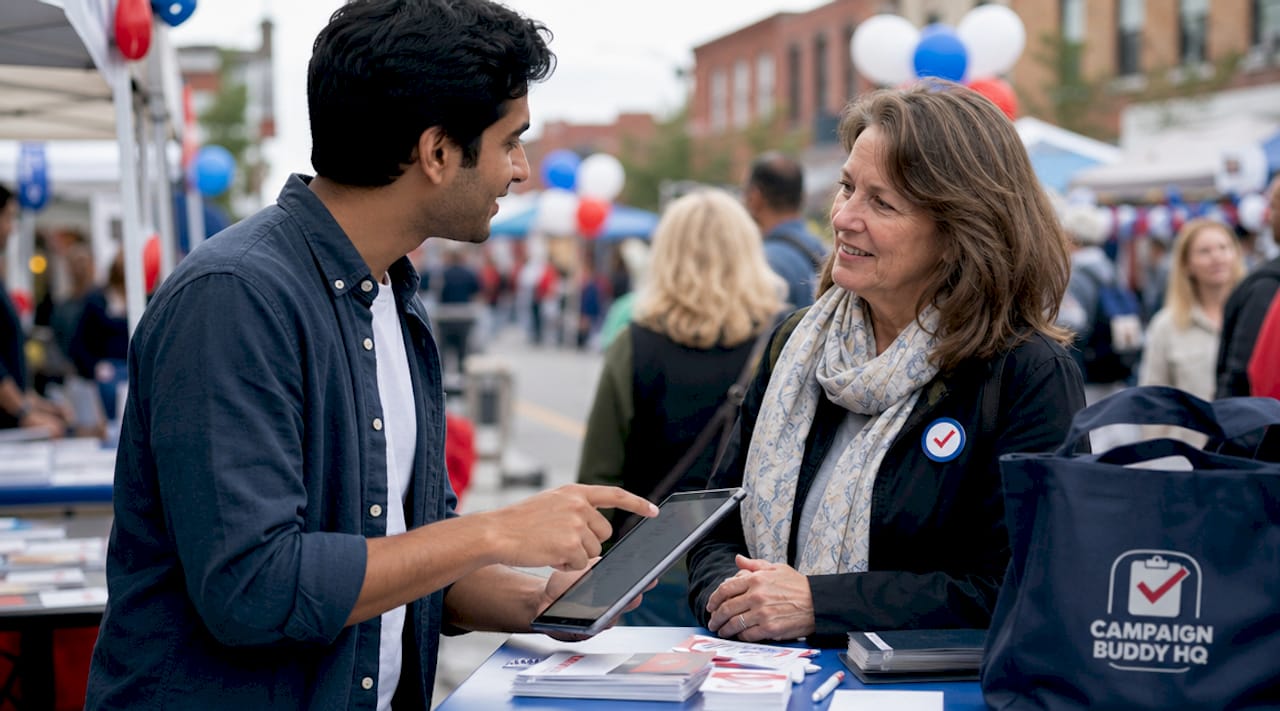
Multi-channel promotion is the most effective recruitment strategy. Campaigns that combine social media storytelling, community partnerships, and personal referrals consistently see higher sign-up rates than those relying on a single channel. No single platform reaches everyone, and your strongest volunteers may be hiding in places you have not looked yet.
The most productive channels for campaign organizers include:
- Social media storytelling. Short videos of volunteers in action outperform text posts. Show real people doing real work. A 60-second clip of a canvasser talking about why they show up every Saturday recruits more effectively than a graphic with a phone number.
- Community partnerships. Local faith communities, labor unions, neighborhood associations, and universities are pre-organized groups of people who already care about something. A single presentation to a college political science class can yield a dozen committed volunteers.
- Referral programs. Existing volunteers are 2–3 times more effective at recruiting friends when specifically asked to bring someone to an event. "Bring-a-friend" events leverage social proof and personal trust in ways no ad campaign can replicate.
- Volunteer platforms and job boards. Sites that connect volunteers with causes attract people who are already motivated to give their time. Listing your specific roles there puts your ask in front of a self-selected audience.
- Email to your existing supporter list. People who have already donated or signed a petition are warm leads. They believe in your cause. A targeted email asking them to take the next step converts at a higher rate than cold outreach.
Pro Tip: Ask every new volunteer, "Is there someone in your life who shares your values and has a few hours to spare?" Then give them a shareable link or a physical flyer to pass along. The ask takes 10 seconds and multiplies your reach.
For more ideas on volunteer attraction methods that combine social media, partnerships, and referrals, campaign organizers have found practical frameworks that translate directly to field work.
How to simplify volunteer sign-up and onboarding
A complicated sign-up form is a recruitment killer. Concise sign-up forms that request only name, email, phone number, relevant skills, and role interest reduce abandonment and increase conversion. Every extra field you add gives a potential volunteer one more reason to close the tab.
| Sign-up mistake | Better practice |
|---|---|
| Asking for full mailing address at sign-up | Collect address only if legally required or role-specific |
| Requiring a detailed biography or essay | Use a single dropdown for role interest instead |
| Sending no confirmation after submission | Send an automated confirmation email within five minutes |
| Waiting days to follow up | Assign a staff contact to reach out within 24 hours |
| Onboarding with a 20-page manual | Use a one-page role sheet and a short welcome call |
Onboarding sets the tone for the entire volunteer relationship. A new volunteer who receives a warm welcome call, a clear one-page role description, and a scheduled first shift within 48 hours of signing up is far more likely to show up than one who receives a PDF and silence. Role clarity that details specific duties and commitment duration reduces burnout and turnover. Volunteers who know exactly what they signed up for report higher satisfaction and stay longer.
Keep your onboarding materials short and visual. A one-page sheet with the volunteer's role, their shift schedule, their point of contact, and the campaign's goal is more useful than a lengthy handbook. Save the deep background for training sessions, not the sign-up stage.
What role does communication play in retaining volunteers?
Consistent, timely communication is the single most underrated retention tool available to campaign organizers. Proactive communication, including prompt thank-you messages and scheduled reminders, significantly improves volunteer retention and trust. Most drop-off happens in the silence between sign-up and first shift.
A practical follow-up sequence looks like this:
- Immediately after sign-up: Send an automated confirmation with the volunteer's role, shift details, and a direct contact name.
- 48 hours later: Send a personal thank-you from the campaign manager or candidate. Keep it short. One paragraph is enough.
- Three days before the first shift: Send a reminder with logistics, parking, what to wear, and who to ask for on arrival.
- Within 24 hours after the first shift: Send a follow-up message acknowledging their contribution and inviting them to the next event.
- Ongoing: Check in monthly with volunteers who are not on active shifts. A brief "we miss you" message with a low-barrier invitation keeps them in the pipeline.
Treating volunteer recruitment as a year-round system rather than a pre-election sprint is what separates campaigns that always have enough people from those that scramble every cycle. Build your communication calendar the same way you build your field calendar. Schedule it, assign ownership, and track it.
For a deeper look at multi-channel communication strategies that keep volunteers engaged across email, text, and social media, the 2026 guide for organizers covers the full picture.
Common pitfalls in volunteer recruitment and how to avoid them
Most recruitment failures trace back to a small set of repeatable mistakes. Recognizing them early saves you weeks of wasted effort.
-
Vague calls to action. "Get involved" and "join us" are not asks. They are suggestions. Every recruitment message must include the four-element framework described earlier: role, time, impact, and next step.
-
Unclear role expectations. Volunteers who show up without knowing what they will do become frustrated and do not return. Write a one-paragraph role description for every position before you recruit for it.
-
Recruiting only during peak periods. Campaigns that recruit only in the final weeks before an election face a talent shortage every single cycle. Successful programs build year-round recruitment calendars and relationship-building cycles that keep the pipeline full.
-
Overloading your best volunteers. When you have a small core of reliable people, the temptation is to give them everything. That leads to burnout. Spread responsibilities deliberately and recruit replacements before you need them.
The campaigns that win are not the ones with the most passionate volunteers. They are the ones with the most organized volunteer systems. Passion without structure burns out. Structure without passion never ignites. You need both, and the structure has to come first.
Billy's take on building a volunteer system that actually scales
The most common mistake I see campaign organizers make is treating volunteer recruitment as an event rather than a system. They run one big push, fill a few shifts, and then wonder why they are starting from scratch three months later. That cycle is exhausting and completely avoidable.
The campaigns I have watched succeed treat their volunteer recruitment strategies the same way a good business treats its sales pipeline. They track who is in it, where each person is in the process, and what the next step is. They do not rely on memory or spreadsheets held together with hope.
Technology matters here, but not in the way most people think. The tool is not the strategy. The strategy is the year-round calendar, the clear role descriptions, the follow-up sequences, and the referral asks. The tool just makes sure none of that falls through the cracks. If you are managing more than 20 volunteers without a system, you are already losing people you do not know you have lost.
Start small. Write role descriptions for your three most critical volunteer positions. Build a two-week follow-up sequence. Ask every current volunteer for one referral. Those three actions alone will outperform any recruitment blast you have ever sent.
— Billy
Campaignbuddyhq makes volunteer management less chaotic
Recruiting volunteers is only half the work. Keeping them organized, tracking their activity, and following up consistently is where most campaigns fall apart.
Campaignbuddyhq is built for exactly this kind of work. The platform gives campaign organizers tools to log outreach activity, track volunteer engagement, plan daily and weekly schedules, and monitor progress toward campaign goals. It is designed for real-world conditions, including rural and low-density communities where every volunteer counts twice as much. Whether you are managing a first-time candidate's grassroots effort or a multi-district issue advocacy campaign, Campaignbuddyhq gives you the structure to recruit, retain, and deploy volunteers without losing anyone in a spreadsheet. A free 7-day trial requires no credit card.
FAQ
What is the most effective way to ask someone to volunteer?
The most effective volunteer ask includes four elements: a specific role, a clear time commitment, a concrete impact statement, and a single frictionless next step. Vague asks like "get involved" produce significantly lower sign-up rates than specific, time-bound requests.
How many fields should a volunteer sign-up form have?
A volunteer sign-up form should collect only name, email, phone number, relevant skills, and role interest. Longer forms increase abandonment rates and reduce overall volunteer conversion.
How do you keep volunteers from dropping off after they sign up?
Send a confirmation immediately after sign-up, a personal thank-you within 48 hours, and a logistics reminder three days before the first shift. Proactive communication sequences significantly improve retention and reduce no-shows.
When should a campaign start recruiting volunteers?
Campaigns should recruit year-round, not just in the weeks before an election. Programs that build sustained recruitment calendars and relationship-building cycles maintain a fuller pipeline and avoid the last-minute scramble that leads to burnout.
How can existing volunteers help recruit new ones?
Existing volunteers are 2–3 times more effective at recruiting friends when specifically asked to bring someone to an event. "Bring-a-friend" events and direct referral asks are among the most efficient recruitment tactics available to campaign organizers.
Key Takeaways
Effective volunteer recruitment requires a year-round system built on clear role definitions, multi-channel outreach, and consistent follow-up communication.
| Point | Details |
|---|---|
| Use the four-element ask | Every recruitment message needs a specific role, time commitment, impact statement, and one clear next step. |
| Combine multiple channels | Social media, community partnerships, and referral programs together outperform any single outreach method. |
| Keep sign-up forms short | Collect only five fields at sign-up to reduce abandonment and increase volunteer conversion. |
| Follow up immediately | Send a confirmation, a thank-you, and a pre-shift reminder to prevent drop-off after sign-up. |
| Recruit year-round | Campaigns with sustained recruitment calendars avoid the last-minute scramble and maintain stronger volunteer pipelines. |