
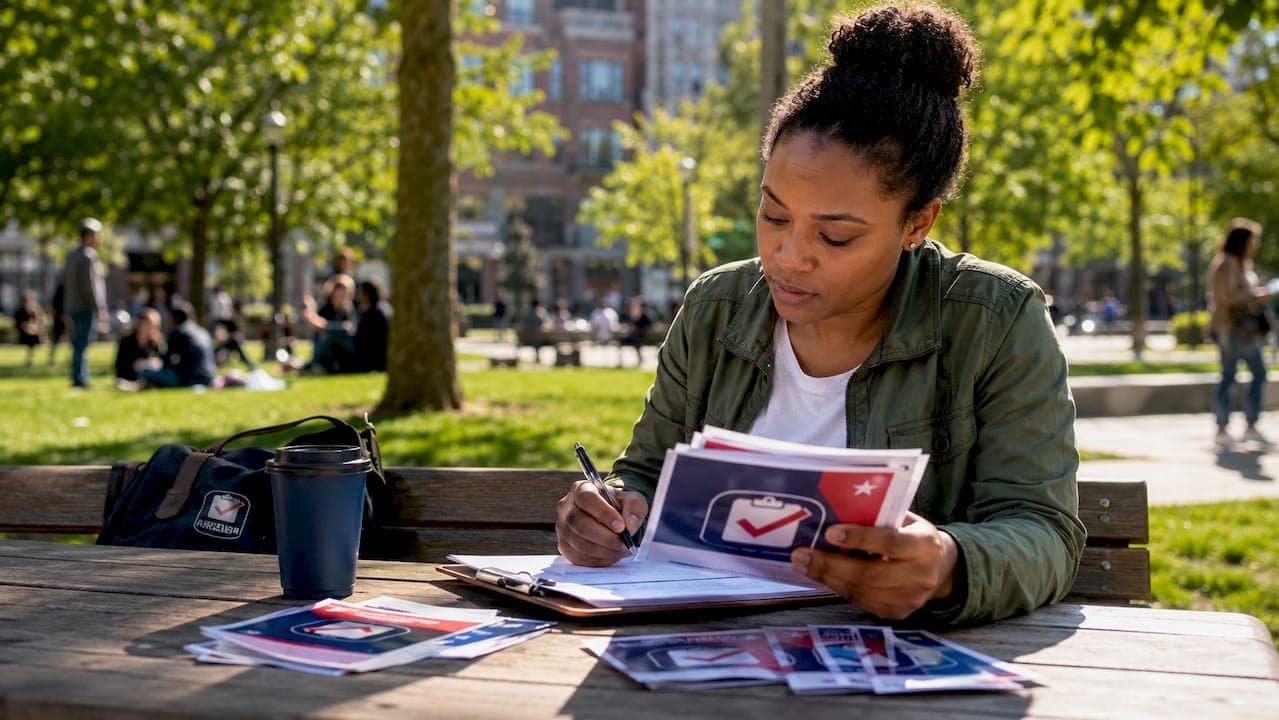
Progressive campaigning is the use of organized, values-driven voter outreach and persuasion strategies that prioritize policy goals like economic justice, racial equity, climate action, and healthcare access, translating those goals into messages that mobilize people to vote, volunteer, and register. Unlike conventional campaign models that treat voter contact as a numbers game, progressive campaigning treats every conversation as a relationship worth building. The DNC's 2026 Organizing Re-Model formalizes this shift, pushing campaigns to integrate digital outreach, coalition work, and field organizing into a single, coherent strategy. If you are a candidate, activist, or organizer trying to understand what this approach actually demands, this guide covers the principles, tactics, and tools that define it.
What is progressive campaigning and what does it stand for?
Progressive campaigning is defined as an organized effort to advance progressive political movements by combining electoral strategies with movement-building tactics. The goal is not just to win a single election. It is to shift public attitudes, build lasting community power, and create conditions for durable policy change.
The core policy areas that drive this work include:
- Economic justice: Closing wage gaps, expanding labor protections, and addressing wealth inequality through policy and organizing.
- Racial equity: Dismantling systemic barriers in housing, education, criminal justice, and healthcare that disproportionately affect communities of color.
- Climate action: Advancing clean energy policy, environmental regulation, and climate resilience at every level of government.
- Healthcare access: Expanding coverage, reducing costs, and treating healthcare as a public good rather than a market commodity.
- Social inclusion: Protecting voting rights, LGBTQ+ rights, and immigrant rights as non-negotiable pillars of democratic participation.
Progressive movements blend national organizations like the ACLU and Sierra Club with local grassroots efforts, mixing research, legal work, and community organizing across government levels. This decentralized structure means no single group controls the agenda. It also means campaigns must build coalitions deliberately rather than assuming alignment. The definition of progressive campaigning, then, is not just about ideology. It is about infrastructure: who you organize with, how you talk to voters, and what you measure.
Which strategies and tactics define effective progressive campaigns?
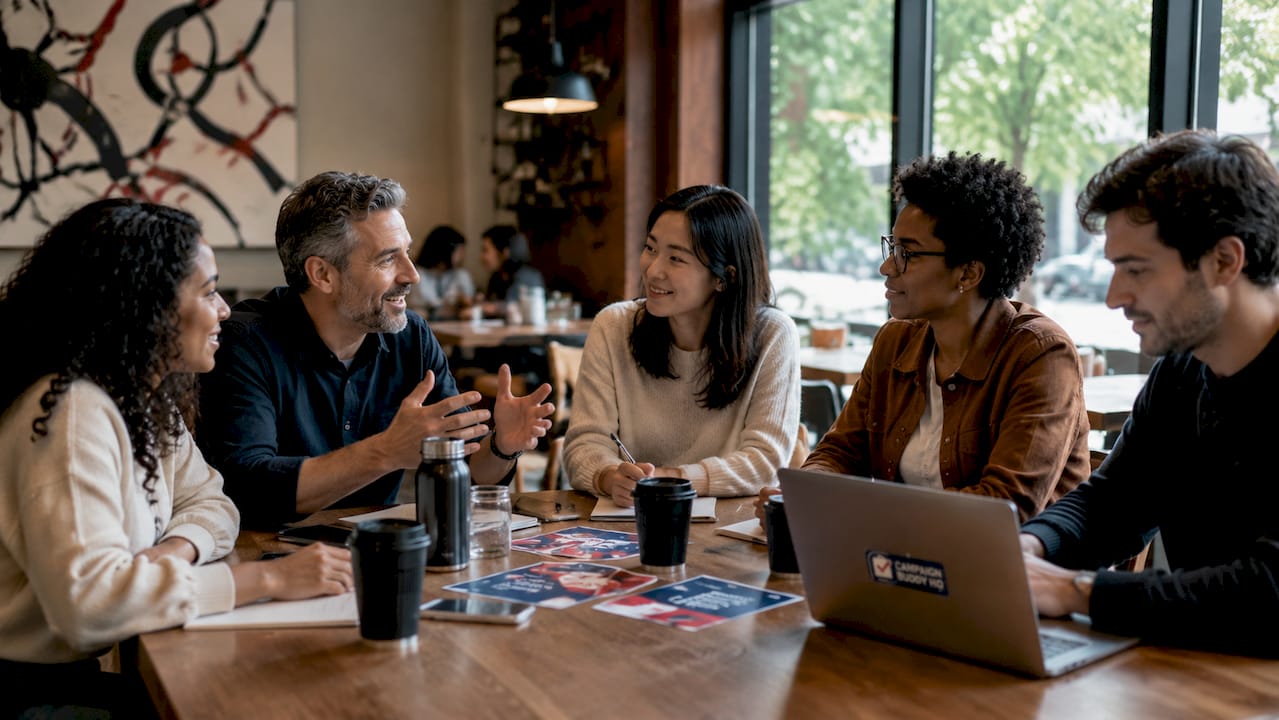
Effective progressive campaign strategies layer multiple contact methods into a sequence rather than relying on a single outreach channel. The DNC's 2026 playbook describes this as a layered voter contact approach, where face-to-face canvassing, phone calls, texts, and digital ads reinforce each other rather than operating in isolation.
Here is how a layered outreach sequence works in practice:
- Voter registration drives: Identify and register unregistered voters in target precincts, prioritizing communities historically excluded from the electoral process.
- Persuasion canvassing: Train volunteers to have genuine conversations about issues, not to recite scripts. The DNC now explicitly shifts from scripts to curiosity-driven listening before asking for a vote.
- Event invitations: Invite engaged voters to town halls, community meetings, or volunteer orientations to deepen the relationship beyond a single door knock.
- Digital follow-up: Retarget canvassed voters with issue-specific digital content that reinforces the in-person conversation.
- Get-out-the-vote (GOTV) mobilization: In the final weeks, activate the full contact list with ride-to-polls programs, reminder texts, and phone banking.
- Direct action and ballot initiatives: Progressive campaigns pair electoral work with direct action, litigation, and ballot initiatives to shift public debate even when electoral wins are out of reach.
Coalition programs are equally central. The DNC's 2026 model introduces Coalition Regions to centralize organizing efforts and dismantle silos between digital and field teams, with dedicated outreach to identity and language groups that traditional campaigns routinely ignore.
Pro Tip: Map your voter universe by language and cultural identity before you build your outreach calendar. A Spanish-language canvass in a predominantly Latino precinct will outperform a translated English script every time.
How does modern progressive campaigning integrate technology and relationship-building?
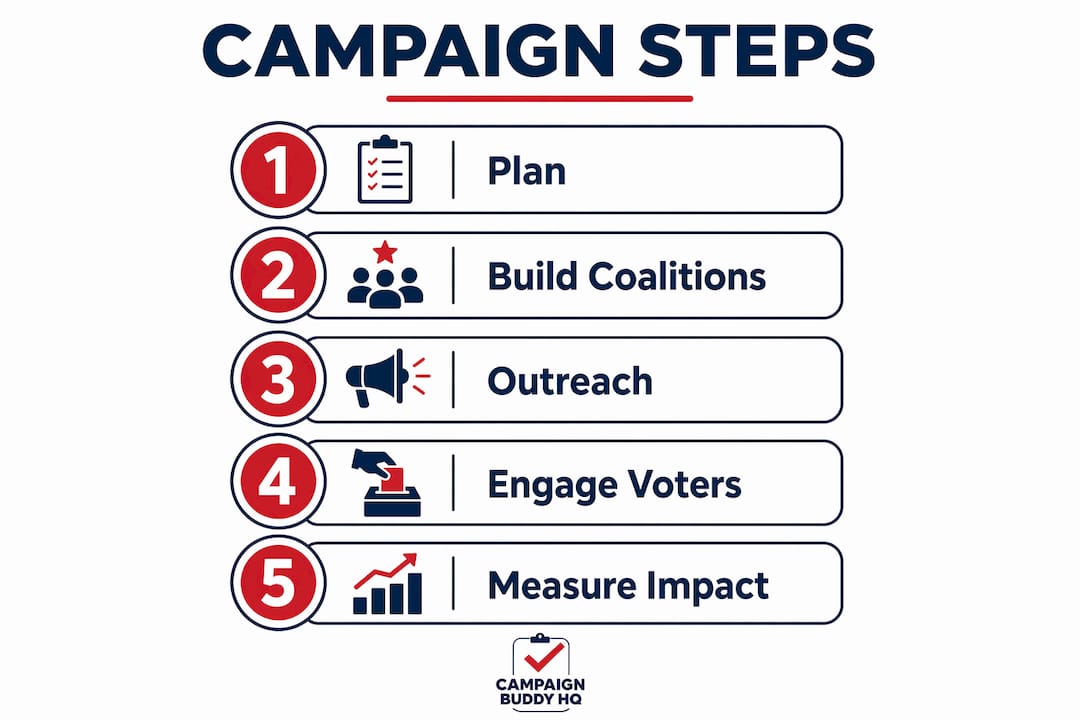
Modern progressive campaigning treats technology as a support layer for human relationships, not a replacement for them. Voter conversations feed back into messaging; organizers use listening calls as inputs for refining campaign messages rather than just delivering scripts, realigning outreach with actual voter priorities. This feedback loop is what separates a data-driven progressive campaign from a campaign that merely collects data.
The integration of digital and field teams is the structural change that makes this possible. When digital ads and field canvassing operate as separate departments, campaigns waste resources and confuse voters with inconsistent messages. The DNC's 2026 Re-Model addresses this directly by requiring campaign departments to dismantle silos and build coalition programs that reach diverse constituencies through coordinated channels.
Data analytics plays a specific role in this model. Campaigns use voter file data to segment audiences by likelihood to vote, issue priority, and past engagement. They then assign each segment a contact sequence calibrated to move that voter from awareness to action. The key is that the data informs the conversation rather than replacing it. A canvasser who knows a voter cares about housing costs can lead with that issue instead of delivering a generic candidate pitch.
Outreach fatigue is a real obstacle. Voters in competitive districts receive dozens of contacts per cycle, and impersonal outreach accelerates disengagement. Campaigns that invest in authentic community engagement report higher volunteer retention and stronger GOTV turnout because voters feel like participants rather than targets.
Pro Tip: After every canvassing shift, hold a 10-minute debrief where volunteers share what voters actually said. Use those notes to update your talking points weekly. This is the fastest way to close the gap between your message and voter reality.
How can activists and organizers measure the impact of a progressive campaign?
Measuring progressive campaign impact requires moving beyond raw contact counts to behavior change metrics. Effective advocacy campaigns are designed around specific audience segments and countable actions, leveraging capability, opportunity, and motivation to increase desired behaviors. A campaign that knocks 10,000 doors but cannot report how many of those contacts resulted in a registration, a volunteer sign-up, or a confirmed vote has a data problem.
The metrics that actually matter include:
- Voter registrations completed: Not just forms distributed, but confirmed registrations in the voter file.
- Event attendance rates: The percentage of invited contacts who show up, which signals depth of engagement.
- Volunteer conversion: How many canvassed voters become volunteers, which is the strongest indicator of genuine relationship-building.
- Pledge-to-vote confirmations: Tracked commitments from persuaded voters, followed up in the GOTV phase.
- Issue-specific response rates: Which messages generate callbacks, door reopens, or digital click-throughs.
Campaign media drives awareness but needs an operational layer converting attention into specific actions for electoral impact. Content, digital outreach, and field work must be tied to downstream actions like registration and volunteer follow-up. Without that operational layer, even a viral social media moment produces no measurable campaign outcome.
The theory of change model is the most useful framework for aligning daily activities with long-term goals. It forces organizers to map the chain from a single voter conversation to a policy outcome, identifying where the campaign's effort is actually moving the needle and where it is producing activity without impact. Campaign progress tracking tools that log doors, calls, texts, and registrations in one place make this analysis possible without requiring a data science team.
The table below summarizes the key measurement categories and what each one tells you about campaign health.
| Metric | What it measures |
|---|---|
| Voter registrations | Conversion from outreach to confirmed electoral participation |
| Volunteer conversion rate | Depth of relationship-building and community trust |
| Event attendance rate | Engagement quality beyond initial contact |
| Pledge-to-vote confirmations | Persuasion effectiveness in the GOTV phase |
| Issue response rates | Message resonance across voter segments |
Key takeaways
Progressive campaigning succeeds when electoral outreach, coalition-building, and digital-field integration operate as a single system tied to measurable behavior change rather than contact volume.
| Point | Details |
|---|---|
| Core definition | Progressive campaigning combines values-driven voter outreach with movement-building to advance policy goals. |
| Layered outreach | Sequential contacts across canvassing, digital, and events outperform single-channel approaches. |
| Relationship over script | Curiosity-driven voter conversations replace scripted pitches to build genuine community trust. |
| Behavior change metrics | Track registrations, volunteer conversions, and pledges rather than raw contact counts. |
| Digital-field integration | Dismantling silos between digital and field teams is the structural requirement for modern campaigns. |
Why the relationship-first model is the only model that scales
I have watched campaigns spend six figures on digital advertising and still lose precincts they should have won, because the ads generated awareness and nothing else. The shift the DNC is formalizing in 2026 is something experienced organizers have known for years: a voter who has a real conversation with a neighbor is ten times more likely to show up than one who saw a Facebook ad. The problem is that relationship-building does not scale the way ad buys do, so campaigns default to volume.
The answer is not to abandon digital tools. It is to use them as a follow-up layer after a human contact has already been made. When a canvasser has a genuine conversation about healthcare costs on a Tuesday, and that voter receives a targeted digital ad on the same issue on Thursday, the ad lands differently. It feels like confirmation rather than interruption. That sequencing is what the layered outreach model is designed to produce.
The harder truth is that most campaigns still run digital and field as separate departments with separate budgets and separate metrics. Until those teams share data and coordinate timing, the layered model stays theoretical. The Oxfam Influencing for Impact Guide makes the same point from a global advocacy perspective: campaign effectiveness stems from addressing structural causes and selecting tactics that lead to lasting attitude changes, not just short-term wins. That principle applies whether you are running a city council race or a statewide ballot initiative.
The campaigns that will define progressive politics in 2026 and beyond are the ones building the infrastructure now: trained volunteers, integrated data systems, coalition relationships, and a feedback loop that turns voter conversations into sharper messages. That is not a technology problem. It is an organizational discipline problem, and it starts with how you run your next canvassing shift.
— Billy
How Campaignbuddyhq supports progressive organizers in 2026
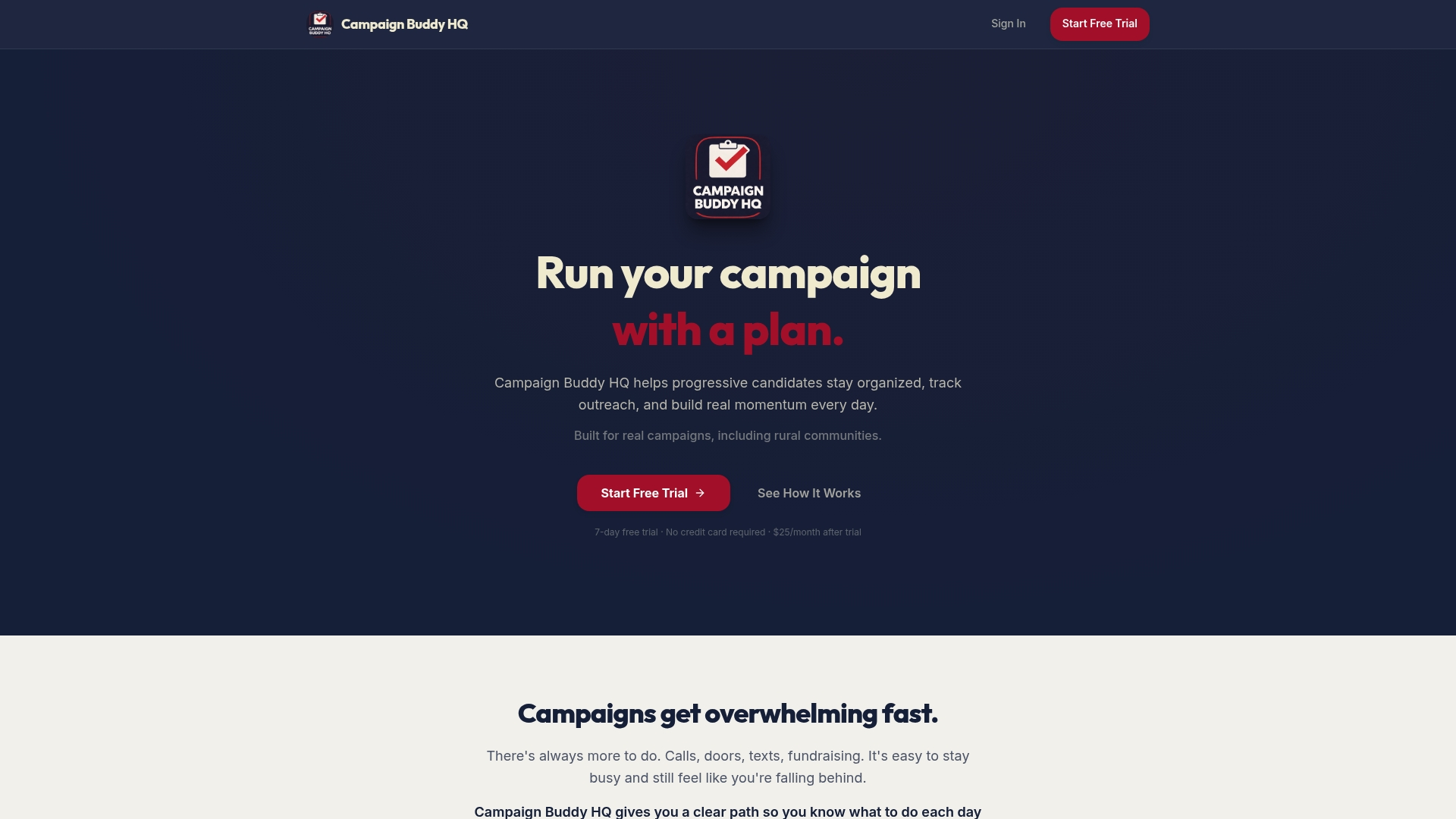
Running a values-driven campaign means tracking every door knocked, call made, text sent, and voter registered without losing sight of the relationships behind those numbers. Campaignbuddyhq is built for exactly that. The platform gives progressive candidates and organizers a centralized place to log outreach activities, plan daily and weekly schedules, track supporter engagement, and monitor progress toward campaign goals across every phase of the cycle. It is designed for real-world conditions, including rural and low-density communities where every contact counts more. Whether you are managing a first-time candidate's local race or coordinating a multi-precinct issue advocacy effort, Campaignbuddyhq gives your team the structure to stay consistent and build momentum. Start with a free 7-day trial, no credit card required.
FAQ
What does progressive campaigning mean in practice?
Progressive campaigning means organizing voter outreach and advocacy around specific policy goals like economic justice, racial equity, and climate action, using relationship-building tactics rather than impersonal mass contact. It combines electoral work with movement-building to create lasting political change.
How do progressive campaigns differ from traditional campaigns?
Traditional campaigns often prioritize contact volume and scripted messaging, while progressive campaigns prioritize relationship quality, coalition-building, and integrating digital and field outreach into a single coordinated strategy. The DNC's 2026 Re-Model formalizes this distinction with its shift from scripts to curiosity-driven voter conversations.
What are the most effective progressive campaign strategies?
Layered outreach sequences combining canvassing, phone calls, texts, and digital follow-up consistently outperform single-channel approaches. Coalition programs that reach identity and language groups, paired with behavior change metrics like voter registration and volunteer conversion, define the most effective progressive campaign strategies.
How do you measure the success of a progressive campaign?
Success is measured through behavior change metrics: voter registrations completed, volunteer conversion rates, event attendance, and pledge-to-vote confirmations. Raw contact counts without downstream action data do not indicate campaign effectiveness.
Can small campaigns use progressive campaigning techniques?
Progressive campaigning techniques scale down effectively because they are relationship-based rather than resource-intensive. A small team running disciplined canvassing with a feedback loop and a basic outreach tracking system can outperform a larger campaign that relies on volume without strategy.