
A field organizing workflow in 2026 is defined by layered, integrated, data-driven voter contact that replaces the old volume-first model with precision outreach. The shift is structural. Campaigns that still measure success by doors knocked are falling behind those that track layered contacts per voter from trusted sources. The 2026 campaign outreach trends show that relational organizing, coalition integration, and mobile-first coordination are no longer optional upgrades. They are the baseline for competitive field campaign management. Tools like ActBlue Field Tools and frameworks like the DNC Organizing Playbook are setting the standard for what effective organizing processes look like this cycle.
What are the core components of an effective 2026 field organizing workflow?
The foundation of any effective field organizing workflow is the shift from volume to layered contact. Campaigns win when every voter contact method is coordinated into a single system rather than deployed as isolated tactics. That means a voter receives a relational text from a neighbor, a canvass knock from a trained volunteer, a follow-up call, and a ballot chase reminder. Each contact reinforces the last.
The 2026 DNC Organizing Playbook introduces the Coalition Regions model as the structural answer to siloed campaign teams. Integrating Digital, Coalitions, and Field into unified regional units creates culturally relevant outreach to identity and language communities that siloed departments consistently miss. This is not a cosmetic reorganization. It changes who gets contacted, how, and by whom.
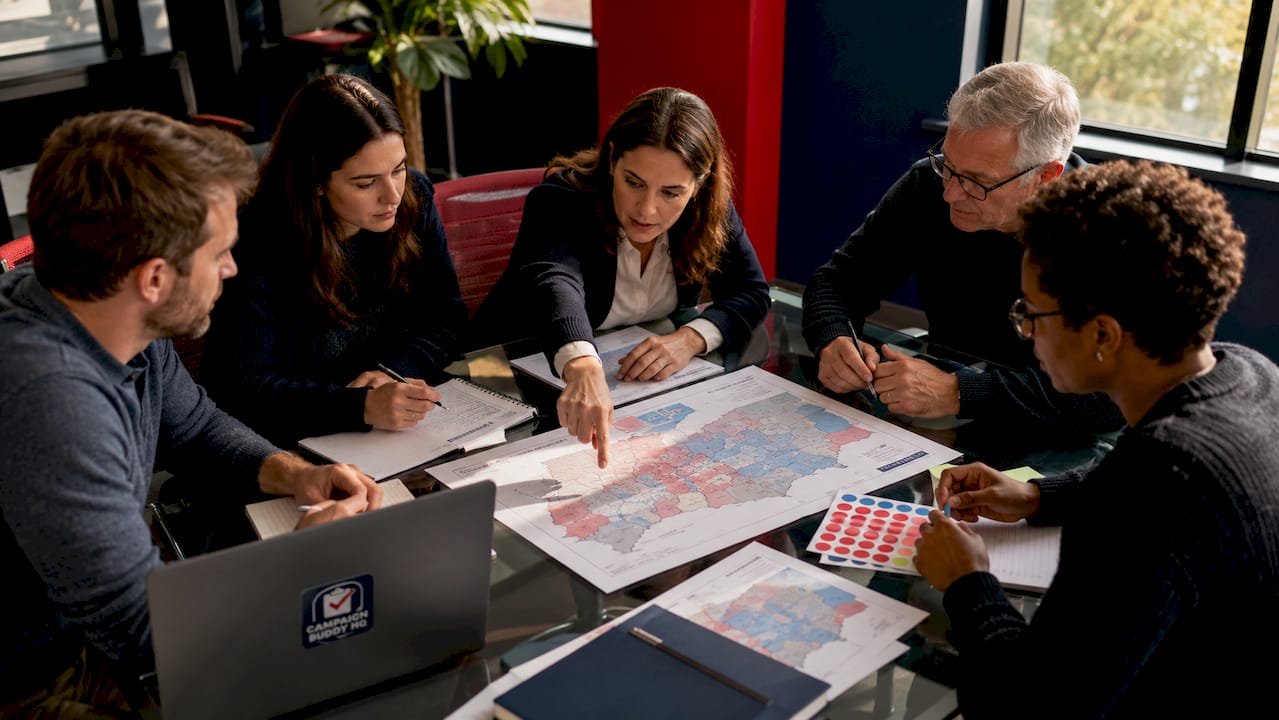
Data quality sits at the center of this model. The bottleneck in most field efforts is not the number of volunteers or hours worked. It is poor contact sequencing and low-quality turf data. Prioritizing relational signals before canvassing increases conversion rates because you are sending the right person to the right door at the right time.
| Component | Purpose |
|---|---|
| Layered voter contact | Coordinates multiple contact types per voter to shift behavior |
| Coalition Regions model | Unifies Digital, Field, and Coalitions for culturally relevant outreach |
| Relational organizing | Identifies supporters and persuadables before canvassing begins |
| High-quality turf data | Improves targeting efficiency and reduces wasted volunteer hours |
| Sequenced contact phases | Builds persuasion momentum from listening to ballot chase |
Which tools and technologies best support field organizing workflows in 2026?
Modern field workflow optimization depends on tools that connect your data, your volunteers, and your voter contact in real time. ActBlue Field Tools offers an integrated platform covering peer-to-peer texting, phone banking, and canvassing coordination with built-in volunteer management. That combination matters because it eliminates the coordination gap between your digital and field teams.
Mobile organizing techniques are now central to daily operations. Volunteers expect to receive turf assignments, log contacts, and flag persuadable voters from their phones without waiting for a nightly data sync. Platforms that support real-time updates give field directors the ability to redirect resources mid-day based on actual contact rates rather than morning projections.
Data dashboards and voter contact tracking have moved from campaign luxury to operational requirement. When a field director can see which precincts are underperforming at 2 p.m., they can shift canvassers before the day is lost. Without that visibility, you are managing by assumption.
| Tool or Platform | Primary Use Case |
|---|---|
| ActBlue Field Tools | P2P texting, phone banking, canvassing, volunteer management |
| Campaignbuddyhq | Daily planning, outreach logging, supporter tracking, campaign phases |
| VAN (Voter Activation Network) | Voter file management, turf cutting, contact result tracking |
| ThruText | High-volume peer-to-peer texting at scale |
| MiniVAN | Mobile canvassing app for door-to-door volunteer deployment |
Pro Tip: Set up your data dashboard to flag any precinct where contact rates fall below 40% by midday. That single trigger gives you enough time to redeploy volunteers and recover the day's goal before close of canvass.
How to implement a step-by-step field organizing workflow for 2026 campaigns
Execution is where most campaigns lose ground. The strategy is clear, but the sequencing breaks down between onboarding and turnout. A structured, phased workflow solves that. The step-by-step campaign outreach guide from Campaignbuddyhq covers hiring and onboarding in detail, and the principle is consistent: structure from day one prevents chaos at crunch time.
60% of organizers rated their initial onboarding experience as poor to average. That number explains a lot of mid-campaign turnover and performance gaps. Formalized playbooks, clear role expectations, and structured first-week training are not administrative overhead. They are the difference between an organizer who hits their contact goals in week two and one who is still figuring out the VAN in week four.
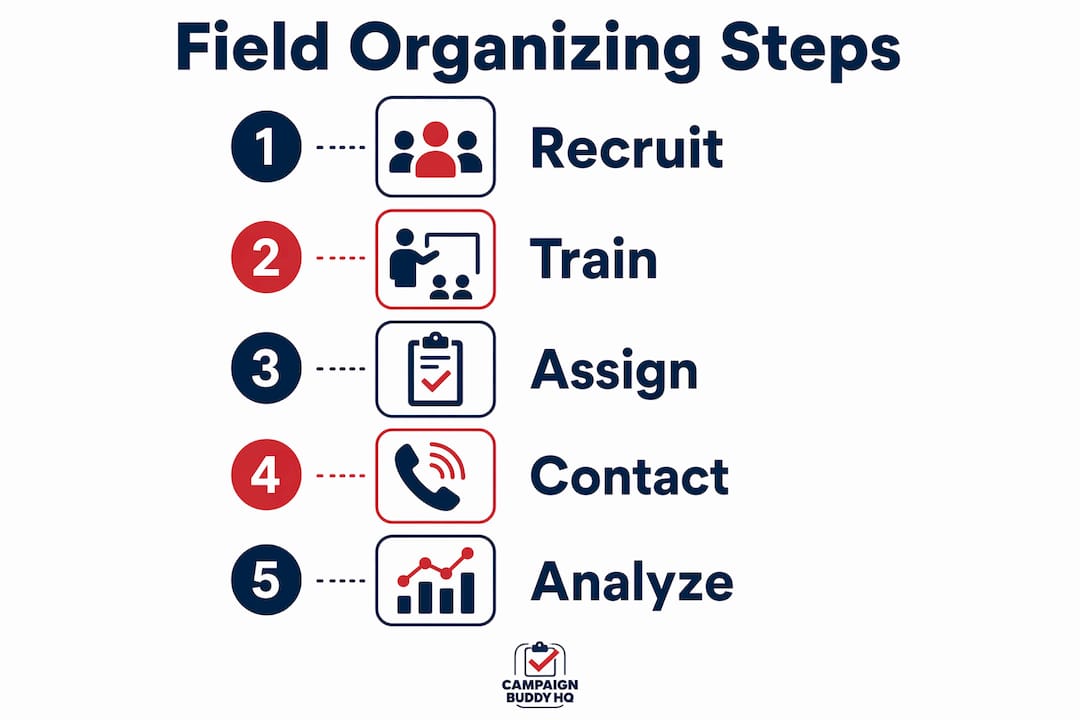
Here is the workflow sequence that reflects 2026 best practices:
- Recruit and onboard with a structured playbook. Define role expectations, contact goals, and tool access before the first day. Use a written onboarding checklist tied to measurable week-one outcomes.
- Run listening-first conversations. Before persuasion, your team needs to understand what voters care about. Train organizers to ask open questions and record responses in your voter file.
- Execute relational organizing. Relational organizing is friend-to-friend and neighbor-to-neighbor outreach that identifies valuable turf before canvassing begins. Deploy this phase early to build your persuadable universe.
- Layer in peer-to-peer texting. Once relational contacts have warmed the universe, P2P texting from volunteers adds a second layer of trusted contact at scale.
- Deploy targeted canvassing. Use the relational and texting data to cut turf by persuasion score, not geography alone. Send your strongest volunteers to your highest-value doors.
- Reinforce with phone banking. Calls from local volunteers to voters who have already received a text or door knock convert at higher rates than cold calls. Sequence matters.
- Execute ballot chase. In the final 72 hours, shift all resources to confirmed supporters who have not yet voted. Track returns in real time and update your contact list every two hours.
Pro Tip: Build your ballot chase list at least two weeks before Election Day. Waiting until the final weekend means you are building infrastructure while you should be deploying it.
The most common workflow pitfall is treating each phase as independent. Organizers who run texting without feeding results back into the voter file break the layering logic. Every contact result must update the data so the next contact is smarter than the last.
What key metrics should you track to optimize field organizing performance?
Grassroots organizing in 2026 requires a metrics framework that goes beyond counting doors. Volume metrics like doors knocked are being replaced by measures of layered contacts per voter from trusted sources. That shift reflects a deeper truth: more contacts do not equal more votes. The right contacts, in the right sequence, from the right people do.
Reporting practices matter as much as the metrics themselves. Weekly transparency reports shared with your full field team create accountability and surface problems before they become crises. When every organizer can see how their precinct compares to the campaign average, performance gaps become visible and fixable.
Key performance indicators for a 2026 field workflow include:
- Layered contacts per voter: The number of distinct contact types each voter has received. Target at least three layers for persuadable voters before Election Day.
- Relational contact rate: The percentage of your persuadable universe reached through friend-to-friend or neighbor-to-neighbor outreach.
- Canvass conversion rate: The share of doors knocked that result in a recorded meaningful conversation, not just a door answer.
- Volunteer retention rate: The percentage of recruited volunteers who complete at least three shifts. Low retention signals an onboarding or management problem.
- Ballot return rate: For vote-by-mail programs, the percentage of identified supporters who have returned ballots by your tracking date.
Turf prioritization should update weekly based on these numbers. Precincts with low layered contact rates get more resources. Precincts with high conversion rates get your best volunteers. The campaign planning frameworks that perform in 2026 treat data as a living input, not a one-time setup task.
Key takeaways
A field organizing workflow in 2026 succeeds when layered voter contact, integrated team structures, and real-time data replace volume-based tactics and siloed operations.
| Point | Details |
|---|---|
| Layer contacts, not just volume | Coordinate relational, text, canvass, and call contacts per voter to drive conversion. |
| Integrate your teams | Unify Digital, Coalitions, and Field into Coalition Regions for culturally relevant outreach. |
| Sequence before you scale | Run relational organizing first to identify persuadables before deploying canvassing. |
| Fix onboarding first | 60% of organizers rate onboarding as poor; structured playbooks prevent mid-campaign performance gaps. |
| Measure layered contacts | Replace doors-knocked counts with layered contacts per voter as your primary field metric. |
Why the old playbook is costing campaigns more than they realize
I have watched campaigns pour resources into door-knocking programs that hit their volume targets and still lose close races. The numbers looked fine on paper. Doors knocked, calls made, texts sent. What the reports did not show was that the same voters were being contacted three times by the same method while persuadable neighbors went untouched.
The listening-first approach changes that dynamic in ways that are hard to quantify until you see it work. When an organizer sits with a voter and asks what actually matters to them this cycle, the conversation that follows is worth more than six cold door knocks. It builds the kind of trust that makes every subsequent contact land differently. That is the relational logic that the DNC Organizing Playbook is formalizing, and it reflects what experienced organizers have known for years.
The silo problem is real and it is expensive. I have seen field teams and digital teams run parallel universes on the same campaign, duplicating contacts and missing gaps because nobody was sharing data in real time. The Coalition Regions model is the structural fix, but it requires leadership to enforce it. Turf directors and digital directors need to be in the same room, looking at the same dashboard, making decisions together.
My honest advice: do not wait until the final sprint to integrate your workflow. The campaigns that win in 2026 will be the ones that built integrated, data-driven field operations in the spring and had months to refine them before October.
— Billy
How Campaignbuddyhq supports your 2026 field organizing workflow
Campaignbuddyhq is built for exactly the kind of layered, data-driven field organizing that 2026 demands. The platform gives campaign teams daily and weekly planning tools, outreach logging for doors, calls, and texts, supporter tracking, and campaign phase management. Whether you are running a statewide coordinated campaign or a local grassroots effort in a rural district, Campaignbuddyhq keeps your workflow organized and your data current. You can track progress toward contact goals in real time, manage volunteer activity, and maintain consistency across your entire field program. Start with a free 7-day trial at Campaignbuddyhq and see how a structured workflow changes what your team can accomplish.
FAQ
What is a field organizing workflow in 2026?
A field organizing workflow in 2026 is a coordinated system of layered voter contacts that integrates relational outreach, digital tools, and coalition team structures to maximize voter engagement and campaign efficiency.
How does relational organizing differ from traditional canvassing?
Relational organizing uses friend-to-friend and neighbor-to-neighbor outreach to identify persuadable voters before canvassing begins, improving targeting efficiency and conversion rates compared to cold door-knocking alone.
What metrics replace doors knocked in modern field campaigns?
Layered contacts per voter from trusted sources is the primary replacement metric, measuring how many distinct contact types each voter has received rather than total volume of outreach attempts.
Why do so many field organizers struggle with onboarding?
A 2024 Trestle Collaborative survey found that 60% of organizers rated their onboarding as poor to average, pointing to the absence of structured playbooks and clear performance expectations from day one.
What tools support mobile organizing techniques for field campaigns?
ActBlue Field Tools, MiniVAN, and Campaignbuddyhq all support mobile-first field operations, enabling volunteers to receive turf assignments, log contacts, and update voter data from their phones in real time.