

The fastest way to keep campaign volunteers active is to match short, clear shifts with fast onboarding, a confirmation loop, and personal recognition. Do those four things consistently and your retention numbers will look different by week three.
Here is your quick-start checklist:
- Write a one-paragraph role description before you recruit anyone
- Send a first-shift script to new volunteers 24 hours before they arrive
- Confirm every scheduled shift three times: at sign-up, 48 hours out, and 24 hours out
- Assign a shift leader for every small group of volunteers
- Run a 90-second paired roleplay before any phone bank or canvass goes live
- Feed people and say thank you out loud, by name, before they leave
- Ask volunteers to sign up for their next shift before the current one ends
- Log every disposition in real time, not from memory at the end of the night
Pro Tip: Arrange for the candidate to spend five minutes with volunteers at the end of a shift whenever possible. Brief, in-person thanks from the candidate raise re-sign rates more than any digital acknowledgment.
Table of Contents
- What does the volunteer lifecycle look like for a campaign?
- Where do you find volunteers and how do you place them well?
- How do you onboard and train volunteers before their first shift?
- How do you run briefings, supervision, and feedback that actually work?
- What recognition tactics actually keep volunteers coming back?
- What metrics should you track and which tools help you track them?
- How do you schedule shifts and budget for a volunteer program?
- Ready-to-use templates and checklists you can copy today
- How does Campaignbuddyhq put these tactics into practice?
- Key Takeaways
- What most campaign guides get wrong about volunteer management
- Campaignbuddyhq gives you the systems to make these tactics stick
- Useful sources and further reading
What does the volunteer lifecycle look like for a campaign?
Every well-run volunteer program moves through four stages: recruit, onboard, engage and supervise, then retain and advance. Skip or rush any stage and you pay for it later, usually in no-shows and early drop-off.
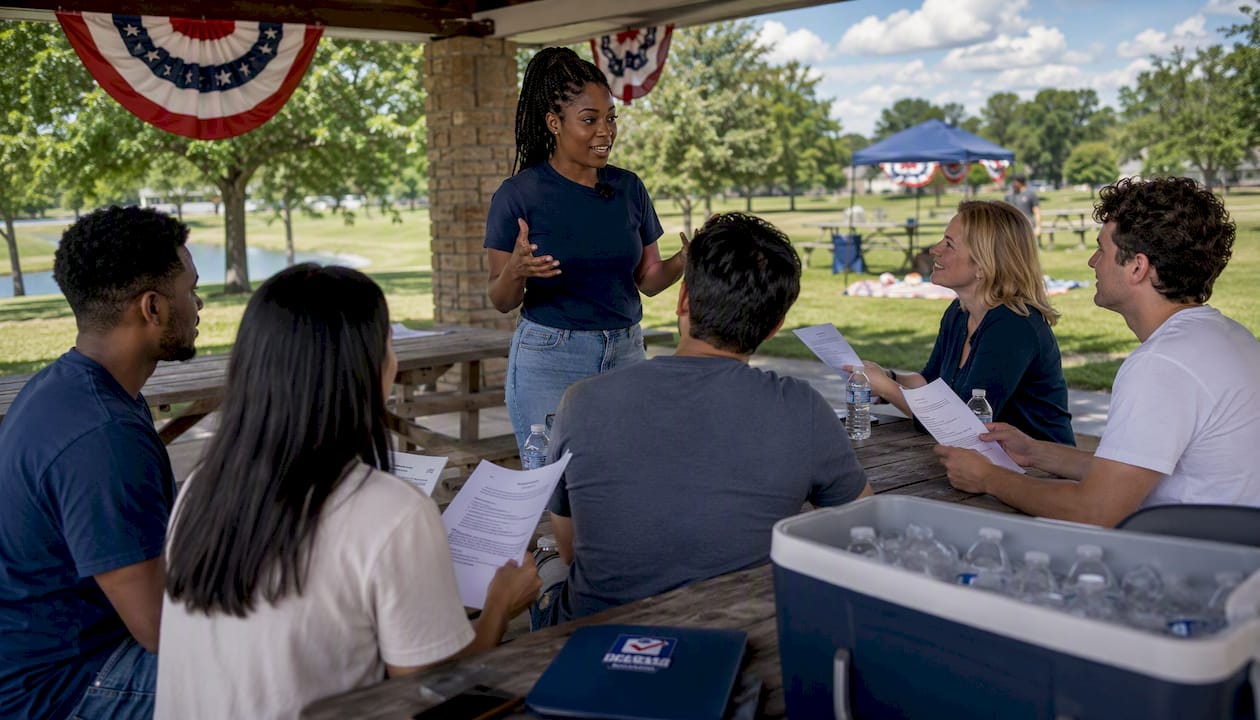
Recruit. Target your existing supporter list first. Warm contacts convert faster than cold outreach. Ask donors, endorsers, and allied organizations to refer people directly. Peer referrals bring volunteers who already trust the campaign.
Onboard. Give every first-timer a structured session covering campaign context, script walkthrough, roleplay, and a data-entry demo. Structured onboarding, clear role descriptions, and consistent communication are the three practices most consistently tied to volunteer retention.
Engage and supervise. Run a five-minute pre-shift briefing every time. Designate shift leads so staff can focus on strategy rather than floor management. Use brief mid-shift check-ins, not just an end-of-night debrief.
Retain and advance. Recognize effort publicly and often. Move reliable volunteers into deputy roles. Ask for the next commitment before the current shift ends.
Track these metrics at each stage:
- Recruit: new sign-ups per week, referral source breakdown
- Onboard: first-shift completion rate, no-show rate
- Engage: shift fill rate, average hours per volunteer per week
- Retain: re-sign rate, retention rate at 30 and 60 days, total volunteer hours
Pro Tip: Most campaigns over-invest staff time in recruitment and under-invest in onboarding. Flip that ratio. One hour of solid first-shift training significantly reduces the time spent on re-recruiting replacements.
Where do you find volunteers and how do you place them well?
Start with the people already in your orbit. Donors, past volunteers, endorsing unions, civic organizations, campus groups, and faith communities are all faster to convert than strangers. Segmenting volunteers by function and letting senior volunteers manage small teams lets you scale without adding staff.
Recruitment channels worth your time:
- Existing supporter list: send a direct ask with a specific role and shift time attached
- Endorsing organizations: ask union reps and allied group leaders to recruit from their membership
- Campus programs: partner with political science or public policy departments for course-credit placements
- Community groups: post to neighborhood Facebook groups, Nextdoor, and local civic club listservs
- Skills-based asks: target professionals (data entry, graphic design, bilingual speakers) with role-specific pitches
- Referral asks: tell every current volunteer, "Bring a friend to your next shift"
Once someone signs up, place them before their first shift. A simple triage works: quick one-time asks (literature drops, event setup), short-term project roles (data entry, social media), and leadership track (shift lead, deputy organizer). Match on availability, comfort level with phone or door contact, and transportation access.
Forcing volunteers into tasks they find uncomfortable is one of the fastest ways to lose them. Ask directly: "Are you more comfortable on the phone or at the door?" Then honor the answer.
Sample role description template:
| Field | Content |
|---|---|
| Role title | Phone Bank Volunteer |
| Core responsibilities | Make 60 calls per shift, log dispositions, flag issues to shift lead |
| Time commitment | 2–3 hours per shift, 1–2 shifts per week |
| Key skills | Comfortable on the phone, basic data entry |
| First-shift deliverables | Complete script walkthrough, log 10 practice calls |
| Supervisor contact | [Shift lead name and cell number] |
Pro Tip: Recruit in pairs. Volunteers who sign up with a friend show up at higher rates and stay longer. When you ask for referrals, ask for a specific person, not "anyone you know."

How do you onboard and train volunteers before their first shift?
Short, focused onboarding combined with live roleplay prevents the two most common first-shift problems: volunteers going off-script and volunteers entering bad data. Both are fixable before anyone picks up a phone or knocks on a door.
First-shift onboarding checklist:
- Greet volunteers by name at the door; have a sign-in sheet ready
- Give a two-minute campaign context briefing (why this race matters, what today's goal is)
- Walk through the script out loud as a group, one section at a time
- Run 90-second paired roleplays using character cards: supportive voter, skeptical voter, hostile voter
- Demo the data-entry screen and have volunteers log three practice dispositions before going live
- Cover safety basics: canvassers work in pairs, never enter a private home, check in with shift lead every 45 minutes
- Distribute the one-page cheat sheet (script, walkaway lines, disposition codes)
- Ask every volunteer to sign up for their next shift before leaving
For timing: new volunteers need 60–90 minutes for the full session. Returners can be briefed in 15–20 minutes. Late arrivals get a condensed 10-minute version from the shift lead. Phone banking training that includes group script walkthroughs, roleplay pairs, and live data-entry practice consistently outperforms script-reading alone.
Pro Tip: Pair every new volunteer with an experienced shift leader for their first 30 minutes on the floor. That one-on-one shadow time catches errors before they become habits and makes new volunteers feel less alone.
For a copy-ready version of this checklist, see the Campaign Volunteer Onboarding Checklist.
How do you run briefings, supervision, and feedback that actually work?
Concise pre-shift briefings, two or three mid-shift touchpoints, and a clear escalation structure cut confusion and reduce no-shows more than any single tactic. The goal is that every volunteer knows the day's target, who to go to with a problem, and what success looks like before they make a single call or knock.
Five-minute pre-shift briefing template:
- Goal (60 seconds): today's target number (calls, doors, registrations) and why it matters
- Talking points (90 seconds): two or three key messages, one local hook
- Logistics (60 seconds): turf assignments, parking, bathroom, break schedule
- Safety (30 seconds): buddy system reminder, escalation contact
- Motivation (60 seconds): one quick win from the last shift, shout-out to a returning volunteer
For supervision, designate one shift lead per small team of volunteers. During phone banks, a 60-second check-in at the 30-minute mark catches script drift and data-entry errors early. For canvassing, use a buddy system and require check-ins every 45 minutes. After the shift, run a three-minute debrief: what went well, one hard thing, and next steps.
Collect feedback with a three-question form or a quick floor check: What worked? What was confusing? What do you need next time? Act on at least one piece of feedback visibly, then tell volunteers you did. That loop builds trust faster than any recognition program.
Confirming a scheduled shift two to three times via text or email is one of the highest-leverage actions a campaign can take. Volunteers juggle work, family, and other obligations. The confirmation loop is not nagging — it is the difference between a full room and an empty one.
Pro Tip: Schedule confirmations at three specific moments: immediately after sign-up, 48 hours before the shift, and again 24 hours out. This redundancy materially reduces no-shows for volunteers managing competing obligations.
What recognition tactics actually keep volunteers coming back?
Combine frequent, personal recognition with a clear path to greater responsibility and you will hold volunteers far longer than campaigns that rely on generic thank-you emails. The human touch matters more than the budget.
Recognition ideas that cost little and land hard:
- In-shift shout-outs by name when a volunteer hits their call or door target
- Handwritten thank-you notes from the candidate or campaign manager after a big shift
- A small end-of-campaign celebration (pizza, a group photo, a printed certificate)
- Public acknowledgment on the campaign's social media with the volunteer's permission
- Micro-badges or milestone markers (50 calls, 100 doors) posted on a visible leaderboard
- Brief candidate face-time at the end of a shift whenever the schedule allows
Short, personal face-to-face thank-yous from the candidate or campaign staff after a shift significantly boost morale and return rates compared with generic digital acknowledgments. That finding holds across campaign sizes.
For advancement, identify your most reliable volunteers by week four and offer them a deputy role. Give them a small team to manage, a title, and a direct line to staff. Some campaigns offer modest transportation reimbursements or training stipends where campaign finance rules permit. Alumni networks, even informal group chats, keep former volunteers engaged for future cycles.
Recognition calendar skeleton:
- Weekly: in-shift shout-outs, confirmation texts with a personal line
- Monthly: handwritten notes to top volunteers, milestone acknowledgment
- End of campaign: celebration event, social media recognition, alumni outreach
Pro Tip: Thank volunteers in person whenever you can. A 30-second conversation beats a group email every time. If the candidate cannot be there, the campaign manager should be.
What metrics should you track and which tools help you track them?
Track a small set of metrics well rather than a long list poorly. Four numbers tell you most of what you need to know about volunteer program health.
Must-track metrics:
- Shift fill rate: percentage of scheduled slots filled. Below 70% signals a recruitment or confirmation problem.
- Re-sign rate: percentage of volunteers who commit to a second shift before leaving the first. This is your single best leading indicator of retention.
- Volunteer hours: total hours logged per week by activity type (calls, doors, events). Tracks program scale.
- Conversion by activity: calls made per hour, doors knocked per hour, registrations per shift. Tells you where volunteers are most productive.
Tracking outcomes beyond hours — like contacts made or registrations completed — gives a fuller picture of volunteer impact and informs where to invest training time.
Practical tool pathway:
| Stage | Tool | Best for |
|---|---|---|
| Early campaign (under 20 weekly volunteers) | Google Sheets or Airtable | Simple shift logs, sign-up tracking |
| Growing campaign (20–60 weekly volunteers) | Shared CRM with volunteer log | Disposition tracking, contact history |
| Scaled campaign (60+ weekly volunteers) | Dedicated campaign platform | Scheduling, confirmations, reporting |
Campaignbuddyhq is built for the growing-to-scaled range. Its outreach logging captures doors, calls, texts, and registrations in real time; its supporter tracking ties volunteer activity to contact records; and its progress visualization shows shift fill rates and weekly totals without a manual spreadsheet pull.
Logging dispositions in the moment rather than from memory at the end of a shift measurably improves data quality. Build that habit during onboarding and your metrics will actually mean something.
How do you schedule shifts and budget for a volunteer program?
Short shifts, predictable recurring slots, and a confirm-before-you-count rule are the three scheduling principles that prevent the most common problems. Keeping shifts under three hours with at least one break and securing next-shift commitments during end-of-shift debriefs locks in re-sign-ups before volunteers walk out the door.
Sample shift templates:
| Shift type | Ideal length | Supervision ratio | Break rule |
|---|---|---|---|
| Phone bank shifts should be kept short with a lead assigned per a manageable number of callers and a break during the shift. | |||
| Canvass shifts should be kept short with a lead assigned per a manageable number of canvassers and a break during the shift. | |||
| Event/tabling | 3–4 hours | 1 lead per 10 volunteers | 15 min per 2-hour block |
Budget line items to plan for:
- Printed scripts, cheat sheets, and turf packets (paper and printing costs)
- Refreshments per shift (water, snacks, coffee for morning shifts)
- Transportation reimbursements where permitted under applicable campaign finance rules
- Training materials and any platform subscription costs
- Small recognition items (certificates, stickers, event supplies)
For safety, canvassers always work in pairs. Review the step-by-step canvassing guide for turf safety protocols. Never send a volunteer to a location alone, and set a clear check-in schedule before anyone leaves the staging location.
Pro Tip: Build your schedule around recurring weekly slots rather than one-off events. Volunteers who know "Tuesday evenings are phone bank nights" plan around it. Irregular scheduling is one of the quieter drivers of drop-off.
Ready-to-use templates and checklists you can copy today
Paste-ready templates reduce staff prep time and give volunteers confidence from minute one. Here are the core documents every campaign needs.
Onboarding checklist (copy and adapt):
- Volunteer signs in and receives name tag
- ID and waiver collected if required by campaign policy
- Two-minute campaign context briefing delivered
- Script walkthrough completed as a group
- Roleplay pairs completed (minimum two scenarios)
- Data-entry demo completed; volunteer logs three practice dispositions
- Safety guidelines reviewed
- One-page cheat sheet distributed
- Next shift sign-up completed before volunteer leaves
First-shift script opening (phone bank):
"Hi, may I speak with [Name]? Hi [Name], my name is [Volunteer Name] and I'm calling on behalf of [Candidate Name]'s campaign for [Office]. We're reaching out to supporters in [Area] ahead of [Election Date]. Do you have about two minutes?"
Objection responses to include on the cheat sheet: "I'm not interested" (thank them and close politely), "I already voted" (thank them and ask if they know anyone who needs a ride to the polls), "I support the other candidate" (thank them and log the disposition accurately).
Role description template (canvass volunteer):
- Role: Canvass Volunteer
- Responsibilities: Knock assigned doors, deliver the campaign message, log voter responses
- Time commitment: 2–3 hours per shift, flexible scheduling
- Skills needed: Comfortable with face-to-face conversation, basic smartphone use
- First-shift deliverable: Complete turf packet for assigned area
- Supervisor: Shift lead (name and cell provided at check-in)
Recognition plan skeleton:
- Weekly: name-check top performers at end-of-shift debrief
- Monthly: handwritten note to any volunteer who completed four or more shifts
- Campaign close: group celebration, social post with volunteer photos (with permission), alumni list invite
Pro Tip: Link your onboarding checklist to your volunteer sign-up form so new volunteers arrive knowing what to expect. Fewer surprises on day one means fewer people who quietly don't come back.
How does Campaignbuddyhq put these tactics into practice?
A campaign-focused platform shortens the gap between knowing what to do and actually doing it at scale. Campaignbuddyhq maps directly to the tactics above.
Feature-to-tactic connections:
- Outreach logging: captures doors, calls, texts, and registrations in real time, so disposition data is accurate and shift metrics are available immediately after a shift ends
- Supporter tracking: ties volunteer activity to individual contact records, giving organizers a clear picture of who has been contacted and by whom
- Daily and weekly planning: lets shift leads set targets before a shift and review progress against them without a separate spreadsheet
- Campaign phase management: organizes volunteer tasks by campaign stage, so the right activities are prioritized at the right time
- Progress visualization: shows shift fill rates and weekly totals at a glance, flagging gaps before they become problems
Two use cases:
A campaign running weekly phone banks can use Campaignbuddyhq's scheduling and outreach logging to send shift confirmations, track who showed up, and log every call disposition in one place. The re-sign step happens inside the same workflow, so the next shift's roster builds automatically.
For canvassing, the platform's supporter tracking and daily planning tools let a shift lead assign turf, monitor check-ins, and review door totals without waiting for paper packets to come back at the end of the night.
The campaigns that scale fastest are not the ones with the most volunteers. They are the ones with the tightest systems. A platform that handles confirmations, logging, and scheduling in one place removes the friction that causes good volunteers to quietly stop showing up.
Campaigns must follow applicable volunteer reimbursement and campaign finance rules in their jurisdiction before offering any stipends or reimbursements.
When should you move from a spreadsheet to a platform? If you are consistently managing a sizable weekly volunteer base or handling multiple shift reassignments weekly, a dedicated platform will save more time than it costs.
Pro Tip: Use your first week on any campaign platform to run one phone bank with the full confirmation loop and re-sign flow active. That single test shift will show you exactly where your process has gaps.
Key Takeaways
Consistent volunteer retention on a campaign comes down to short shifts, fast onboarding, a three-touch confirmation loop, and personal recognition delivered before volunteers leave the building.
| Point | Details |
|---|---|
| Confirmation loop | Confirm every shift three times: at sign-up, 48 hours out, and 24 hours out to cut no-shows. |
| Short shifts with re-sign | Keep shifts under 3 hours and ask for the next commitment before the current shift ends. |
| Roleplay before going live | Run 90-second paired roleplays with character cards before any phone bank or canvass. |
| Personal recognition | In-person thank-yous from the candidate or manager outperform digital acknowledgments for retention. |
| Campaignbuddyhq | Use Campaignbuddyhq to handle scheduling, outreach logging, and confirmation workflows in one place. |
What most campaign guides get wrong about volunteer management
The conventional wisdom says retention is a recognition problem. Run more thank-you events, send more appreciation emails, and volunteers will stay. That framing is not wrong, but it puts the solution at the end of the process when the real problem usually lives at the beginning.
Most volunteer drop-off happens in the first two shifts, not after month two. A volunteer who shows up once, feels confused about their role, enters bad data, and leaves without knowing when to come back is not going to respond to a thank-you email three weeks later. The recognition tactics matter, but they only work on volunteers who made it past onboarding.
The trade-off experienced teams navigate is time versus scale. Personal recognition is powerful, but a campaign manager running 40 volunteers across three shifts cannot write a handwritten note to everyone. The answer is not to abandon personal recognition. It is to build systems that make the personal moments possible: a shift lead who knows every volunteer's name, a debrief structure that creates a natural moment for a public shout-out, a platform that flags who has not re-signed so a staff member can make a quick call.
The confirmation loop is the other thing campaigns consistently underestimate. Sending one reminder feels like enough. It is not. Volunteers are managing jobs, kids, and a dozen other obligations. Three touches, at the right intervals, is not excessive. It is the minimum that actually works.
The roleplay piece gets skipped most often because it feels awkward and takes time. That is exactly why it matters. A volunteer who has practiced a skeptical voter response once is ten times more likely to stay on script when they hit one live. The 15 minutes you spend on roleplay before a shift saves you 45 minutes of correcting bad data afterward.
Campaignbuddyhq gives you the systems to make these tactics stick
Running a volunteer program on sticky notes and group texts works until it doesn't. Campaignbuddyhq replaces the patchwork with one place for daily planning, outreach logging, supporter tracking, and shift scheduling, all built around the way political campaigns actually operate.
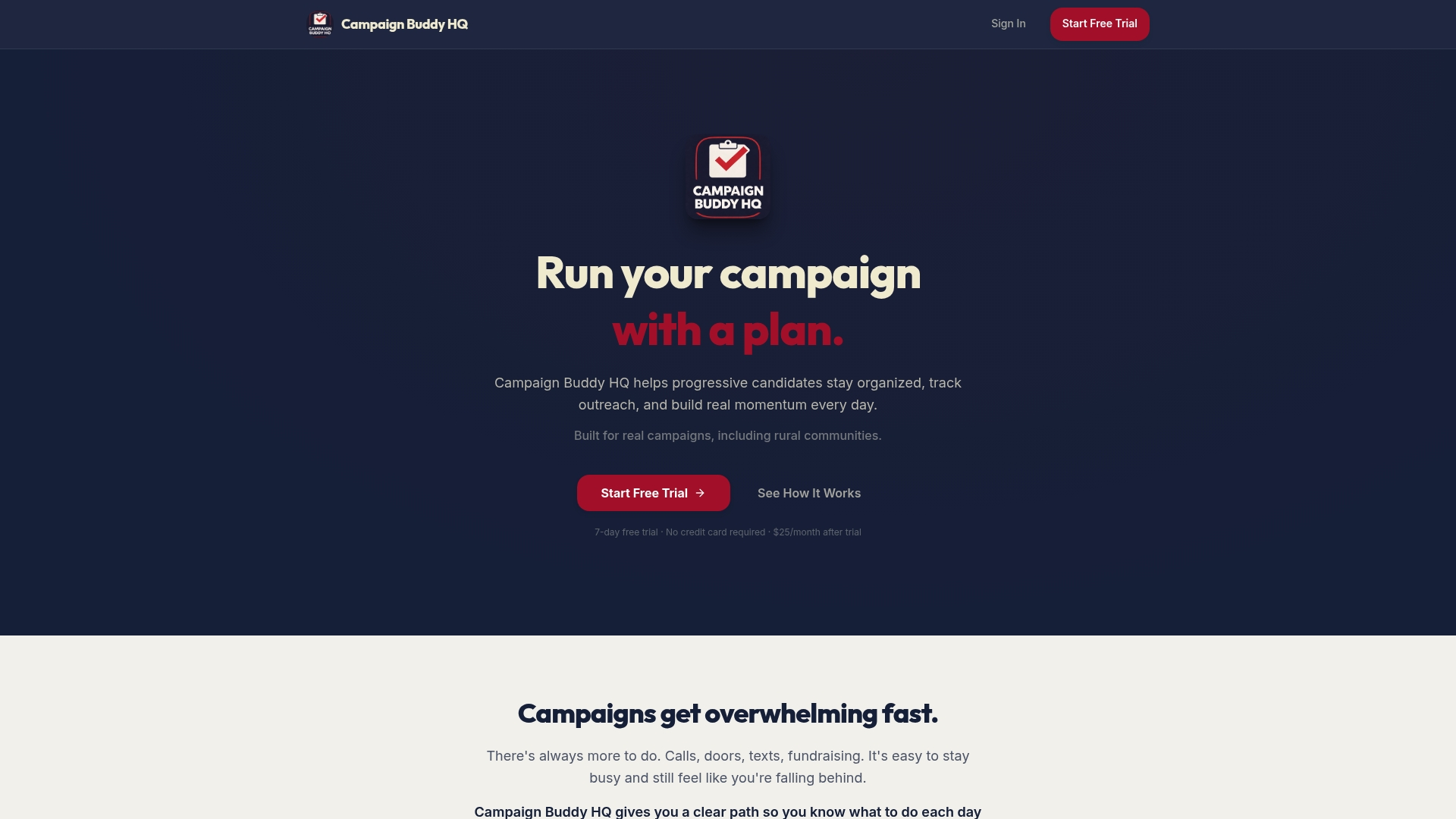
The confirmation loop, the re-sign flow, the disposition logging that makes your metrics trustworthy — those are not extras. They are the core of what the platform does. Campaigns using Campaignbuddyhq can run a phone bank with confirmation automation active, track every call logged in real time, and close the shift with next-week's roster already filling. No spreadsheet juggling, no end-of-night data entry scramble.
The 7-day free trial requires no credit card. Use it to run one complete shift cycle: send confirmations, log dispositions, and test the re-sign flow. You will know within that first shift whether the platform fits your operation.
Start your free trial at Campaignbuddyhq and see what a tighter system does for your numbers.
Useful sources and further reading
The research and guidance behind these tips comes from practitioners and organizations with direct experience in volunteer coordination and campaign operations. These are the most useful resources for going deeper.
- 10 Volunteer Management Strategies for Nonprofits — Nonprofit Learning Lab's structured overview of lifecycle management, retention metrics, and recognition practices
- Volunteer Management for Nonprofits: Best Practices and Tips — Academic overview of volunteer lifecycle frameworks and program design
- How to Recruit Volunteers for Your Campaign — Practical recruitment strategies for converting supporters into active volunteers
- Campaign Volunteer Onboarding Checklist — Copy-ready checklist and timing recommendations for first-shift onboarding
- Campaign Volunteer Power: 5 Strategies That Win — Tactics for sustaining volunteer commitment across a full campaign cycle