
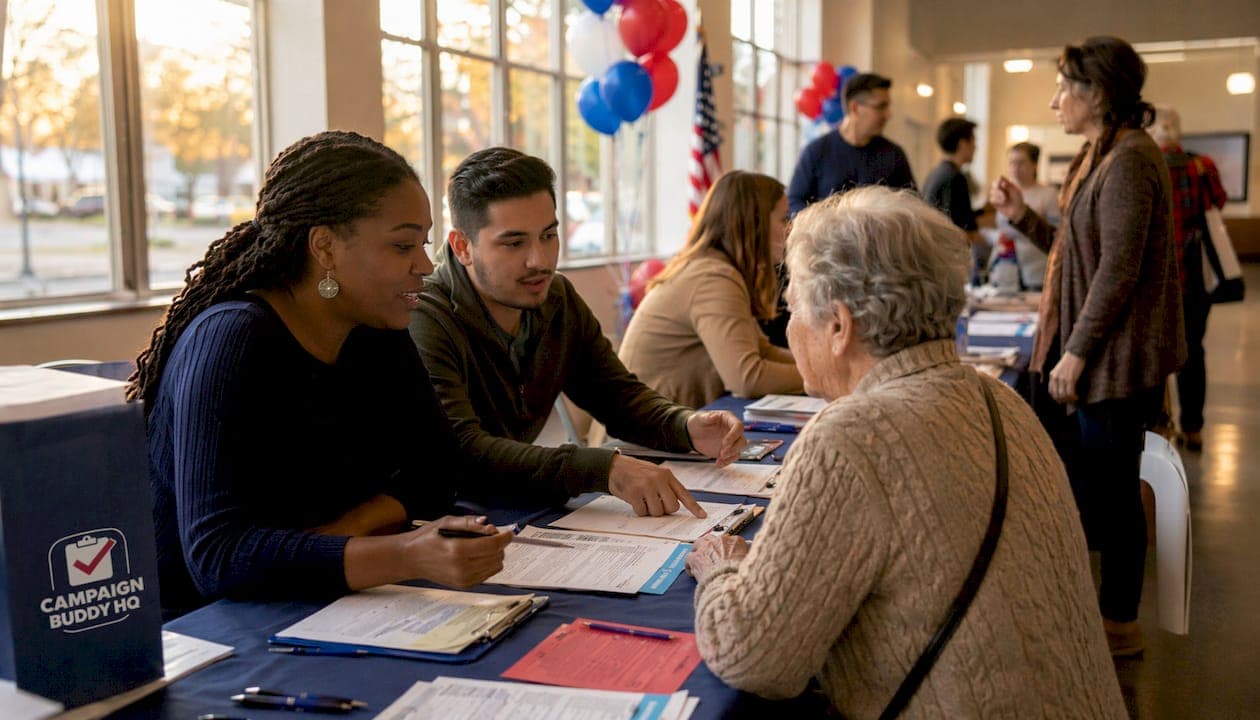
A voter registration drive is a coordinated effort where individuals or organizations help eligible citizens complete and submit voter registration forms, with the direct goal of increasing electoral participation. These drives are the most personal form of civic outreach available to community leaders. They reach people who fall through the cracks of automated systems, and they build the kind of trust that no mailer or digital ad can replicate. Understanding what a voter registration drive involves, including its legal requirements and planning demands, is the first step toward running one that actually works.
What is a voter registration drive and why does it matter?
A voter registration drive is a planned campaign where trained volunteers assist eligible citizens to register to vote at a specific location, event, or through targeted outreach. The formal term used by election officials and legal bodies is "third-party voter registration drive," which distinguishes community-led efforts from government-run registration programs. Both terms describe the same activity, and you will encounter both in state regulations and nonprofit guidance.
Registration is the first critical contact with new voters and a direct opportunity to build long-term civic engagement. That first interaction shapes whether someone sees voting as accessible or bureaucratic. A well-run drive removes that barrier on the spot.
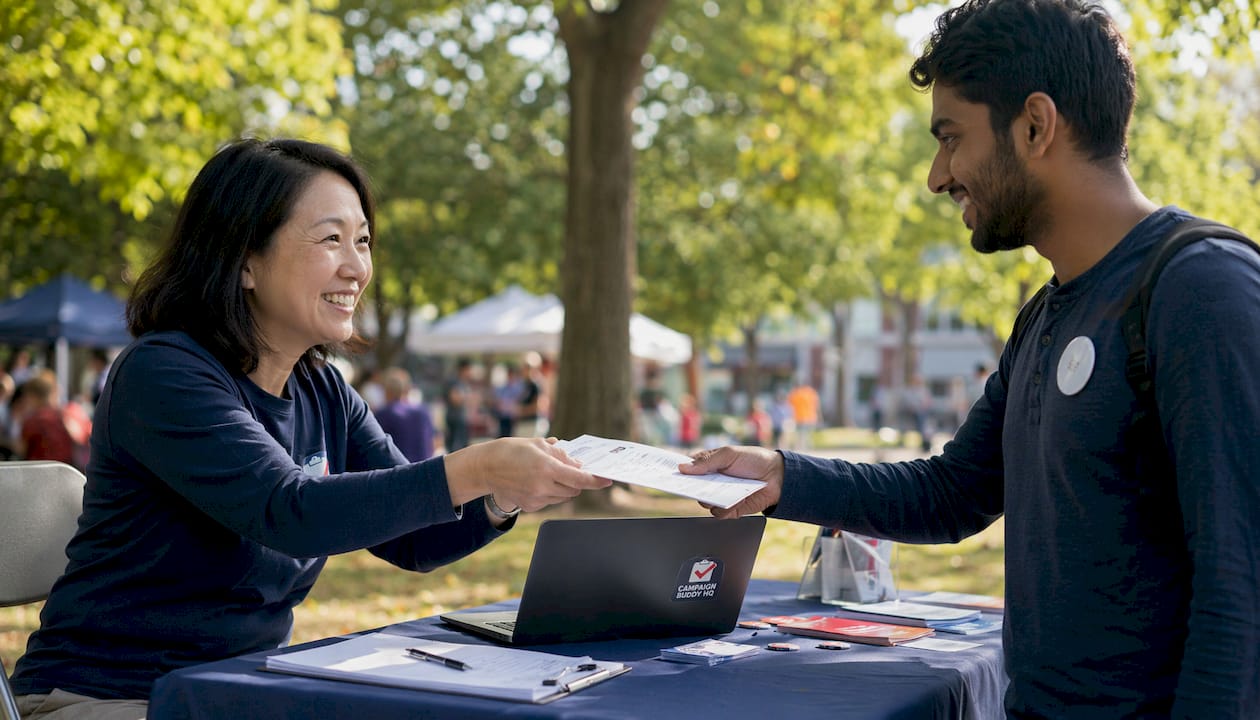
The importance of voter registration drives goes beyond paperwork. Registered voters are more likely to volunteer, advocate for community issues, and seek public office. Registration is not the finish line. It is the starting point for a more engaged community.
What are the key benefits and goals of voter registration drives?
The benefits of voter registration drives reach far beyond the number of forms collected on a single afternoon. Drives build community clout, create lifelong civic habits, and reach voters that no other method touches.
The core goals of a well-planned voter registration campaign include:
- Increasing representation. Communities with higher registration rates carry more weight in elections and policy decisions. Drives directly expand that representation.
- Building voting habits early. First-time registrants who receive personal guidance are more likely to vote consistently in future elections.
- Reaching isolated voters. Drives go to community centers, churches, college campuses, and rural areas where people are not actively seeking registration on their own.
- Strengthening democratic trust. Face-to-face engagement builds confidence in the electoral process, especially in communities with historical barriers to participation.
- Creating civic multipliers. Research confirms that drives increase turnout by producing community advocates who participate in multiple civic actions beyond voting.
One benefit that surprises many organizers is the nonpartisan nature of the results. Voter outreach drives do not advantage any single political party. New registrants reflect the existing partisan leanings of their community, not the preferences of the organizers. That fact matters when you are building coalitions or seeking institutional support for your drive.
Pro Tip: Frame your drive around community representation, not party politics. Nonpartisan messaging attracts more volunteers, more venue partners, and more participants.
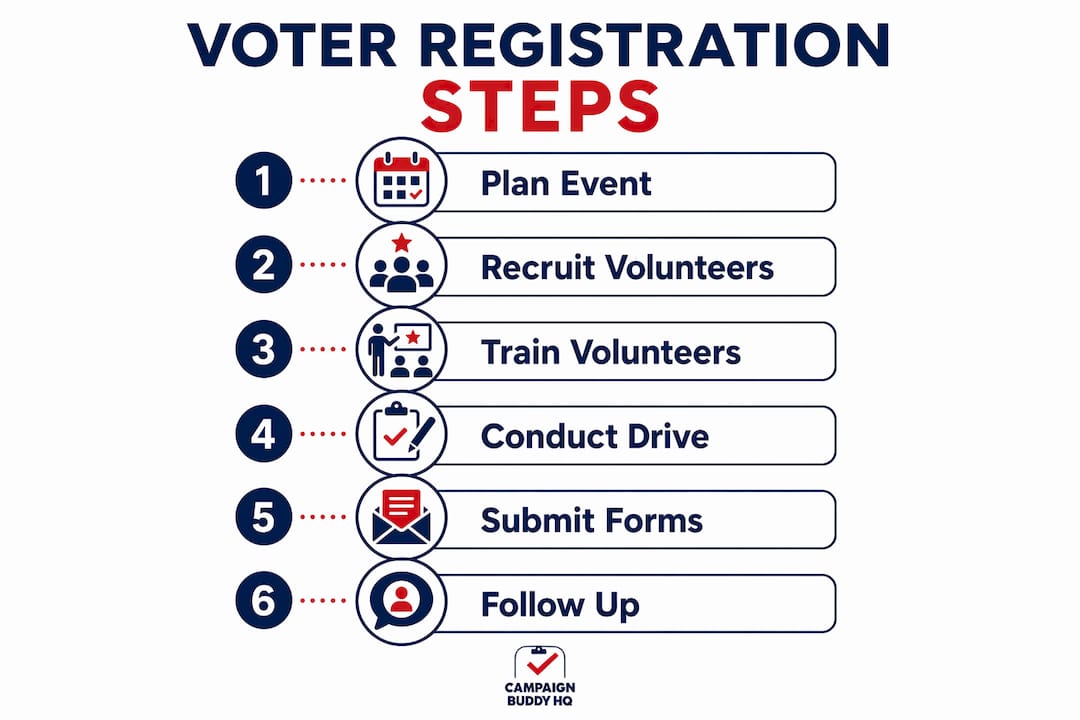
How do voter registration drives work, and what legal rules apply?
Running a voter registration drive requires more than setting up a table and handing out forms. Legal compliance is non-negotiable, and the rules vary significantly by state.
Follow these steps to stay compliant and protect every registration you collect:
- Research your state's requirements first. Approximately 50% of U.S. states impose specific restrictions or regulatory requirements on third-party voter registration drives. Some states restrict private-led drives outright. Know the rules before you recruit a single volunteer.
- Complete required training. Some states require organizers to undergo certified training before conducting a drive and to use only state-approved forms. Training is not optional in those states. It also reduces errors that invalidate registrations.
- Use only official, state-approved forms. Unofficial or outdated forms will be rejected. Download current forms directly from your state or county election office.
- Submit forms within legal deadlines. Oregon's 5-day rule is one example of a strict submission deadline. Missing it can invalidate every form collected at your event. Know your state's deadline before the drive begins.
- Never alter a completed form. If a voter makes an error on their signed registration form, organizers cannot correct it. Discard the form and give the voter a fresh one. Altering a signed form is a legal violation.
- Do not keep unauthorized copies. Organizers legally cannot retain copies of completed registration cards containing personal information unless the data is redacted. Keeping unauthorized copies is one of the most common compliance violations.
Pro Tip: Assign one person per drive event to handle all completed forms. A single chain of custody reduces errors, prevents loss, and makes submission faster.
How do voter registration drives fit into broader voter engagement strategies?
Policy reforms like automatic voter registration and the National Voter Registration Act (commonly called the Motor Voter Act) have expanded access to registration significantly. These reforms matter. But local voter registration drives remain essential even where automatic registration exists. No automated system replaces the trust built through a direct conversation.
The Motor Voter Act requires states to offer registration at DMV offices and public assistance agencies. That reaches people who interact with those systems. Drives reach everyone else, including people who do not drive, do not use public benefits, and have never been prompted to register.
"Successful drives are about more than form-filling. They help voters understand the importance of their voice and the social context of voting. Experts stress the value of orienting voters to the democratic process, not just completing paperwork." — Center for Democracy and Civic Engagement
That distinction is the most underappreciated insight in civic engagement work. A drive that treats registration as a transaction misses the point. A drive that treats it as an introduction to democratic participation builds something lasting. Community leaders who understand voter outreach strategy know the difference between collecting forms and building civic identity.
What are best practices for planning an effective voter registration drive?
Effective voter drive events share a common structure. The logistics are straightforward when you plan them in advance.
Location and timing
Choose high-traffic locations where your target community already gathers. College orientation weeks, community festivals, faith community events, and local nonprofit events are proven venues. Secure written permission from venue managers before the event date. Schedule drives at least 30 days before your state's voter registration deadline to give new registrants time to confirm their status.
Volunteer recruitment and training
Recruit volunteers through existing community networks, faith organizations, and campus groups. Train every volunteer on state-specific rules, form handling, and the submission deadline. A volunteer who does not know the 5-day rule can cost you an entire event's worth of registrations.
Nonpartisan messaging
Your materials, scripts, and signage must be nonpartisan. Focus on eligibility, the process, and the deadline. Avoid candidate names, party symbols, or issue-specific language at the registration table.
Document handling and submission
Use a secure folder or envelope for completed forms. Count forms before and after each shift. Plan your submission schedule around the legal deadline, not around your convenience. Speed of submission matters more than volume.
Follow-up outreach
Registration is the start of the relationship. Follow up with new registrants before the election to remind them of their polling location, early voting options, and election date. This follow-up step is where drives convert registrations into actual votes.
| Planning element | Key action |
|---|---|
| Location selection | Choose high-traffic community venues with written permission |
| Volunteer training | Cover state rules, form handling, and submission deadlines |
| Form management | Assign one handler per event, count forms each shift |
| Submission timing | Submit before the legal deadline, not at the last minute |
| Post-drive follow-up | Contact new registrants before election day with voting logistics |
Key Takeaways
A voter registration drive succeeds when organizers combine legal compliance, nonpartisan community engagement, and a clear submission plan before the first volunteer shows up.
| Point | Details |
|---|---|
| Legal compliance is non-negotiable | About 50% of states impose specific rules on third-party drives; research your state before starting. |
| Drives reach voters automation misses | Automatic registration systems do not replace face-to-face outreach for isolated or disengaged communities. |
| Form handling requires strict discipline | Never alter a signed form, never keep unauthorized copies, and always submit within the legal deadline. |
| Nonpartisan framing builds broader support | Drives do not favor any party; new registrants reflect community leanings, not organizer preferences. |
| Registration starts a civic relationship | Follow up with new registrants before election day to convert registrations into actual votes. |
Why voter registration drives are harder than they look
I have watched well-meaning organizers set up a table, collect 40 forms, and then scramble to figure out where to submit them two days before the deadline. The planning gap is almost always the same. People focus on the event and forget the paperwork chain that follows it.
The legal side of voter registration drive planning catches first-timers off guard. The rules around form alteration, copy retention, and submission deadlines are not intuitive. They feel bureaucratic until you realize they exist to protect voters' privacy and the integrity of their registration. Once you understand that, compliance stops feeling like a burden and starts feeling like part of the job.
The deeper challenge is the one most guides skip entirely. Building trust in communities that have historically faced barriers to voting takes more than one afternoon with a folding table. It takes consistent presence, honest conversation, and follow-through after the drive ends. The volunteer strategies that work in sustained outreach campaigns apply directly here. Show up more than once. Know the community before you ask it to trust you with its civic participation.
The drives that produce lasting results treat registration as an introduction, not a transaction. That shift in mindset is the single biggest difference between a drive that inflates a spreadsheet and one that actually moves a community.
— Billy
How Campaignbuddyhq supports your voter registration efforts
Running a voter registration drive means tracking volunteers, logging registrations, managing submission deadlines, and following up with new registrants before election day. That is a lot to coordinate without a system.
Campaignbuddyhq is built for exactly this kind of organized, ground-level outreach. The platform lets you log registrations, track volunteer activity, plan daily and weekly outreach, and monitor progress toward your goals, all in one place. It works for grassroots drives in dense urban precincts and rural low-density communities alike. You can start a free 7-day trial with no credit card required and see how much easier coordinated outreach becomes when your data and your plan live in the same tool.
FAQ
What is a voter registration drive?
A voter registration drive is a coordinated effort where trained volunteers help eligible citizens complete and submit voter registration forms at community events or targeted outreach locations. The goal is to increase electoral participation, especially among underregistered populations.
Are voter registration drives partisan?
Voter registration drives are nonpartisan by design. Research from the Center for Democracy and Civic Engagement confirms that new registrants reflect the existing partisan leanings of their community, not the preferences of the organizers running the drive.
What legal rules do organizers need to follow?
Rules vary by state, but common requirements include using state-approved forms, completing certified training, submitting forms within strict deadlines, and never altering or copying completed registration cards without authorization.
How do voter registration drives differ from automatic voter registration?
Automatic voter registration enrolls eligible citizens through government agency interactions like DMV visits. Drives reach people who do not interact with those systems and provide the personal engagement that builds long-term civic trust.
How do I start planning a voter registration drive?
Start by researching your state's specific requirements, then secure a high-traffic venue, recruit and train volunteers on form handling and submission deadlines, and build a post-drive follow-up plan to remind new registrants about upcoming elections.