
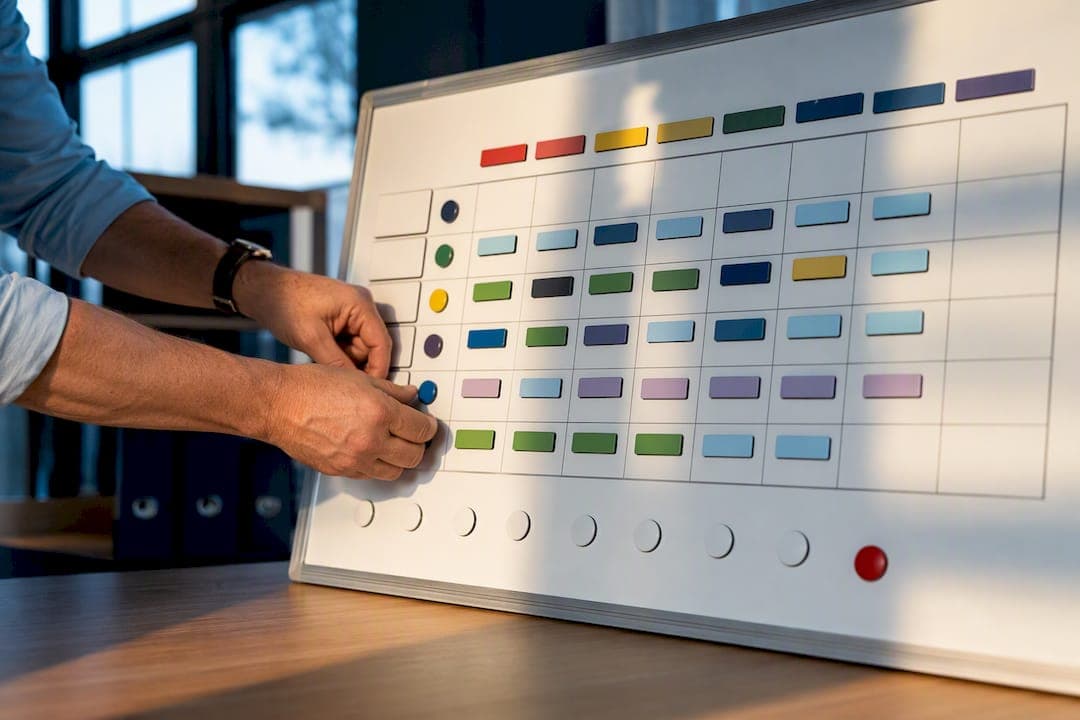
A weekly field plan is the seven-day breakdown of doors, calls, and texts your campaign needs to hit its win number, tied to a shift grid that tells volunteers where to show up. The one non-negotiable piece is a numeric outreach target for the week, derived from your vote goal, not a vague sense of "canvass more." Below is a copyable template and the math to build your own.
TL;DR:
- Campaigns should adjust weekly contact goals based on voter universe, conversion rates, and volunteer capacity, updating targets every two weeks with live data.
- Volunteer schedules should be simple, tiered by experience, and include standby lists to handle no-shows, with reminders sent 24 and 2 hours before shifts.
- A weekly dashboard must track contacted voters, conversations, supporters, shifts filled, and uncontacted areas to guide real-time redeployment and adjustments.
- Contingency plans for low volunteer turnout include standby lists and flexible outreach methods, shifting from canvassing to calls or texts when necessary.
- Using dedicated campaign software streamlines planning, tracking, and reallocation, reducing setup time and improving real-time oversight over paper-based systems.
Table of Contents
- What Goes Into a Weekly Field Plan?
- How Do You Turn a Win Number Into Weekly Targets?
- How Do You Divide Turf and Fill a Shift Grid?
- How Do You Recruit and Retain Volunteers Every Week?
- What Should Your Weekly Dashboard Track?
- What's the Backup Plan When Volunteers Don't Show?
- How Do You Keep Volunteers Motivated Week After Week?
- What Legal Rules Apply to Voter Contact Activities?
- How Often Should You Adjust the Weekly Plan?
- Author's perspective: what actually breaks weekly field plans
- Run Your Weekly Field Plan Without the Spreadsheet Chaos
- Templates and Checklists Worth Downloading
- Sources
- FAQ
What Goes Into a Weekly Field Plan?
A weekly field plan works when volunteers can glance at it and know exactly where to go. Build a grid with five columns: day, shift window, method, target contacts per shift, and shift lead. Fill it in before Monday, not during Tuesday's scramble.
Pass counts vary by geography. In dense urban turf, canvassers can typically knock 25 to 35 doors in a three-hour shift, according to GOTV volunteer coordination guidance. Rural routes with longer drive times between houses often cut that number by a third or more, so a rural shift grid should budget more travel time and fewer total contacts per volunteer.
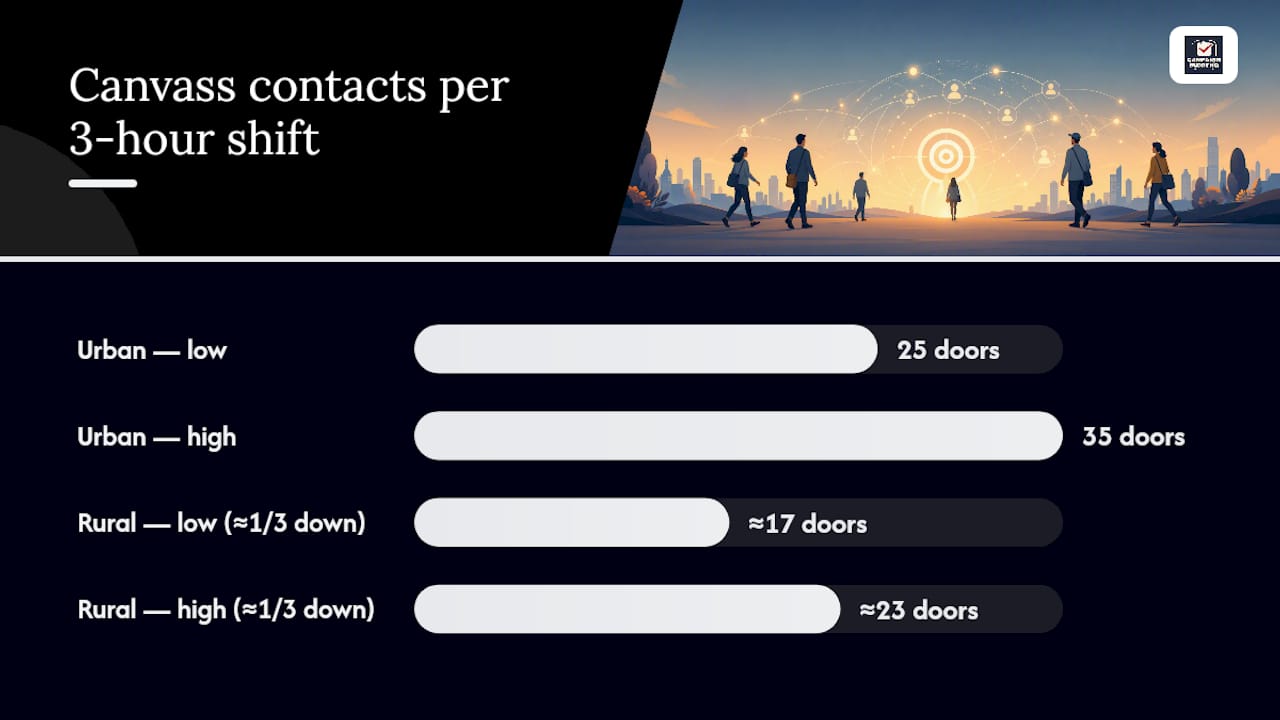
A sample week might look like this:
Daily priorities should shift with your campaign phase:
- Early week: persuasion contacts with undecided voters, longer conversations.
- Midweek: voter ID calls to sort your universe into support levels.
- Weekends closer to Election Day: base and GOTV turnout, short reminder scripts.
Keep the whole document to one page. A field plan cluttered with 100 pages of strategy rarely gets opened twice, while a working weekly sheet gets used every day.
How Do You Turn a Win Number Into Weekly Targets?
Your win number is the vote total you need to win, usually half the projected turnout plus one. Your vote goal is that number adjusted for expected support levels among people you haven't contacted yet. Projected turnout is your estimate of how many people will actually vote, based on historical turnout in comparable races.
The math works backward from there:
- Take your persuasion universe (undecided or soft-support voters) and multiply by how many contacts each voter typically needs to move, often two to four touches.
- Divide that total contact need by the number of weeks left in the cycle to get a weekly contact target.
- Split the weekly target across canvassing, phone banking, and texting based on your volunteer capacity for each method.
- Build in a no-show buffer of about one-third to two-fifths for scheduled shifts, since that's the realistic gap between sign-ups and people who actually show.
A field plan template built for campaigns walks through this exact sequence: universe size, contacts needed, conversion assumptions, then weekly output. Run the numbers once at the start of the cycle, then recheck them every two weeks as your voter file updates. Static targets set in July rarely match reality in October.
How Do You Divide Turf and Fill a Shift Grid?
Turf division starts with your persuasion universe, not your map. Break neighborhoods into walk lists sized to what one volunteer can realistically cover in a shift, usually 25 to 35 doors in dense areas, fewer in spread-out precincts.
- Assign a ward captain or team lead to each geographic cluster, responsible for filling that turf's shifts weekly.
- Set shift length at two to three hours; longer shifts see sharp drop-offs in volunteer energy and door quality.
- Build a standby list of 10 to 15 volunteers who can cover no-shows on short notice, a tactic GOTV coordination research flags as essential once you're inside the final month.
- Send shift reminders 24 hours and again 2 hours before start time, cutting down on last-minute gaps.
Tier your volunteers so you know who to call first. Experienced canvassers anchor the schedule; newer recruits get paired alongside them rather than sent out solo. For a full walkthrough of shift-day logistics, the step-by-step canvassing guide covers scripts and data capture in more detail.
It's easier to consolidate a light shift than to scramble for coverage when three volunteers cancel the morning of.*
How Do You Recruit and Retain Volunteers Every Week?
Volunteer capacity is the actual ceiling on your outreach, not door count or call list size. Run recruitment pushes on a weekly cycle, timed two to three days before your busiest shift days, so sign-ups convert while the ask is still fresh. Make the ask specific: "We need 12 people Saturday from 10 to 1" recruits better than "come volunteer sometime."
A one-shift onboarding checklist keeps new volunteers moving instead of standing around confused:
- Meeting location and check-in contact
- Script and talking points, reviewed out loud once before knocking
- What data to record after each contact
- Safety guidance and an escalation contact for problem encounters
Retention comes down to tiering. Split volunteers into A-tier (reliable, experienced, can lead shifts) and B-tier (newer, need pairing), then recruit a few short-term shift leaders from your A-tier each week to spread the coordination load. The volunteer onboarding checklist has a longer version of this process if you're building it from scratch.
Pro Tip: Thank volunteers within 24 hours of their shift, by name, referencing what they actually did that day. Generic "thanks everyone" messages get ignored; specific ones get people to sign up again.
What Should Your Weekly Dashboard Track?
A weekly dashboard needs to answer one question fast: are we on pace? Guidance on weekly campaign tracking recommends logging these fields every week:
- Voters contacted (total, by method)
- Successful conversations versus attempted contacts
- Supporters identified and undecided voters contacted
- Volunteer shifts scheduled versus filled
- Uncontacted turf areas carried into next week
Run a 15-minute weekly review every Monday morning. Decision rules should be simple. If a precinct is behind schedule two weeks running, pull a shift lead from a caught-up area rather than adding more recruitment pressure to a struggling one.
Short, repeatable weekly reviews paired with a live completion view let field directors redeploy volunteers in real time during peak GOTV weeks instead of discovering the gap after Election Day. Daily logs feed this review; without them, the Monday meeting is guesswork. A live dashboard that updates as shifts wrap turns a static weekly report into something the whole team checks daily, which matters most in the final month when reassignment decisions need to happen within hours, not days.
What's the Backup Plan When Volunteers Don't Show?
Build your contingency plan before you need it, not the week a snowstorm wipes out your Saturday canvass. Every weekly plan should carry a written fallback for the two failure modes that hit hardest: low volunteer turnout and events outside your control.
For turnout gaps, your standby list is the first line of defense, but it only works if you've actually recruited one. Keep 10 to 15 names on hand who've agreed to short-notice shifts, and text them the morning a gap appears rather than waiting until shift time to discover you're short.
For external disruptions, weather, venue cancellations, a competing community event, build flexibility into the method mix. If canvassing gets rained out, shift that day's target to phone or text outreach instead of losing the week's numbers entirely. Campaigns that treat their weekly targets as fixed by method, rather than fixed by total contacts, adapt faster when conditions change.
Document this rule once, and every shift lead knows the call without escalating to the campaign manager first.
How Do You Keep Volunteers Motivated Week After Week?
Communication with volunteers works best when it's specific, frequent, and two-way. A weekly group text or email that states the week's target number, gives one update on progress, and names people who hit milestones does more for morale than a monthly newsletter ever will.
Give shift leads a direct line to the campaign manager or field director, not a general inbox that takes two days to answer. Volunteers who hit a confusing situation on a Tuesday canvass need an answer that afternoon, not next week.
Recognition matters more than most campaigns budget for. A short shout-out naming a volunteer's actual contribution, "Dave knocked 34 doors Saturday and flipped two undecideds," builds more loyalty than a generic thank-you blast. Pair that with a light-touch check-in for volunteers who've gone quiet for two weeks; a simple "we miss you Saturday mornings" text often recovers a lapsed volunteer better than silence does.
What Legal Rules Apply to Voter Contact Activities?
Voter contact rules vary by state and by method, so campaigns need to check their specific jurisdiction rather than assume national rules apply evenly. Robocalls and automated texts face restrictions under federal telemarketing law that differ from live-caller rules, and several states add their own disclosure requirements for who's paying for a call or text.
Door-knocking has its own patchwork: some municipalities restrict canvassing hours or require permits for organized political canvassing in certain public spaces, though private-property door-to-door canvassing is broadly protected. Campaign finance disclosure rules also apply to volunteer-run phone and text operations if the campaign is paying for the platform or the data, so keep expense records tied to your outreach activity.
None of this replaces legal counsel. Every campaign should have its compliance questions, script language, calling hours, and disclosure requirements, reviewed by an election law attorney familiar with the specific state and local rules governing the race, before the first shift goes out.
How Often Should You Adjust the Weekly Plan?
Review your weekly plan against real results every single week, not just when something goes visibly wrong. The Monday review meeting isn't only for reporting numbers backward; it's for deciding what changes forward.
Three signals should trigger a plan adjustment: a persuasion universe that's converting faster or slower than assumed, a turf area consistently under target for two weeks running, and volunteer capacity that's grown or shrunk from your original estimate. Any one of those means your weekly targets from three weeks ago no longer reflect reality.
Adjustment doesn't mean rebuilding the plan from scratch. It means moving numbers: shifting five shifts from an over-performing precinct to a lagging one, adding a text push if phone conversion drops, or pulling back on canvass shifts in a turf area that's already saturated. Keep a simple running note of what changed and why each week, so by the time you hit the GOTV phase, you're adjusting based on eight weeks of pattern, not guessing blind.
Author's perspective: what actually breaks weekly field plans
Volunteer capacity is the real ceiling on outreach. Plan to that constraint, not to an idealized door count. The two mistakes I see most: schedules too complicated for shift leads to run without a manager, and skipping the weekly review because "everyone already knows the numbers." They rarely do. Keep it simple, keep it measured, every week.
— Billy
Run Your Weekly Field Plan Without the Spreadsheet Chaos
There are software platforms built for exactly the workflow this article just walked through: weekly and daily planning templates, outreach logging for every door knocked, call made, and text sent, volunteer shift scheduling, and dashboards that show contacts against targets in real time.
Instead of rebuilding your shift grid in a spreadsheet every Sunday night, some platforms offer Week-by-Week Campaign Plan playbooks to set targets once and adjust them as the voter file updates, cutting weekly setup time down to minutes instead of hours. Supporter tracking and campaign phase management stay tied to the same weekly numbers teams review regularly, so redeployment decisions happen off real data instead of a shift lead's gut feeling.
If your team is still tracking doors on paper and reconciling three spreadsheets before the Monday meeting, start a free 7-day trial and run next week's field plan inside one system instead.
Templates and Checklists Worth Downloading
Three resources worth pulling before you build your own weekly grid: the field plan template from TrainDems for universe segmentation and GOTV framework, the IAFF field and canvassing guide for a win-number-first checklist, and the additional field plan breakdown for scripts and volunteer assignment structure.
Sources
Your voter file, your CRM, and your shift-scheduling tool need to talk to each other, or your weekly plan runs on stale information. Most campaigns pull from three sources: a state or national voter file for contact history and vote propensity scores, a phone/text vendor for outreach logs, and a scheduling tool for shift fill rates.
The failure mode is predictable: canvassers knock doors already contacted by phone bankers that same week, because the two lists never synced. Fixing this doesn't require enterprise software. It requires a weekly export and import cycle, even a manual one, where contact results from Saturday's canvass update the master list before Monday's phone shift goes out.
Segment your voter universe once, then keep it updated weekly rather than rebuilding it from scratch each cycle. Persuasion targets, turnout targets, and base voters need separate lists because they get different scripts and different weekly priorities. A platform like Campaign Buddy HQ that logs doors, calls, and texts in one place removes the manual reconciliation step, but even a shared spreadsheet with clear update rules beats three disconnected lists. The voter outreach guide breaks down universe segmentation in more depth if your list-building process needs a rebuild.
- Field and Canvassing Guide (IAFF)
- Political field plan template (TrainDems)
- GOTV volunteer coordination (Vox Populus)
- Political campaign strategies and weekly targets (PoliticalMarketer)
FAQ
What is a weekly field plan in a political campaign?
It's a seven-day schedule of canvassing, phone banking, and texting shifts tied to a numeric outreach target derived from the campaign's win number, along with the volunteer roster needed to fill it.
How many doors should a canvasser knock per shift?
In denser urban areas, 25 to 35 doors in a three-hour shift is typical; rural routes usually run lower due to travel time between houses.
When should GOTV coordination start relative to Election Day?
Start major GOTV coordination roughly 30 days out, aiming for about 30% shift capacity committed at that point, 60 to 70% filled at 14 days, and full confirmations by 72 hours before Election Day, per GOTV volunteer coordination guidance.
What should a weekly reporting dashboard include?
Track voters contacted, successful conversations, supporters identified, volunteer shifts filled, and uncontacted turf areas, reviewed in a short weekly meeting to decide on redeployment.