
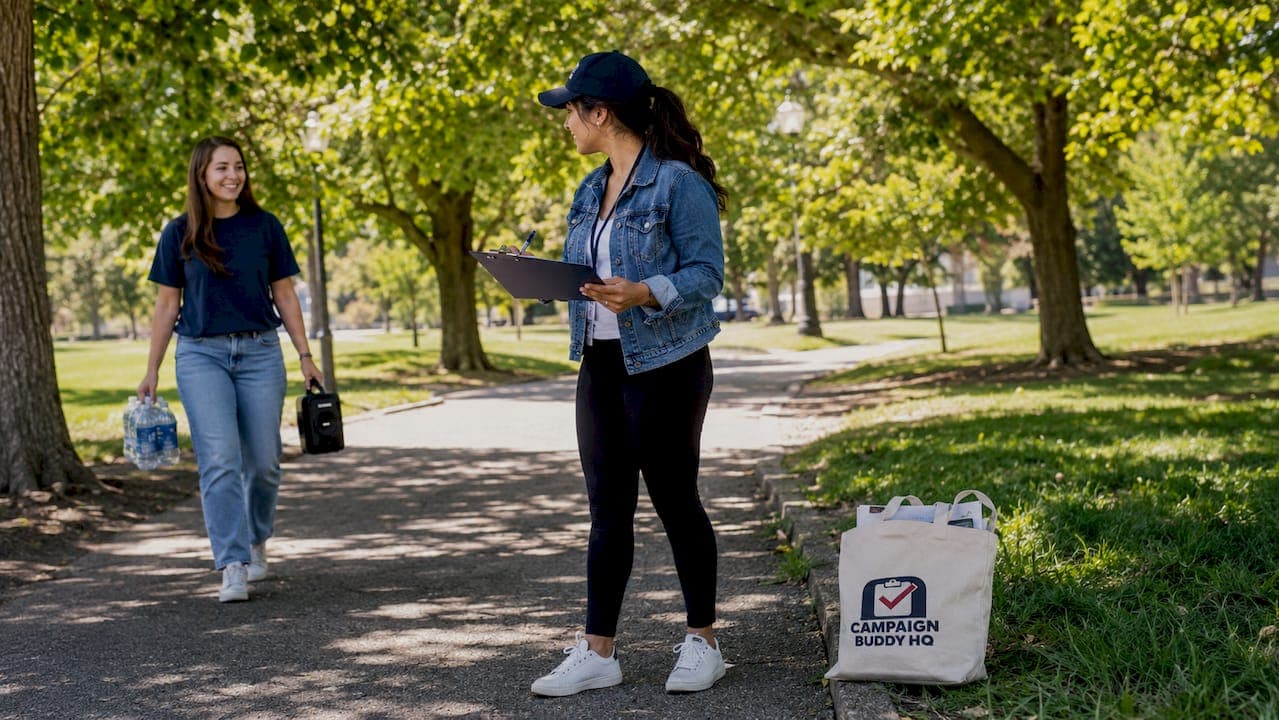
Field organizing is defined as the coordinated practice of direct voter contact and volunteer mobilization through canvassing, phone banking, text banking, and community events to win elections. It is the engine of every serious grassroots campaign. A comprehensive campaign field plan translates strategic goals into daily outreach by defining voter universes, canvassing scripts, and volunteer structures. Campaignbuddyhq was built specifically to support this kind of ground-level work, giving organizers the tools to plan, track, and sustain field operations from day one.
What is field organizing, and why does it matter?
Field organizing is the structured, ground-level effort to contact voters directly and build the volunteer networks that make those contacts possible at scale. Unlike advertising, which broadcasts a message to a passive audience, field organizing creates two-way conversations. Those conversations build trust, answer objections, and move voters from undecided to committed.
The field organizing definition extends beyond knocking doors. It includes every direct touchpoint between a campaign and a voter: phone calls, text messages, community events, and relational outreach through personal networks. The role of field organizing in a campaign is to convert a candidate's support into actual votes on election day. Without a functioning field operation, even a well-funded campaign leaves votes on the table.

Campaign organizing at its core is about people reaching people. Field organizing gives that principle a repeatable structure.
What are the primary roles in field organizing?
Field organizers are the professionals who coordinate the day-to-day mechanics of voter contact and volunteer management. Field organizers coordinate volunteer recruitment, training, and voter contact through canvassing, phone, and text, while also collecting data using software platforms to connect campaign strategy to the community. That is a wide scope, and it requires both people skills and operational discipline.
Examples of field organizing roles in a typical campaign include:
- Field organizer: Recruits and trains volunteers, manages canvassing turf, tracks voter contact data, and reports progress to the campaign director.
- Regional field director: Oversees multiple field organizers across a geographic area, sets weekly goals, and coordinates with the campaign's data team.
- Volunteer coordinator: Schedules volunteer shifts, handles logistics for phone banks and canvasses, and keeps volunteer morale high.
- Relational organizer: Focuses on peer-to-peer outreach, coaching volunteers to contact their own networks rather than strangers.
- Data manager: Maintains the voter file, inputs contact results, and produces reports that guide targeting decisions.
What does a field organizer do beyond voter contact? Organizers build alliances with local leaders, manage volunteer schedules, and track every interaction in the campaign's data system. That last point matters more than most campaigns realize.
Pro Tip: Assign each field organizer a specific turf and a weekly contact goal. Clear ownership prevents duplication and makes performance easy to measure.
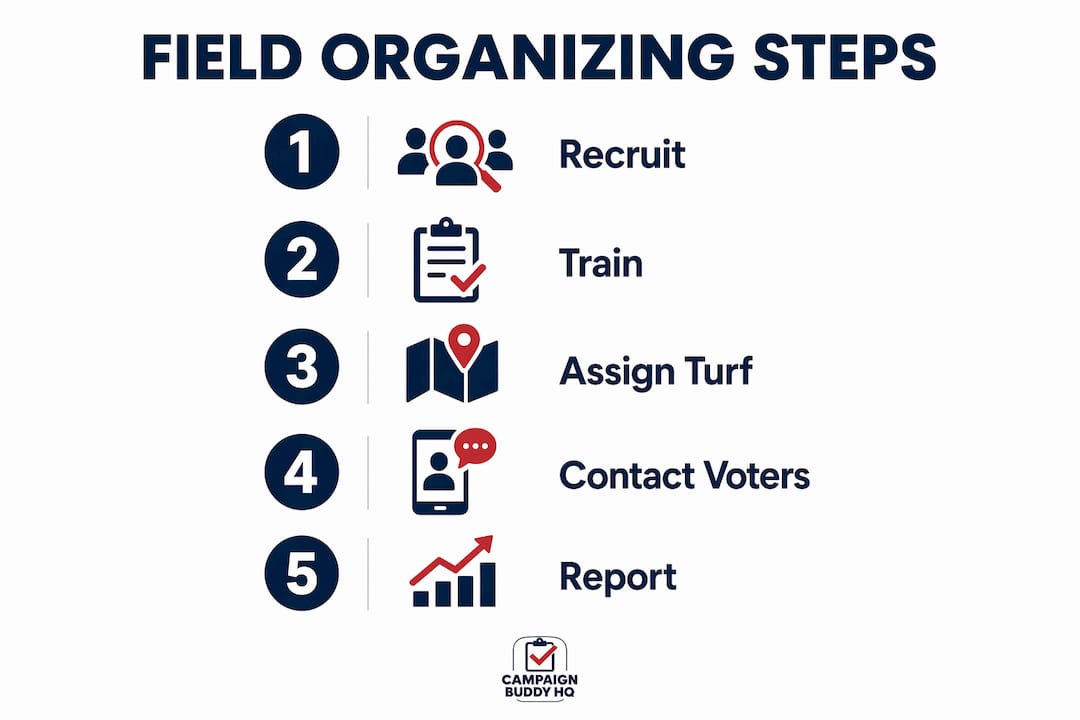
How do field organizing strategies mobilize volunteers and engage voters?
The most effective field organizing strategies combine multiple contact methods in a deliberate sequence. A voter who receives a door knock, a follow-up text, and a phone call from a neighbor is far more likely to turn out than one who sees a single ad. Repeated contacts build higher voter rapport and conversion, which is why layered outreach is the standard for serious campaigns.
A practical field mobilization sequence looks like this:
- Build your voter universe. Use your voter file to identify persuadable voters and low-propensity supporters in your target precincts. Prioritize by margin of victory needed.
- Recruit and train volunteers. Run a volunteer recruitment drive through social media, community events, and personal asks. Train every volunteer on the canvassing script, data entry, and how to handle objections.
- Launch canvassing. Send volunteers door to door in assigned turf. Collect contact results in real time using a mobile data entry tool.
- Follow up with phone and text banking. Reach voters who were not home during canvassing. Text banking works well for appointment reminders and event invitations.
- Deploy relational organizing. Ask volunteers to personally contact five to ten people in their own networks. Volunteer-powered outreach is more persuasive than paid canvassing because volunteers act as trusted voices among friends and family.
- Track, adjust, and repeat. Review contact data weekly. Shift resources to precincts where contact rates are low or persuasion numbers are moving.
Volunteer management strategies are the backbone of this sequence. Volunteers who feel respected and informed stay engaged longer and recruit others.
Obama's 2008 and 2012 campaigns demonstrated this at scale. Those operations invested heavily in volunteer training and context sharing, giving volunteers a clear picture of the strategy and their role in it. Volunteer motivation improved when organizers explained the "why" behind every task.
Pro Tip: Hold a brief weekly call with your top volunteers. Share contact numbers, celebrate wins, and preview the week ahead. Transparency builds loyalty.
How does field organizing differ from community organizing?
Field organizing and community organizing share tactics but serve different goals. Field organizing focuses on electoral wins through structured, time-bound voter contact. Community organizing seeks long-term relationship-building and power development around broader social issues. Confusing the two leads campaigns to misallocate time and resources.
| Dimension | Field organizing | Community organizing |
|---|---|---|
| Primary goal | Win a specific election | Build lasting community power |
| Time horizon | Defined by election date | Ongoing, multi-year |
| Success metric | Votes, turnout, persuasion | Membership, policy wins, coalitions |
| Volunteer role | Execute contact goals | Co-lead and shape the agenda |
| Data focus | Voter file and contact rates | Relationship mapping and issue tracking |
The distinction matters for resource allocation. A campaign that treats every community meeting as a voter contact opportunity will frustrate community partners. A campaign that ignores community relationships will struggle to recruit credible local validators.
The best campaigns integrate both. They run a tight field operation focused on voter contact while supporting community organizing efforts through separate staff or partner organizations. Differentiating field from community organizing allows campaigns to focus resources on winning elections while supporting broader community power-building through other means.
What tools support field organizing today?
Modern field organizing runs on data platforms that connect voter contact to real-time decision-making. Field organizers use platforms such as NGP VAN or VoteBuilder to monitor voter support levels, volunteer engagement, and campaign progress. Real-time data improves targeting and resource allocation across the entire operation.
The core infrastructure a field operation needs includes:
- Voter file access: A current, clean voter file is the foundation. It tells you who to contact, in what order, and with what message.
- Mobile canvassing app: Volunteers enter contact results in the field, eliminating paper walk sheets and data entry delays.
- Volunteer management system: Tracks who signed up, who showed up, and who needs a follow-up ask.
- Outreach logging and reporting: Gives organizers a daily view of doors knocked, calls made, texts sent, and registrations completed.
- Digital outreach integration: Integrating digital and in-person outreach creates layered persuasion across trusted channels and reinforces field messaging.
Successful campaigns integrate field and digital outreach for consistent messaging, using data-driven decisions and genuine respect for volunteer infrastructure. Campaigns that rely on digital ads alone and neglect field infrastructure consistently underperform their polling.
Campaignbuddyhq addresses this gap directly. The platform logs outreach activities across doors, calls, texts, and registrations, tracks progress toward campaign goals, and supports daily and weekly planning for organizers working in both urban and rural communities.
Pro Tip: Review your contact rate by precinct every Monday morning. If a precinct is below target by midweek, redeploy volunteers before the weekend canvass.
Key Takeaways
Field organizing is the most direct path from campaign strategy to votes, and it requires disciplined volunteer management, layered outreach, and real-time data to succeed.
| Point | Details |
|---|---|
| Field organizing definition | Direct voter contact through canvassing, phone, and text combined with volunteer mobilization to win elections. |
| Core field organizer duties | Recruit and train volunteers, manage turf, track contact data, and report progress to campaign leadership. |
| Volunteer outreach advantage | Volunteers are more persuasive than paid canvassers because they speak authentically to people they know. |
| Field vs. community organizing | Field organizing targets electoral wins within a fixed timeline; community organizing builds long-term power. |
| Tools and tracking | Platforms like NGP VAN and Campaignbuddyhq give organizers real-time data to target and adjust field efforts. |
Field organizing is undervalued, and campaigns pay for it
Campaigns consistently underinvest in field relative to digital advertising, and the results show up in turnout numbers. I have watched well-funded campaigns spend heavily on social media while their field operation ran on a skeleton crew and a spreadsheet. The voters they needed most, low-propensity supporters in competitive precincts, never got a knock on the door.
The shift that actually moves numbers is treating field as the primary persuasion tool, not a backup for when the ad budget runs out. Shifting campaign culture to prioritize field outreach as a primary persuasion tool is critical for modern electoral success. That means hiring field staff early, building volunteer infrastructure before you need it, and tracking contact metrics with the same rigor you apply to fundraising.
The other mistake I see constantly is treating volunteers as free labor rather than the campaign's most credible messengers. Volunteers speak authentically from the heart to people they know, unlike paid outreach. When you invest in training, context, and recognition, volunteers stay, recruit others, and deliver conversations no ad can replicate. The campaigns that win close races almost always have a volunteer corps that feels ownership over the outcome. That does not happen by accident. It happens because someone built the infrastructure and treated people well.
— Billy
How Campaignbuddyhq supports your field operation
Running a field operation without the right tracking tools means flying blind on your most important metrics.
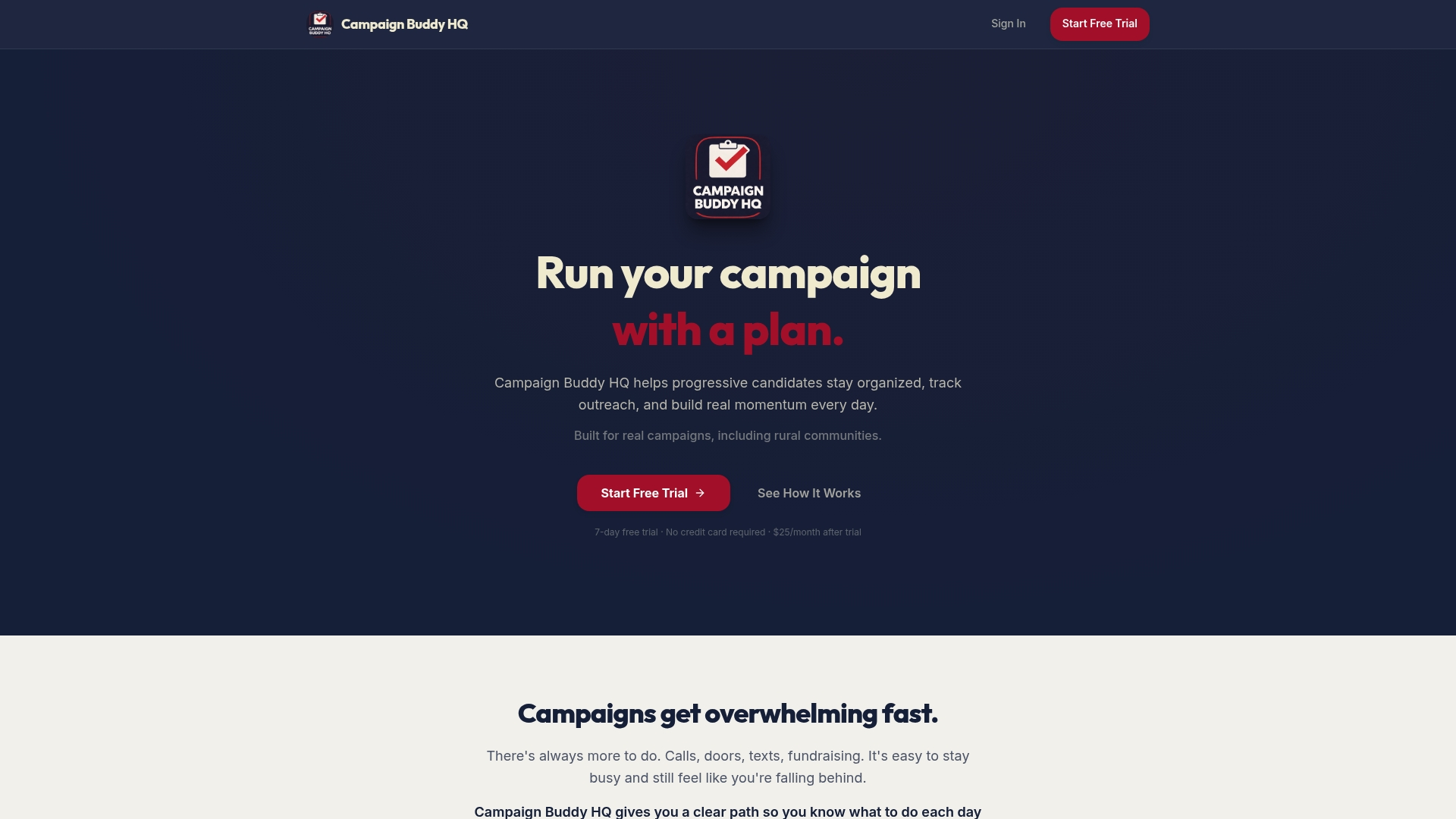
Campaignbuddyhq gives political campaigns, issue advocacy groups, and grassroots organizers a purpose-built platform to manage every layer of field work. You can log doors knocked, calls made, texts sent, and registrations completed, then track progress against your weekly and campaign-phase goals. The platform supports daily planning, volunteer tracking, and outreach logging in a format built for real-world conditions, including low-density rural communities where field work is hardest. A field organizing workflow built on consistent data collection is what separates campaigns that hit their targets from those that guess. Try Campaignbuddyhq free for 7 days with no credit card required.
FAQ
What is the field organizing definition in politics?
Field organizing is the structured practice of direct voter contact and volunteer mobilization through canvassing, phone banking, and text banking to win elections. It converts campaign strategy into measurable outreach activity.
What does a field organizer do day to day?
A field organizer recruits and trains volunteers, manages canvassing turf assignments, tracks voter contact data in platforms like VoteBuilder or NGP VAN, and reports progress to campaign leadership.
How does field organizing differ from community organizing?
Field organizing targets a specific election within a fixed timeline, while community organizing builds long-term relationships and power around broader social issues. The goals, timelines, and success metrics are distinct.
Why is volunteer outreach more effective than paid canvassing?
Volunteers speak to people they know personally, which makes their conversations more credible and persuasive than contact from a paid stranger. Campaigns use paid canvassers for consistency but rely on volunteers for relational strength.
How do you build a field organizing plan from scratch?
Start by defining your voter universe, then set weekly contact goals, recruit and train volunteers, assign turf, and track results daily. A step-by-step campaign plan helps you sequence these steps before your first canvass.