
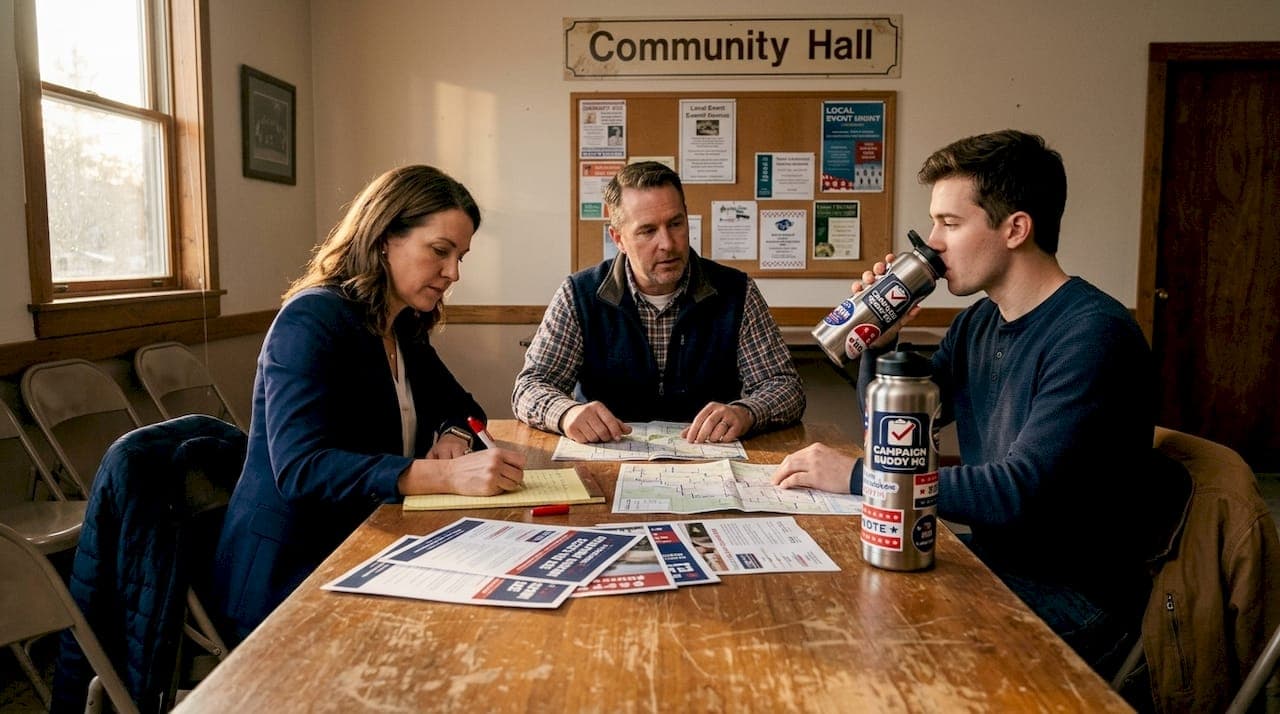
Rural campaigns fail for a surprisingly consistent reason: they treat momentum like a switch that can be flipped right before election day. It doesn't work that way. In lower-density communities, voters have long memories and tight social networks. A stranger showing up in October with flyers and a polished pitch gets politely ignored. The campaigns that actually move numbers in rural areas are built over months or years of authentic presence, honest listening, and community trust. This guide maps out exactly how to build that kind of real, lasting momentum.
Table of Contents
- Understand the unique challenges of rural momentum
- Laying the groundwork: Building trust and infrastructure early
- Deep listening and canvassing: The engine of grassroots engagement
- Common mistakes: Trust breakdowns and how to avoid them
- Tracking, adapting, and verifying grassroots momentum
- Why conventional campaign wisdom misses the rural mark
- Empower your rural campaign the smart way
- Frequently asked questions
Key Takeaways
| Point | Details |
|---|---|
| Local presence matters | Building momentum in rural areas depends on persistent in-person presence and trust, not just campaign events. |
| Start groundwork early | Begin campaign relationship building well before elections to lay community infrastructure for success. |
| Deep listening drives results | Engage in authentic conversations and issue-based follow-up for stronger grassroots engagement. |
| Avoid trust pitfalls | Involving communities in co-design and decision-making prevents backlash and loss of momentum. |
| Measure and adapt | Track engagement and feedback continuously and adjust strategies as needed to sustain real momentum. |
Understand the unique challenges of rural momentum
To solve the problem, you first need to understand the structural and trust barriers holding back rural campaign momentum.
Rural organizing is not urban organizing with fewer people. The geography, social dynamics, and information networks are fundamentally different. In cities, you can reach thousands of persuadable voters through targeted digital advertising or a well-placed media buy. In rural areas, word travels through church groups, feed stores, county fairs, and family dinner tables. If your campaign isn't embedded in those channels, it barely exists in voters' minds.
One of the biggest traps is the "parachute model," where outside organizers or candidates arrive close to the election, run a brief visible push, and then disappear. Communities notice. They've seen it before, and they don't trust it. Progressive momentum in rural areas is built by running local candidates everywhere (not just in "obvious" targets) and treating rural presence as infrastructure. That framing changes everything. You stop thinking about individual races and start thinking about building something permanent.
The sequencing matters just as much as the presence. Strategic sequencing matters: local infrastructure must come first, then organizing can follow. Jumping straight to voter contact without a foundation of trusted local relationships is like trying to build a house starting with the roof.
Here's a comparison of what the parachute model looks like versus the infrastructure model:
| Approach | Timeline | Key Actions | Likely Outcome |
|---|---|---|---|
| Parachute model | Final 8 weeks | Ad buys, outside canvassers, rallies | Low trust, limited reach |
| Infrastructure model | 12 to 24+ months | Local volunteers, events, issue listening | Embedded trust, real turnout |
For any rural campaign trying to gain traction, keeping campaign consistency tactics front and center from the very start makes the difference between showing up and actually mattering.
Why rural momentum behaves differently:
- Trust is earned through repeated contact and genuine contribution, not slogans
- Local social networks amplify or kill campaign credibility faster than media
- Information spreads through community ties, making authenticity essential
- Voters are highly skeptical of unfamiliar faces, especially from urban areas
- Margins can shift dramatically when trusted locals visibly back a candidate
"The most effective rural campaigns aren't the loudest ones. They're the ones that were already there when it mattered."
Laying the groundwork: Building trust and infrastructure early
Once you recognize the unique challenges, the next key is to lay lasting groundwork that authentically embeds your campaign in the rural community fabric.
Persistent presence doesn't mean showing up to every event with a campaign sign. It means being genuinely useful and visible before you ever ask for anything. That could look like sponsoring a local youth sports team, helping organize a community cleanup, or simply attending town hall meetings for months without a campaign agenda. Momentum comes from cumulative preparation through local organizing and showing up, not from late persuasion bursts.
The campaigns that consistently overperform in rural areas are the ones rooted in trust, presence, and persistence over time. Start by identifying three to five trusted local messengers in your target communities. These aren't necessarily political activists. They are the kinds of people neighbors call for advice, the pastor, the retired school principal, the owner of the local diner.
Here's a practical step-by-step for building early rural campaign infrastructure:
- Map your community connectors. Identify who already has social trust in each township or county you're targeting. These are your future volunteer leads and surrogate speakers.
- Host issue-based listening sessions. Don't lead with your candidate or platform. Ask what matters most to residents. Show up to hear, not to talk.
- Show consistent visible presence. Attend local events monthly, contribute to community causes, and make sure your name and face become familiar over time.
- Recruit from within. Prioritize local volunteers over imported staff. One local volunteer is worth ten outside organizers in terms of community credibility.
- Establish your ground-level goals early. Use effective goal-setting to set measurable benchmarks for volunteer recruitment, event attendance, and conversations logged months before peak campaign season.
- Build outreach systems now. Set up your tracking and outreach checklists so your team doesn't scramble to organize data later.
Pro Tip: Don't wait for the campaign to become "official" before you start building infrastructure. The candidate who already knows 200 local families by name before filing paperwork has an enormous advantage that money cannot buy.
| Infrastructure activity | Right time to start | Measurable output |
|---|---|---|
| Listening sessions | 18 to 24 months out | Issues identified per community |
| Local volunteer network | 12 to 18 months out | Volunteers recruited per precinct |
| Candidate visibility events | 12 months out | Events attended, contacts made |
| Issue-based messaging drafts | 6 to 9 months out | Tested messages, feedback gathered |
| Voter contact and canvassing | 4 to 6 months out | Doors knocked, follow-ups logged |
Deep listening and canvassing: The engine of grassroots engagement
The foundation is set. Now it's time to shift from talking at communities to actively listening and engaging them where it matters most.
Standard canvassing in rural areas often looks like volunteers walking door to door with a script, delivering a pitch, and marking a form. It's efficient but rarely effective in tight-knit communities. The better approach is deep canvassing, a method where volunteers engage in genuine, extended conversations about community concerns rather than delivering a rehearsed message.
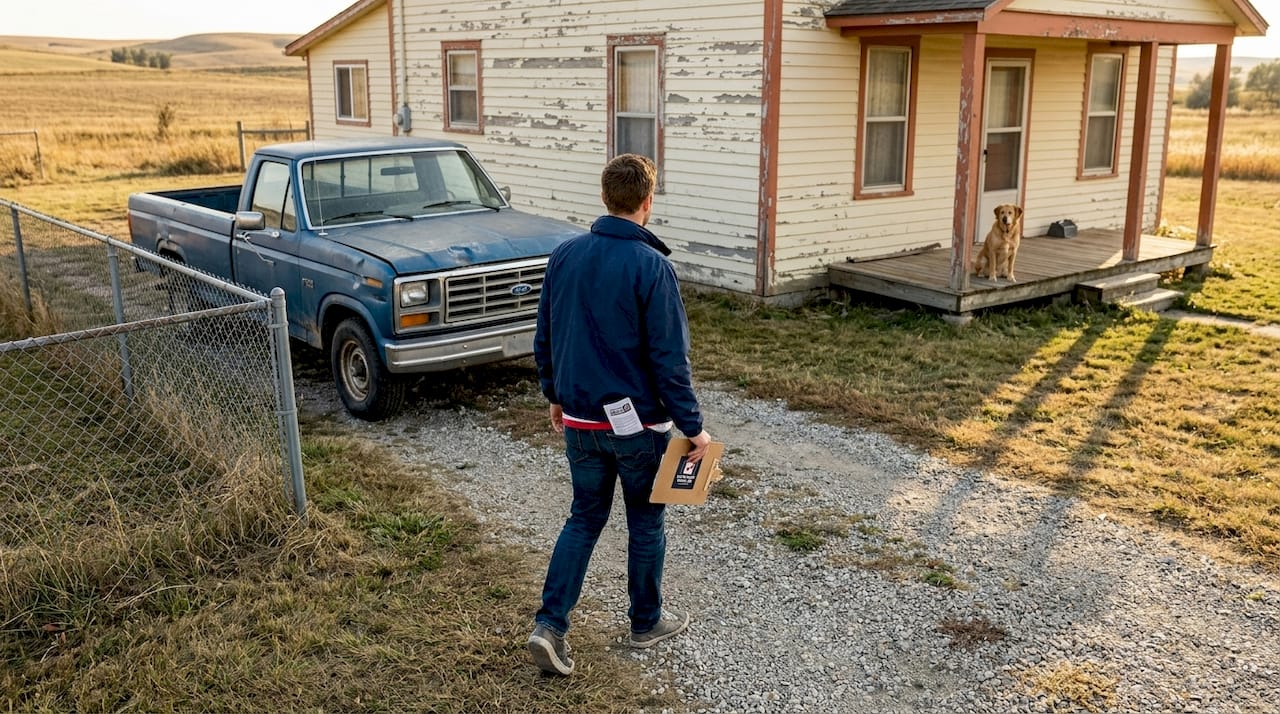
Campaigns build rural momentum by shifting to deep canvassing and community issue follow-up rather than one-way broadcast messaging. The difference in outcomes is striking.
Here's how to run an authentic deep canvassing operation in a rural setting:
- Train volunteers on listening, not pitching. Role-play scenarios where the volunteer's job is to ask questions and take notes, not to sell anything.
- Develop a community issue survey. Ask open-ended questions about what residents feel is being ignored by current leaders, what local problems they want solved, and what they wish people in power understood.
- Set realistic daily contact goals. Rural canvassing covers more physical distance with fewer contacts per hour. Plan accordingly.
- Log every conversation with context. Note specific issues raised, follow-up promises made, and any strong community allies who emerged.
- Follow up personally. Within two weeks, send a handwritten note or personal call to anyone who expressed a strong concern. This step alone separates truly effective campaigns from forgettable ones.
Statistic to keep in mind: One documented rural canvassing effort involved knocking on 6,000 doors and resulted in 579 substantive community conversations, generating statistically meaningful data on local issue priorities. That kind of disciplined engagement reveals patterns that no polling firm can replicate at the same cost or authenticity.
Pro Tip: Track the top three issues raised in each community cluster separately. When your candidate speaks at a local event in that area, referencing those exact concerns signals genuine attention. Voters notice when a candidate actually listened.
Pairing your canvassing operation with strong campaign outreach steps and a solid roster of campaign volunteers who are coached for rural conversations will compound your impact exponentially.
Common mistakes: Trust breakdowns and how to avoid them
While refining your engagement methods, it's essential to recognize and steer clear of common pitfalls that undermine everything you've worked to build.
Rural campaigns can lose months of progress in a single week if trust breaks down. This is especially common when campaigns make decisions that affect communities without involving those communities in the process.
Momentum can reverse sharply if communities feel excluded from co-design or planning, even when the underlying policy or initiative is broadly beneficial. The mechanics of this failure are painfully predictable. A campaign announces a position or event without community consultation. Rumors start. Opponents fill the information vacuum. By the time the campaign responds, the damage is done.
Common warning signs that trust is fracturing:
- Unexpected organized opposition from previously neutral community members
- Declining volunteer show-up rates or engagement at events
- Local messengers going quiet or distancing themselves
- Misinformation spreading in local Facebook groups or church circles
- Sudden negative coverage in small local papers or radio stations
"A campaign doesn't lose trust all at once. It erodes slowly until suddenly you realize the room has changed."
To protect the trust you've built, commit to these practices:
- Communicate early and often. When your campaign is considering a new position or event, brief your local messengers first. Let them ask questions before the public does.
- Co-design community events and messaging. Invite local leaders to help shape how issues are presented. People support what they help build.
- Acknowledge criticism directly. When a community concern emerges, address it head-on in the same channels where it appeared. Silence reads as confirmation.
- Keep your outreach records organized. Using solid outreach tracking tools ensures you always know who you've talked to, what was promised, and what follow-up is due.
Maintaining detailed campaign progress tracking also helps you catch early warning signs before a trust problem becomes a campaign crisis.
Tracking, adapting, and verifying grassroots momentum
After avoiding trust pitfalls, it's vital to continuously track results and adapt your approach. This ensures the progress you see is real and not just wishful thinking.
Momentum feels real when people are showing up to events and volunteers are excited. But feelings aren't data. Rural campaigns that sustain genuine momentum keep careful records and look for patterns rather than relying on anecdote alone.
Statistically valid conclusions about local issue priorities are achievable through deep engagement and disciplined follow-up, not just gut instinct. That means treating your canvassing logs, volunteer activity records, and community feedback like real data assets.
Here's a practical framework for tracking rural campaign momentum:
- Log conversations by community cluster. Group your outreach data geographically so you can spot which areas are warming up and which need more attention.
- Track volunteer consistency, not just total count. A volunteer who shows up every Saturday matters more than ten names on a list who never come back.
- Run monthly community check-ins. Brief, informal conversations with your trusted local messengers will surface sentiment shifts weeks before they show up in turnout data.
- Survey supporters at events. A three-question card or digital form captures real feedback without burdening attendees.
- Compare turnout trends against your contact history. Precincts where you have the deepest canvassing coverage should show measurable engagement differences over time.
| Metric | What to track | Review frequency |
|---|---|---|
| Doors knocked | Total and per volunteer | Weekly |
| Substantive conversations | Issues raised, follow-ups needed | Weekly |
| Volunteer retention rate | Repeat volunteers per month | Monthly |
| Community sentiment signals | Messenger feedback, local chatter | Monthly |
| Turnout in canvassed precincts | Compared to previous cycles | After each election |
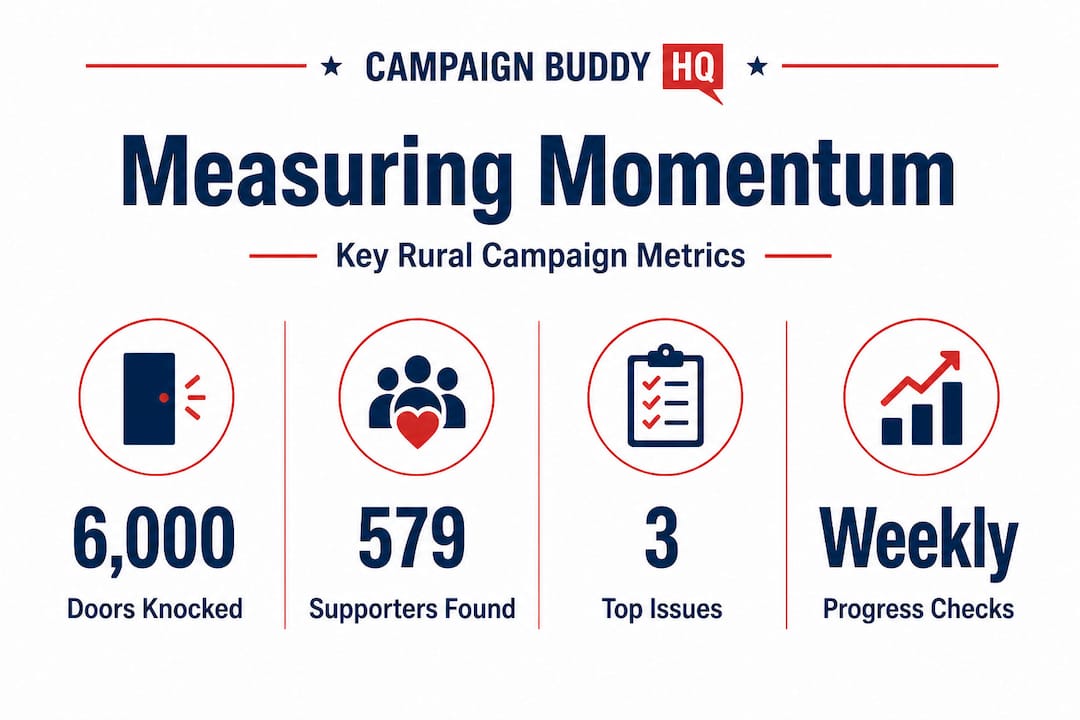
Using a campaign momentum data guide to structure your tracking from day one prevents the frantic scramble to reconstruct contact history in the final weeks of a race.
Why conventional campaign wisdom misses the rural mark
Most standard campaign playbooks were written with urban and suburban environments in mind. They emphasize paid media, rapid persuasion, and efficient voter contact at scale. Those tools aren't useless in rural settings, but they fail when they're the primary strategy rather than a supporting one.
The uncomfortable truth is that many progressive campaigns spend real money on digital advertising in rural areas that generates zero authentic community presence. You can run a 10,000-impression social media campaign in a rural county and have precisely zero new relationships to show for it. Meanwhile, a candidate who spent those same hours attending three local town halls built something that no algorithm can replicate.
Progressive wins in rural spaces consistently trace back to two things: backing real local voices and doing the slow relationship work that mainstream political strategists don't want to bill for because it's unglamorous. A candidate who supports a local school board fight for better funding, who attends the water district meeting, who helps organize a community health fair, that candidate becomes part of the community's story. And that's a very hard thing for an opponent to attack.
Contrary to popular belief, rural voters don't require progressives to hide or soften their values. They require candidates to connect those values to tangible, local, visible issues. Talking about healthcare in rural terms, local hospital closures, long drives to specialists, unaffordable prescriptions, lands far better than abstract policy framing. The same is true for broadband access, agriculture policy, or school funding. Connect the platform to the community's lived reality and you've found your message.
The best rural organizers we've seen work with are genuinely humble. They walk into rooms to learn, not to convert. They recruit volunteer networks from inside the community first. And they accept that momentum takes longer to build in rural areas, while also trusting that once built, it holds longer too.
Pro Tip: Momentum in rural campaigns is built through humility and listening, not through strategy decks or funding announcements. The campaigns that treat rural communities as partners rather than targets consistently outperform those that treat them as another voter segment to be optimized.
Empower your rural campaign the smart way
Building rural campaign momentum requires discipline, local relationships, and a system that keeps every team member organized and accountable across long timelines.
That's exactly what Campaign Buddy HQ is designed for. Whether you're logging doors knocked in a rural precinct, tracking volunteer consistency across multiple townships, or monitoring community feedback trends over months, Campaign Buddy HQ centralizes your entire operation. Built specifically for grassroots and rural campaigns, it gives your team daily planning tools, outreach logging, supporter tracking, and campaign phase management, all in one interface. You don't need a data team or a big budget to run a disciplined, data-driven campaign. Try it free for 7 days, no credit card required, and see how much clearer your path to momentum becomes.
Frequently asked questions
What is the single most important factor for building rural campaign momentum?
Persistent local presence and trust-building are the foundation of rural campaign success. Fielding local candidates everywhere and sustaining rural presence as long-term infrastructure consistently outperform any short-term media strategy.
How can progressive campaigns effectively engage rural voters?
Adopt deep listening, community involvement, and issue-based follow-up rather than relying on partisan messaging alone. Deep canvassing and issue-based engagement consistently produce stronger rural results than broadcast-only approaches.
What mistakes cause rural campaign momentum to stall?
Momentum stalls most often when communities feel left out of decisions or sense their feedback is being ignored. Trust breakdown and exclusion from planning can rapidly generate organized opposition even to well-intentioned campaigns.
How early should rural campaign groundwork begin?
Start well before election season, ideally 12 to 24 months out, to build authentic relationships and embed real community presence. Momentum comes from cumulative preparation, not from a persuasion push in the final weeks of a race.
How do you measure momentum in rural campaigns?
Track real engagement data including conversations logged, volunteer retention, and precinct-level turnout trends, then adapt based on ongoing community feedback. Disciplined engagement and issue tracking provide far more reliable momentum verification than anecdotal impressions or social media metrics.