
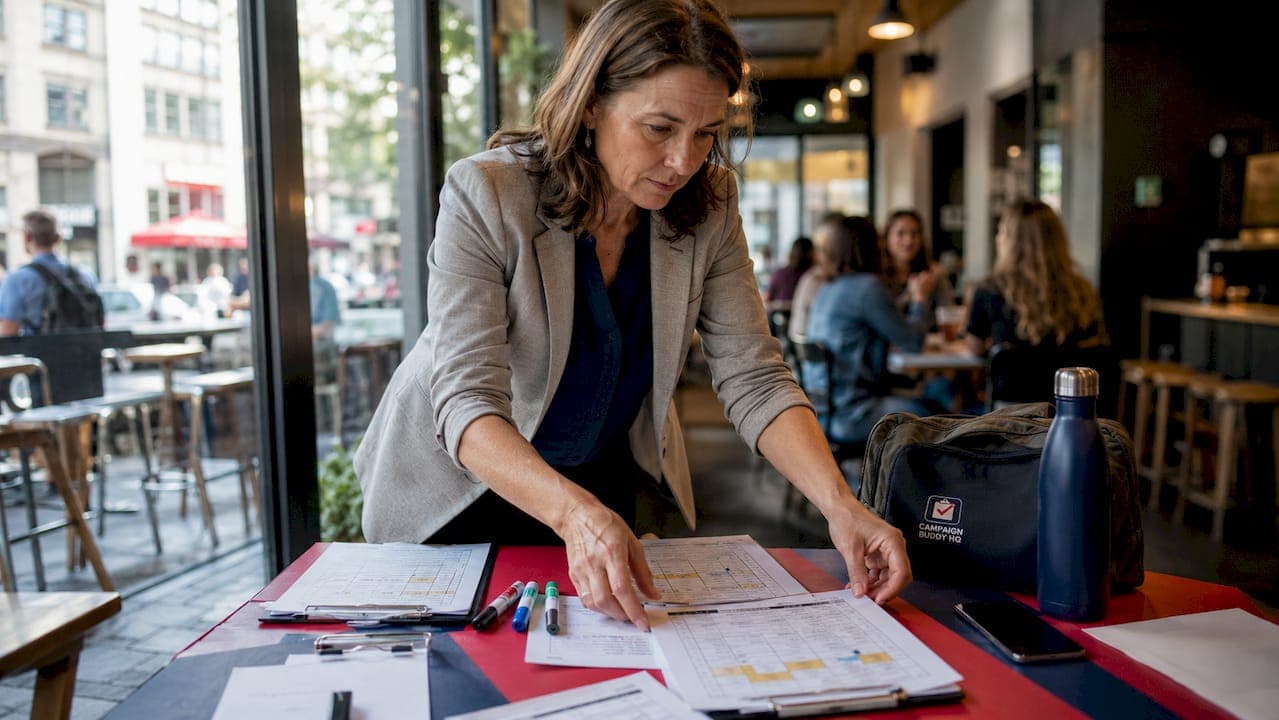
Campaign offices are defined as the physical operational headquarters where political campaigns coordinate volunteers, manage voter outreach, and execute field strategy. Every serious campaign needs one. A well-run office functions as the nerve center for phone banking, canvassing launches, data collection, and community engagement. Without a centralized location, volunteer energy scatters and outreach loses consistency. This guide gives candidates and campaign managers a practical framework for setting up and running campaign offices that actually win votes.
What functions do campaign offices fulfill in a political campaign?
Campaign offices are central hubs for volunteer coordination, organizing outreach efforts, training, and campaign events. That coordination function is what separates campaigns that build momentum from those that stall out after the first few weeks. A physical location gives volunteers a place to show up, a reason to stay, and a structure to work within.
The core activities that run through a well-organized office include:
- Phone banking: Volunteers make voter contact calls from dedicated desks, logging results in real time.
- Canvass launches: Teams gather at the office each morning for assignments, scripts, and turf maps before heading into the field.
- Yard sign distribution: Bulk sign storage and pickup coordination happens on-site, keeping materials organized and accessible.
- Committee meetings: Regular gatherings of precinct captains and organizers keep the team aligned on weekly goals.
- Literature distribution: Flyers, mailers, and door hangers are sorted and staged for field teams.
- Volunteer recruitment and training: New supporters walk in, get oriented, and leave with a role.
Standard office hours run Monday through Friday, 9:00 AM to 5:00 PM, with extended hours during peak periods. That structure matters because it signals reliability to volunteers and voters alike. A recommended staffing ratio is one paid field organizer for every 15 precinct captains. That ratio keeps communication tight and prevents organizers from spreading too thin across their turf.
Pro Tip: Set a weekly all-hands meeting at the office every Monday morning. It resets priorities, surfaces problems early, and gives volunteers a consistent anchor point for the week.
How to select the ideal location for your campaign office
Location is not just a logistical decision. It is a political statement. Successful campaign offices commonly occupy high-visibility downtown commercial spaces, serving as community hubs and signals of grassroots momentum. When voters drive past your office and see activity inside, that visibility builds credibility before a single door is knocked.
The practical requirements for a functional election campaign office setup include:
- Bulk storage space for yard signs, literature, and canvassing supplies
- Phone banking desks with reliable internet and power access
- A training or meeting area that can seat 20 or more people
- Accessible parking for volunteers arriving before and after shifts
- ADA-compliant entry so no supporter is turned away at the door
Repurposing vacant retail spaces works particularly well for grassroots campaigns. Intentional visual cues like duct-taped cables and hand-lettered signs reflect a campaign that is doing the work rather than performing polish. Voters respond to authenticity. An office that looks lived-in tells a story that a glossy storefront cannot.
"The physical environment of a campaign office communicates something to every volunteer who walks through the door. A busy, slightly chaotic space says: we are in this fight. That energy is contagious, and it keeps people coming back."
Avoid locations that are hard to find, lack parking, or sit in areas with low foot traffic. A campaign office that volunteers struggle to reach will be underused from day one. Prioritize visibility and ease of access over square footage or aesthetics.
When should you open your campaign office?
Timing the launch of your political campaign headquarters is as important as choosing the location. Phase 1 of a campaign ends in May for November general elections, providing 5–6 months of operation before voting day. Opening your office during Phase 1 gives you time to recruit volunteer captains, build infrastructure, and establish routines before the summer push begins.
A phased approach to office operations looks like this:
- Phase 1 (by May): Open the office, recruit your first wave of precinct captains, and set up your data and communication systems. Order yard signs, literature, and supplies early to avoid delays.
- Summer (June through August): Use the office as a training ground. Summer is the optimal time to recruit and train interns and volunteers. Run regular canvassing shifts and phone banks to build team habits.
- Fall ramp-up (September through October): Shift to full operational tempo. Extend office hours, increase canvass frequency, and activate your full precinct captain network.
- Final sprint (last two weeks): The office becomes a war room. Every resource focuses on voter contact, ride coordination, and get-out-the-vote execution.
Ordering materials early in Phase 1 prevents the common mistake of running out of yard signs or literature during peak demand in September. Supply chains for campaign materials tighten as election day approaches. Getting ahead of that curve is a structural advantage.
Pro Tip: Recruit your summer volunteers with a clear pitch: strong performers earn paid staff roles in the fall. That incentive improves retention and gives you a pipeline of trained staff when you need them most.
How to staff, use technology, and manage data in your office
The best campaign management office runs on clear roles, real-time data, and tools that keep everyone accountable. The one-organizer-to-15-precinct-captains ratio is a starting point, but the structure only works if data flows cleanly from the field back to the office.

Paper-based tracking is the single biggest operational mistake campaigns make. Modern campaigns use cloud-based platforms like Trello, Asana, and specialized campaign software to maintain real-time data integrity and team accountability. When a canvasser logs a voter contact in the field, that data should be visible to the office team within minutes, not days.
The table below shows how office functions map to the tools and roles that support them.
| Office function | Recommended tool type | Key role responsible |
|---|---|---|
| Volunteer scheduling | Cloud-based project management | Field organizer |
| Voter contact logging | Campaign-specific software | Precinct captain |
| Canvass turf assignment | Mapping and data platform | Data manager |
| Phone bank tracking | Call logging software | Phone bank coordinator |
| Weekly reporting | Shared dashboards | Campaign manager |
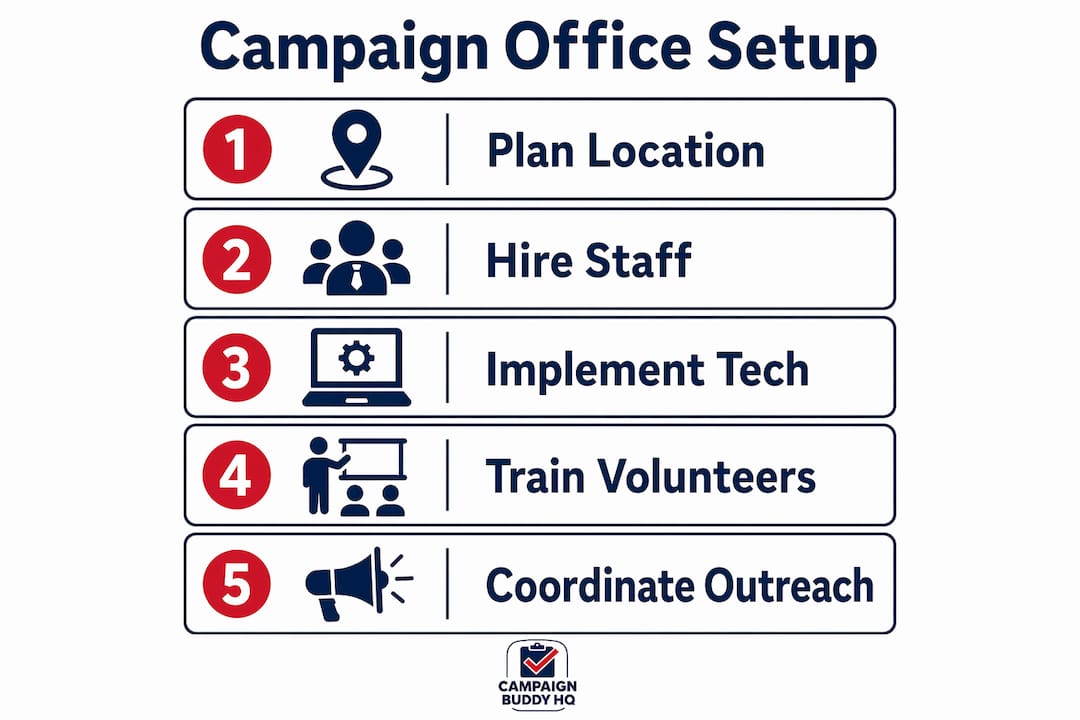
Election war rooms convert raw field data into strategic decisions and coordinate comprehensive campaign activities in real time. That is the standard your office should aim for. The office is not just a place where volunteers show up. It is the place where campaign data drives results and informs every tactical call the campaign makes.
The most effective offices also integrate voter contact approaches across channels, combining door knocking, phone calls, and text outreach into a unified daily plan. That coordination only happens when the office has the right tools and the right people reviewing data every morning. Campaigns that treat the office as a passive gathering space lose the data advantage to campaigns that treat it as an active decision center.
Understanding how to plan digital campaigns alongside your field operations gives your office team a fuller picture of voter sentiment and message performance. Digital and field data together produce better targeting decisions than either source alone.
Key Takeaways
A campaign office is only as effective as the systems, timing, and people operating inside it.
| Point | Details |
|---|---|
| Open early in Phase 1 | Launch by May to recruit captains and build infrastructure before summer. |
| Choose high-visibility locations | Downtown commercial spaces signal momentum and attract walk-in volunteers. |
| Use cloud-based tools | Replace paper tracking with platforms that share data in real time across the team. |
| Staff with clear ratios | One paid organizer per 15 precinct captains keeps communication tight and manageable. |
| Treat the office as a war room | Convert field data into daily tactical decisions, not just a place to store yard signs. |
What I've learned about campaign offices that most guides won't tell you
The conventional advice on campaign offices focuses on location and square footage. That misses the point. The physical space matters far less than the culture you build inside it.
I have seen well-funded campaigns rent beautiful offices in prime locations and lose badly. I have also seen scrappy campaigns operate out of repurposed storefronts with folding tables and win. The difference is almost always the same: the winning campaigns treated their office as a decision-making center, not a volunteer drop-in space. Every morning started with a data review. Every evening ended with a debrief. The office had a pulse.
The "lived-in" aesthetic that some campaigns stumble into accidentally is actually a feature, not a flaw. Voters and volunteers who walk into a busy, slightly chaotic office feel the energy of a campaign that is working. A pristine, quiet office communicates the opposite. Do not over-design your space. Fill it with activity instead.
The biggest operational mistake I see repeatedly is poor data management. Campaigns collect voter contact data in the field and then let it sit in paper logs or disconnected spreadsheets for days. By the time the office team reviews it, the tactical window has closed. The campaigns that win in 2026 will be the ones that close that gap to hours, not days. That requires cloud tools, trained staff, and a daily discipline of data review that starts at the top.
One more thing: your office is a morale center. When volunteers feel the energy of a busy headquarters, they recruit their friends. When the office feels empty and disorganized, attrition accelerates. Invest in the culture of the space as deliberately as you invest in the location.
— Billy
How Campaignbuddyhq supports your campaign office operations
Running a campaign office means tracking dozens of moving parts at once: volunteer shifts, voter contacts, canvassing turf, phone bank results, and weekly progress toward your goals. Campaignbuddyhq is built specifically for that challenge.
Campaignbuddyhq gives campaign managers a centralized platform to track outreach activities including doors knocked, calls made, texts sent, and registrations completed. The platform supports daily and weekly planning, supporter tracking, and campaign phases designed for real-world field operations. It works for both urban and rural campaigns. A free 7-day trial requires no credit card. Visit Campaignbuddyhq to get your office operations running on a system built for campaigns that intend to win.
FAQ
What is the purpose of a campaign office?
A campaign office is the operational headquarters where volunteers coordinate, voter outreach is managed, and field data is processed into strategic decisions. It serves as the central hub for phone banking, canvassing, and community engagement.
When should you open a campaign office?
Phase 1 ends in May for November general elections, making spring the ideal time to open. Opening early gives campaigns 5–6 months to build infrastructure and recruit volunteer captains before voting day.
What is the ideal staffing ratio for a campaign office?
The recommended ratio is one paid field organizer for every 15 precinct captains. That structure keeps communication tight and prevents organizers from losing track of their volunteer networks.
How do campaign offices use technology effectively?
Cloud-based platforms like Trello, Asana, and campaign-specific software replace paper tracking and give the entire team real-time access to volunteer schedules, voter contact logs, and field data.
What makes a good campaign office location?
High-visibility downtown or commercial locations work best because they attract walk-in volunteers and signal grassroots momentum to the community. Accessible parking, ADA compliance, and adequate storage space are non-negotiable requirements.