

Political campaign leadership skills are the blend of strategic, interpersonal, and operational competencies that determine whether a campaign wins or loses. The best leaders translate a candidate's vision into a multi-faceted path to victory that balances policy expertise, voter demographics, and public scrutiny. Jim Messina's Four Ms framework, Message, Movement, Momentum, and Money, provides the foundational pillars every campaign leader must command. Mastering these skills is not optional. It is the difference between a campaign that builds real power and one that stalls before election day.
1. What are the top political campaign leadership skills to master?
Effective leadership in politics starts with a clear understanding of which competencies matter most. The list below covers the skills that separate winning campaigns from losing ones.
2. Decision-making under pressure
Campaign leaders make high-stakes calls with incomplete information every day. Campaigns demand high-stakes decision-making and managing high interpersonal friction in stressful, temporary teams. The leader who freezes under pressure hands the advantage to the opposition. Train yourself to set a decision threshold: gather the best available information, set a deadline, and commit.
3. Deliberate delegation
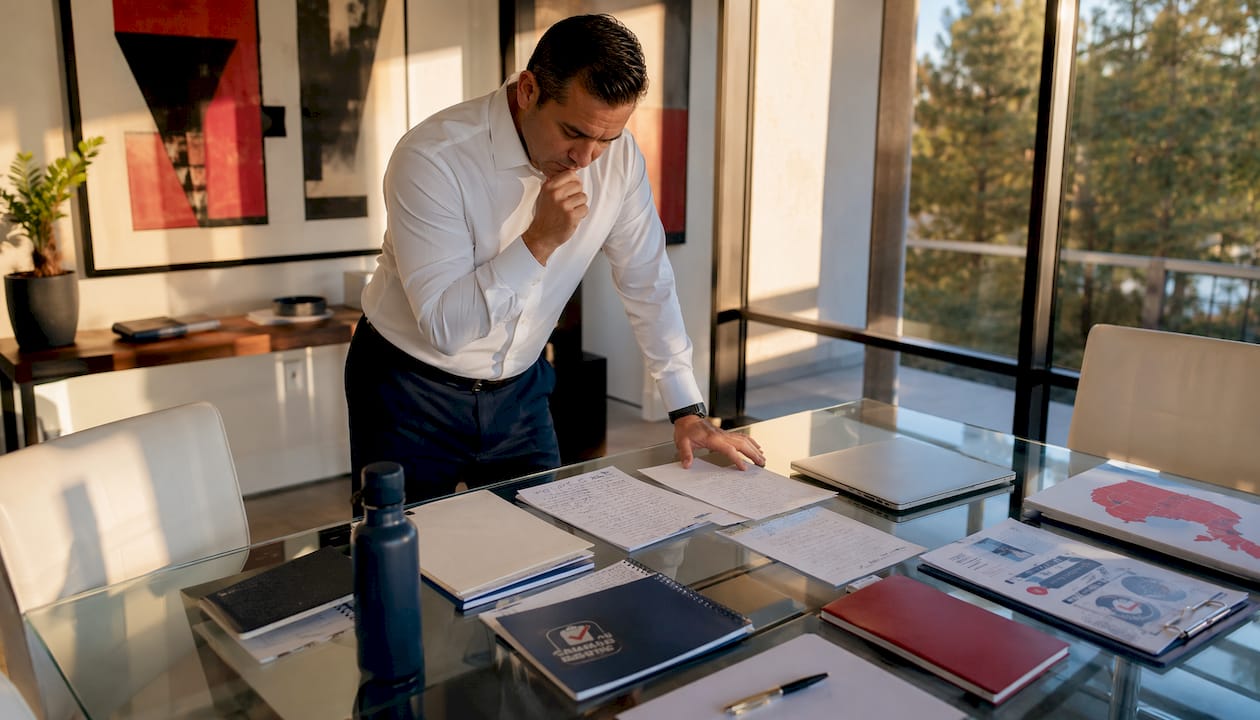
No campaign manager wins alone. Deliberate delegation means assigning tasks based on individual strengths, then holding people accountable through clear reporting structures. Leaders who micromanage burn out their staff and themselves. Build a chain of command before the campaign launches, not after the first crisis hits.
Pro Tip: Create a simple one-page org chart at campaign launch. Distribute it to every staff member and volunteer so everyone knows who owns what decision.
4. Emotional intelligence and conflict resolution
Managing the emotional volatility of candidates and exhausted staff requires conflict resolution approaches rarely taught formally. Emotional intelligence means reading the room, regulating your own reactions, and addressing tension before it fractures the team. A leader who stays calm when a poll drops ten points sets the tone for the entire organization. Practice naming the emotion in the room and redirecting energy toward the next concrete action.
5. Strategic communication mastery
Strategic communication in campaigns is not just about crafting a good message. It coordinates resources and communication tools to achieve unified goals, preventing disjointed efforts across field, digital, and earned media. Leaders must own the message architecture and make sure every team member can articulate the core contrast in thirty seconds. Consistency across channels is what converts awareness into votes.
6. Judgment of character and staff motivation
Effective campaign managers are extraordinary judges of character, able to motivate staff after setbacks and manage the competing demands of candidates. Hiring the wrong field director six weeks before election day is a campaign-ending mistake. Read people carefully during interviews. Ask for specific examples of how they handled failure, not just success.
7. Networking and coalition-building
Campaign managers build careers by evolving from volunteers to senior staff, with networks and reputation mattering more than resumes. The same logic applies inside a campaign. Build alliances with labor unions, community organizations, and trusted local voices early. Those relationships amplify your message and open doors that paid advertising cannot.
8. Budget and resource management
Money is one of Messina's Four Ms for a reason. Voter-directed messages have a statistically significant effect on voter support and electorate composition. That means every dollar spent on the wrong channel is a vote left on the table. Leaders must track burn rate weekly and reallocate resources when field data shows a tactic is underperforming.
9. How do campaign leaders build and maintain momentum?
Momentum is the compounding effect of Message, Movement, and Money working together. Losing it mid-campaign is far easier than rebuilding it. These practices keep it moving forward.
- Keep volunteers energized. Volunteers who feel seen and valued show up consistently. Recognize top performers publicly at weekly meetings and share specific wins, such as doors knocked or calls completed, to make progress tangible. Campaignbuddyhq tracks outreach activity in real time, so leaders can spot and celebrate milestones before enthusiasm fades. Learn more about volunteer engagement strategies that sustain field operations.
- Coordinate message consistency. Every channel, from door knocking to social media, must carry the same core contrast. Brief field staff weekly on message updates and give them a simple talking points card they can reference without looking at a screen.
- Convert momentum into fundraising. A visible win, a strong debate performance, or a viral moment, creates a fundraising window that closes fast. Leaders must have a rapid-response email and text program ready to deploy within hours of a momentum event.
- Adapt based on feedback. Momentum stalls when leaders ignore signals from the field. Build a weekly feedback loop where field directors report what voters are actually saying, not what the campaign wants to hear.
Pro Tip: Use campaign momentum data to identify which precincts are trending toward your candidate and double down on outreach there before the opposition notices.
10. Common leadership challenges in political campaigns
Every campaign hits predictable friction points. Knowing them in advance lets you plan a response before the crisis arrives.
- Staff burnout. Campaign schedules are brutal. Leaders who ignore fatigue signals lose their best people at the worst time. Build mandatory rest periods into the schedule and model the behavior yourself by taking at least one full day off per week.
- Scope creep. Without intake gates, approved briefs and budgets, campaigns experience scope creep that wastes critical time. Every new task request must go through an approval process before it consumes staff hours.
- Decision fatigue. Leaders who make too many small decisions have nothing left for the big ones. Delegate routine approvals to department heads and reserve your judgment for choices that affect the whole campaign.
- Interpersonal conflict. Stress amplifies personality clashes. Address conflict directly and privately within 24 hours of it surfacing. Letting tension fester costs more time than the conversation takes.
- Candidate management. Candidates often want to react to every news cycle. A disciplined focus on the strategic plan is critical when facing constant pressure to pivot due to tactical noise and stakeholder demands. The campaign manager's job is to protect the strategy.
11. How strategic communication unifies your team and reaches voters
Emergent communication strategy differs from top-down messaging in one critical way: it builds from audience insight rather than headquarters preference. Leaders who shift from top-down to emergent approaches maintain better cohesion and resonate with more diverse stakeholders.
The leader's role is to design the message architecture, then give teams the tools to execute it consistently. That means research-based talking points, a clear contrast with the opposition, and a defined tone that works across digital and traditional media. Trusted third-party voices and alliances significantly improve campaign credibility and reach. Identify three to five credible community advocates early and brief them regularly so their public statements reinforce your message without sounding scripted.
Continuous evaluation separates good communication leadership from great. Set a weekly review of message performance across channels. If a digital ad is underperforming, pull it and test a new frame within 72 hours. Explore nonprofit digital outreach strategies for additional frameworks on coordinating message across multiple audiences.
| Communication approach | Best use case |
|---|---|
| Top-down messaging | Rapid response, crisis communications, legal compliance |
| Emergent messaging | Voter persuasion, coalition outreach, community engagement |
| Third-party advocacy | Credibility building, earned media, hard-to-reach audiences |
| Digital A/B testing | Message refinement, audience segmentation, ad optimization |
12. Practical tactics for building a strong campaign team
Building a strong team is the most concrete expression of campaign management skills. These practices create an organization that can execute under pressure.
- Recruit with role clarity. Every hire should receive a written job description with specific deliverables before their first day. Ambiguity about responsibilities is the leading cause of early staff turnover.
- Create intake gates. Require an approved brief and budget before any new project starts. This single practice eliminates the majority of scope creep that derails campaigns.
- Track progress with reporting dashboards. Setting consistent protocols before campaign launch is critical to defend strategy decisions and avoid broken attribution. Use campaign reporting frameworks to keep every department aligned on weekly goals.
- Build a positive culture. Recognize effort publicly and address problems privately. A culture where people feel safe raising concerns catches problems before they become crises.
- Integrate technology without losing the human element. AI tools reduce time spent on operational tasks, but human leadership remains critical in managing complex interpersonal dynamics. Use technology to free up time for the conversations and decisions that only a leader can handle. The role of technology in campaigns continues to grow, but it amplifies leadership rather than replacing it.
Key takeaways
Effective political campaign leadership requires mastering decision-making, communication, delegation, and team management before the pressure of a live campaign removes the margin for error.
| Point | Details |
|---|---|
| Master the Four Ms | Message, Movement, Momentum, and Money compound each other; weakness in one undermines the rest. |
| Delegate deliberately | Assign tasks by strength and enforce accountability through clear reporting structures from day one. |
| Control scope creep | Require approved briefs before any new project starts to protect staff time for core voter outreach. |
| Use emergent communication | Build messaging from audience insight and reinforce it through trusted third-party advocates. |
| Track and adapt weekly | Review field data and message performance every week and reallocate resources when results lag. |
What I've learned about leading campaigns under real pressure
The conventional wisdom says campaign leadership is about vision. My experience says it is about discipline. The candidates and managers who win are not always the most inspiring. They are the ones who protect the plan when everyone around them is panicking.
Emotional intelligence gets undervalued in political circles because the culture rewards toughness. The reality is that a leader who cannot read a room full of exhausted volunteers will lose those volunteers by week six. The skill is not softness. It is precision. You read the emotion, name it briefly, redirect it toward the next concrete task, and move on.
The other thing I have seen consistently is that networks matter more than credentials. The best campaign managers I know built their reputations by showing up, doing unglamorous work well, and treating every colleague like a future ally. That reputation travels faster than any resume. Building an online presence that reflects your values and track record is now part of that equation.
Technology is changing the operational side of campaigns faster than most leaders realize. The managers who thrive are the ones who use tools to free up time for judgment calls, not the ones who resist change or, worse, outsource their judgment to an algorithm.
— Billy
Campaignbuddyhq: built for campaign leaders who need results
Running a political campaign means tracking hundreds of moving parts while keeping your team focused on the voters who matter most. Campaignbuddyhq gives campaign leaders a single platform to log outreach activity, track doors, calls, and texts, monitor progress toward goals, and plan daily and weekly priorities.
The platform is built for real-world campaign conditions, including rural and low-density communities where field operations require extra coordination. Leaders who use Campaignbuddyhq spend less time chasing status updates and more time making the decisions that win elections. A free 7-day trial requires no credit card. Start organizing your campaign today.
FAQ
What are the most important political campaign leadership skills?
Decision-making under pressure, deliberate delegation, emotional intelligence, and strategic communication are the core competencies. Campaign leaders who master these four areas consistently outperform those who rely on charisma alone.
How does Jim Messina's Four Ms framework apply to campaign leadership?
The Four Ms, Message, Movement, Momentum, and Money, function as a flywheel. Strong leadership in each area compounds the others, and weakness in one slows the entire campaign down.
What is the biggest leadership mistake campaign managers make?
Failing to install intake gates for new tasks is the most common operational error. Without an approval process, scope creep consumes staff time that should go toward voter outreach.
How can a campaign leader improve strategic communication?
Shift from top-down messaging to an emergent approach built on audience research. Brief trusted community advocates regularly and review message performance across all channels every week.
How do campaign leaders sustain volunteer motivation?
Share specific outreach wins at weekly meetings, recognize top performers publicly, and give volunteers a clear sense of how their work connects to the path to victory. Campaignbuddyhq tracks outreach activity in real time, making it easy to surface and celebrate those milestones.